
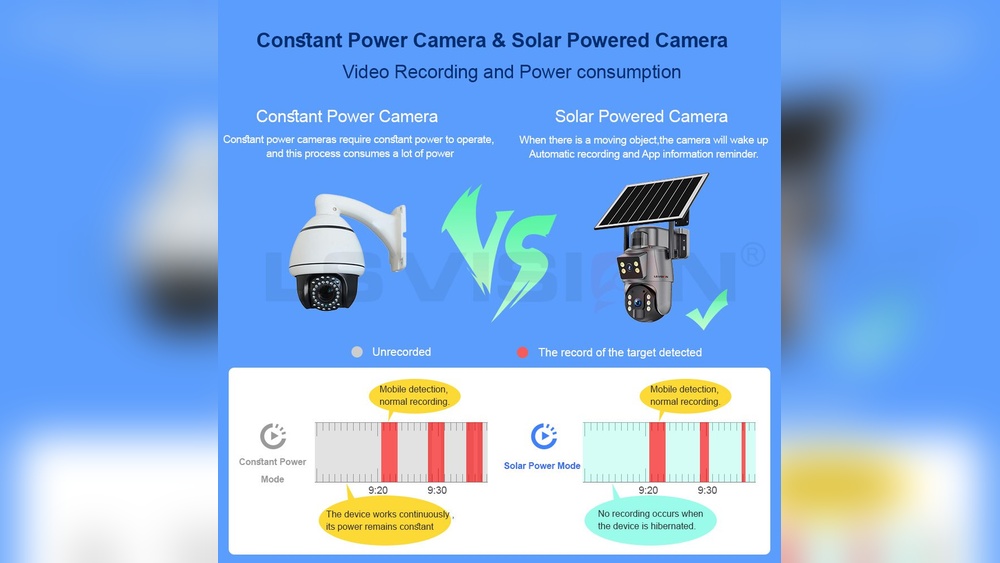
Solar cameras are changing how people protect homes, farms, and businesses. These cameras do not rely on electric power lines. Instead, they use the sun’s energy to operate. This makes them perfect for places without easy access to electricity, and also for people who want to save money and use more green technology.
But how does a solar camera work? What makes it different from regular security cameras? Let’s break down the key parts, technology, benefits, and practical examples so you can understand solar cameras fully.
What Is A Solar Camera?
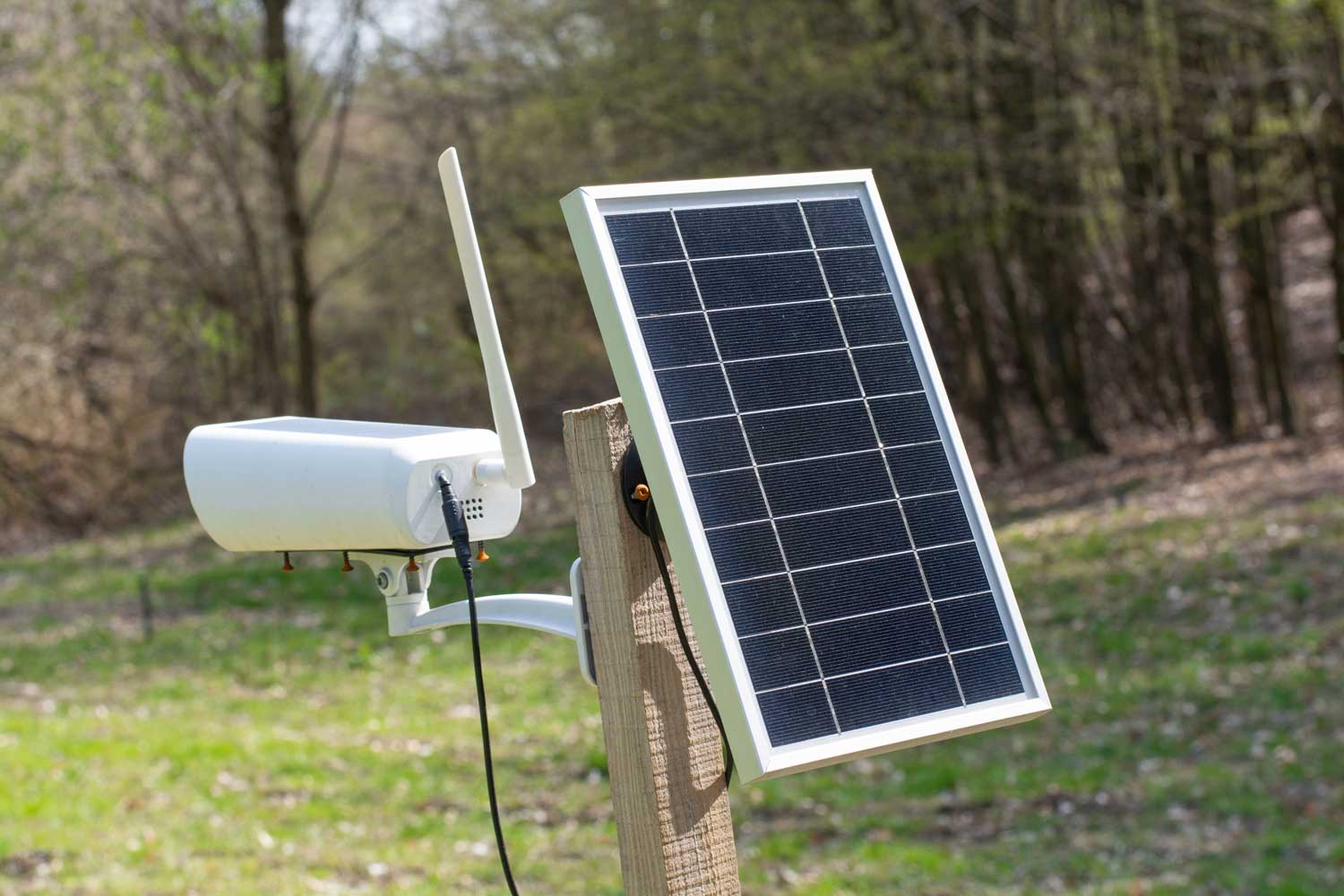
A solar camera is a security camera powered by solar energy. It has built-in solar panels that capture sunlight and turn it into electricity. This electricity is used to run the camera, send video data, and sometimes even charge batteries for nighttime use. Most solar cameras are wireless, meaning they do not need cables for power or data. This makes installation much easier.
Solar cameras are popular for outdoor use. People install them in backyards, parking lots, farms, construction sites, and remote areas. Some models also have extra features like motion detection, night vision, and two-way audio.
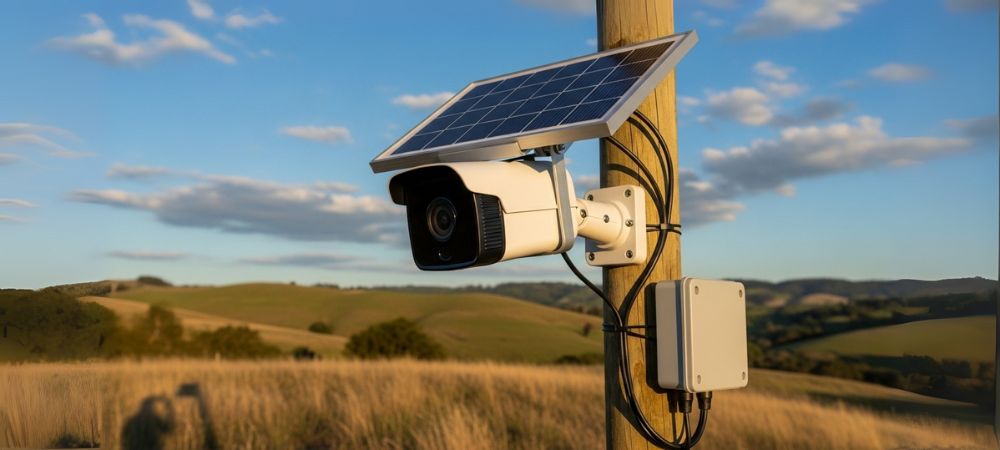
The Main Components Of A Solar Camera
To understand how a solar camera works, you need to know its main parts. Each component plays an important role in capturing, storing, and sending video.
- Solar Panel: The most visible part. This panel absorbs sunlight and converts it into electricity using photovoltaic cells.
- Rechargeable Battery: Stores extra electricity for times when sunlight is low (like at night or on cloudy days).
- Camera Module: Contains the lens, image sensor, and electronics for recording video and audio.
- Wireless Transmitter: Sends video data to your phone, computer, or cloud storage using Wi-Fi or cellular networks.
- Motion Sensor: Detects movement and triggers the camera to start recording or send alerts.
- Microcontroller: The small computer that manages power, video, and communication.
Each part must work together for the camera to operate smoothly. If one part fails, the camera may not function properly.
Credit: www.zetronix.com
How Solar Panels Power The Camera
Solar panels are the heart of the system. Let’s look at how they provide energy.
Photovoltaic Cells
Solar panels are made of photovoltaic cells. These cells are usually made from silicon. When sunlight hits the cells, it creates an electric current. This process is called the photovoltaic effect.
Energy Conversion
The solar panel converts sunlight into direct current (DC) electricity. The camera’s electronics may need alternating current (AC) or specific voltage levels, so the camera includes a charge controller and sometimes a power inverter to adjust the electricity.
Charging The Battery
During the day, the solar panel charges the battery. The battery stores energy for later use. At night, or when the sun is hidden, the camera uses the stored energy. This keeps the camera working 24/7.
Typical Power Output
Most small solar panels for cameras produce between 2 to 10 watts of power. This is enough for low-power cameras, especially if the battery is efficient. If the camera has extra features like PTZ (pan-tilt-zoom), it may need a bigger panel.
How The Camera Captures And Sends Video
Solar cameras use modern technology to record and send video data. Here’s how it works:
Image Sensors
The camera module has an image sensor (usually CMOS). This sensor turns light into digital signals. Most solar cameras record in 1080p (Full HD) resolution, but some advanced models offer 4K.
Video Compression
To save bandwidth and storage, cameras use video compression technology like H.264 or H.265. This reduces file size while keeping good quality.
Wireless Transmission
Solar cameras usually connect to Wi-Fi. Some models use 4G LTE for places without Wi-Fi. The wireless transmitter sends video to your smartphone, computer, or cloud server. You can watch live footage or review recordings.
Storage Options
- Cloud Storage: Video is saved on the internet. You can access it anywhere.
- SD Card: Video is stored locally in the camera.
- NVR (Network Video Recorder): Advanced systems may send video to a central recording device.
The Role Of The Battery
The battery is critical for solar cameras. It allows the camera to work at night or when sunlight is weak.
Battery Types
Most solar cameras use lithium-ion or lithium-polymer batteries. These batteries are lightweight and hold a lot of energy.
Capacity
Battery capacity is measured in milliamp-hours (mAh). A typical solar camera battery is between 4000 mAh and 10,000 mAh. This can power the camera for several hours or even days.
Smart Power Management
Modern solar cameras use smart power management. The camera turns off or reduces power when there is no movement. Some cameras only record when motion is detected. This saves battery life and storage.
How Motion Detection Works
Motion detection is a major feature in solar cameras. It helps save energy and storage space.
Sensors Used
Solar cameras use PIR (Passive Infrared) sensors or software-based motion detection. PIR sensors detect heat changes from moving objects.
Triggering Recording
When motion is detected, the camera starts recording and sends alerts to your phone. This means you only record important events, not hours of empty footage.
Custom Settings
You can adjust sensitivity, alert zones, and notification types. Some cameras let you choose which areas to watch, so animals or cars outside the zone don’t trigger alerts.

Credit: www.amazon.com
Night Vision: How Solar Cameras Work In The Dark
Solar cameras can record even at night. They use infrared (IR) LEDs or low-light sensors.
Ir Leds
Many solar cameras have small infrared LEDs around the lens. These LEDs shine invisible light that the camera can see. This lets the camera record clear video even in total darkness.
Low-light Technology
Some advanced cameras use starlight sensors. These sensors can capture color video in very low light. This is useful for places where you need better details at night.
Battery Use At Night
At night, the camera uses battery power. IR LEDs and sensors consume energy, so battery life depends on how often the camera records.
Solar Camera Vs Traditional Wired Camera
Let’s compare solar cameras and traditional wired cameras. This helps you decide which is best for your needs.
| Feature | Solar Camera | Wired Camera |
|---|---|---|
| Power Source | Solar + Battery | Electric Grid |
| Installation | Easy, no wires | Complex, needs wiring |
| Location Flexibility | Anywhere with sunlight | Near power outlets |
| Cost | Lower long-term cost | Higher installation cost |
| Maintenance | Low | Medium to high |
| Reliability | Depends on sunlight | Always powered |
Real-world Examples: Where Solar Cameras Are Used
Solar cameras are used in many situations. Here are some examples:
Farms And Rural Areas
Farmers use solar cameras to watch animals, protect crops, and check gates. No need for electrical lines in fields.
Construction Sites
Builders install solar cameras to prevent theft and monitor work. Sites may not have power, so solar cameras are perfect.
Public Parks And Trails
Cities use solar cameras in parks and walking trails. They improve safety and help police check incidents.
Vacation Homes And Remote Cabins
Owners install solar cameras to watch properties when they are away. No need to pay for electricity.
Wildlife Monitoring
Researchers use solar cameras to study animal behavior. Cameras can be placed deep in forests without harming nature.
Parking Lots And Businesses
Solar cameras provide security without expensive wiring. Businesses save money and get flexible coverage.
Step-by-step: How A Solar Camera Works Each Day
Let’s follow a typical day for a solar camera.
- Morning: Sunlight hits the solar panel. The panel charges the battery and powers the camera.
- Daytime: The camera records and sends video. Extra energy is stored in the battery.
- Afternoon: Clouds may reduce sunlight, but the battery keeps the camera running.
- Evening: Sun goes down. The camera switches to battery power.
- Night: The camera uses IR LEDs for night vision. It records when motion is detected.
- Next Morning: Sun rises and the cycle repeats.
This cycle keeps the camera working all the time, even in tough weather.
Key Features To Look For In A Solar Camera
If you want to buy a solar camera, pay attention to these features:
- Solar Panel Size: Bigger panels capture more sunlight.
- Battery Capacity: Higher capacity means longer backup.
- Resolution: At least 1080p for clear video.
- Night Vision: Good IR LEDs or starlight sensors.
- Motion Detection: Adjustable sensitivity.
- Wireless Connectivity: Wi-Fi or 4G LTE.
- Weatherproof Design: Rated IP65 or higher.
- Storage Options: Cloud, SD card, or NVR.
- App Support: Easy to control from your phone.
Comparing Popular Solar Camera Models
Here’s a comparison of three popular solar camera models. This helps you see differences in features.
| Model | Resolution | Battery Capacity | Solar Panel Power | Night Vision | Connectivity | Storage |
|---|---|---|---|---|---|---|
| Reolink Argus 3 Pro | 2K (4MP) | 6000 mAh | 4.5 W | IR + Color | Wi-Fi | SD Card + Cloud |
| Arlo Go 2 | 1080p | 7800 mAh | 5 W | IR | Wi-Fi + 4G LTE | SD Card + Cloud |
| Eufy SoloCam S40 | 2K | 6500 mAh | 8 W | IR + Color | Wi-Fi | Cloud |
Advantages Of Solar Cameras
Solar cameras offer many benefits that regular cameras cannot.
Easy Installation
You do not need to run wires or hire electricians. Just mount the camera and aim the solar panel.
Flexible Placement
Place the camera anywhere—fields, forests, or parking lots. No need for power sockets.
Lower Costs
No electric bills. You save money in the long run.
Eco-friendly
Solar cameras use renewable energy. They reduce your carbon footprint.
Reliable Backup
Even if there is a power outage, the camera keeps working.
Remote Access
Watch your camera from anywhere using your phone or computer.
Limitations Of Solar Cameras
Solar cameras are not perfect. Here are some challenges:
Sunlight Dependence
If there is not enough sunlight, the camera may lose power. Places with long winters or heavy shade need bigger panels or extra batteries.
Battery Aging
Batteries lose capacity over time. You may need to replace them every 2–4 years.
Data Limits
If you use 4G LTE, you may face data limits or extra costs.
Weather Effects
Heavy rain or snow can cover panels and reduce efficiency.
Security Risks
Wireless cameras can be hacked if not protected. Use strong passwords and update software often.
Credit: pro-vigil.com
How To Install A Solar Camera
Installing a solar camera is simple if you follow these steps.
- Choose the Location: Pick a spot with good sunlight and clear view.
- Mount the Camera and Panel: Use screws or brackets. Angle the solar panel toward the sun.
- Connect the Battery: Make sure wires are tight and waterproof.
- Set Up Wireless Connection: Connect to Wi-Fi or insert a SIM card for 4G LTE.
- Download the App: Follow instructions to pair the camera with your phone.
- Adjust Settings: Set motion zones, sensitivity, and storage preferences.
- Test the Camera: Check video quality and alerts.
Practical Tips
- Clean the solar panel every month for best performance.
- Avoid placing the camera under trees or roof edges.
- Use weatherproof covers for extra protection.
- Check battery status often, especially in winter.
Common Mistakes When Using Solar Cameras
Many beginners make these errors:
- Ignoring Sunlight Direction: Panels must face the sun, not shade.
- Choosing Too Small Battery: If the battery is too small, the camera dies at night.
- Not Securing Wi-Fi: Weak passwords can lead to hacking.
- Skipping Maintenance: Dirty panels reduce energy. Clean them regularly.
- Overusing Features: High-resolution video and constant recording drain battery fast.
Avoid these mistakes for best results.
Future Trends In Solar Camera Technology
Solar cameras are getting smarter and more efficient. Here are some trends:
Ai-powered Detection
New cameras use artificial intelligence to spot people, animals, and cars. This reduces false alerts.
Longer Battery Life
Better batteries last up to 7 years. Some use supercapacitors instead of lithium.
Integrated Solar Design
Cameras and panels are combined in one unit. This makes installation easier.
Faster Wireless
New models support Wi-Fi 6 and 5G for quicker video transfer.
More Cloud Features
Cloud storage is cheaper and safer. Some cameras offer encrypted video and face recognition.
Smart Home Integration
Solar cameras can connect with smart lights, alarms, and door locks. You control everything from one app.
Data And Performance Statistics
Solar camera adoption is rising. Here are some numbers:
- The global solar camera market is expected to grow 20% per year (2023–2028).
- Over 60% of new outdoor camera installations in rural areas use solar power.
- A typical solar camera saves $100–$300 per year in electricity costs.
- Battery efficiency has improved by 40% in the last five years.
These numbers show that solar cameras are not just a trend—they are becoming standard.
Maintenance And Care
Solar cameras need little care, but a few steps keep them working well.
- Clean the panel with a soft cloth and water. Avoid chemicals.
- Check connections every 6 months for corrosion.
- Update software for security and new features.
- Replace batteries when capacity drops.
- Test alerts and video quality often.
Proper care extends camera life and improves security.
Are Solar Cameras Safe And Reliable?
Solar cameras are safe if installed correctly. They use low voltage (usually under 12V), so there is little risk of shock. The biggest risks are weather and hacking. Always use waterproof models and secure your wireless connection.
Many solar cameras are used by police, city governments, and big companies. This proves they are reliable for important jobs.
Cost Comparison: Solar Camera Vs Wired Camera
Here’s a cost breakdown for a typical outdoor camera setup:
| Expense Type | Solar Camera | Wired Camera |
|---|---|---|
| Camera Price | $120–$250 | $80–$200 |
| Installation Cost | $0–$50 | $200–$600 |
| Power Cost (Year) | $0 | $50–$100 |
| Maintenance (Year) | $20–$40 | $60–$120 |
| Total (Year 1) | $140–$340 | $390–$920 |
Solar cameras cost more upfront but are cheaper over time.
Environmental Impact
Solar cameras help protect the environment. By using solar energy, they cut down on fossil fuels. Each camera reduces carbon emissions by about 60 kg per year compared to wired models. This is a smart choice for people who care about nature.
Advanced Features In Modern Solar Cameras
Some solar cameras offer features beyond basic security.
Two-way Audio
You can talk to visitors or warn intruders using your phone.
Ptz (pan-tilt-zoom)
Move the camera and zoom in for better coverage.
Face Recognition
AI can recognize family members or repeat visitors.
Siren And Alarm
Built-in alarms scare off thieves. You can trigger them from your phone.
Solar Tracking
Panels adjust position to catch more sunlight.
These features make solar cameras more useful and powerful.
Practical Advisor Insights: What Beginners Often Miss
- Panel Angle Matters: Most people mount panels flat, but tilting them toward the sun increases energy by up to 30%.
- Winter Performance Drops: In colder months, panels produce less power. Consider adding a second panel or larger battery.
- Cloudy Days Are Still Okay: Panels work even when it’s cloudy, just less efficiently. Expect 20–50% power compared to sunny days.
- Battery Health: Check battery voltage monthly. A slow drop means aging.
- Camera Placement: Height matters. Mount cameras at 8–10 feet for best coverage and to avoid tampering.
Frequently Asked Questions
How Long Does A Solar Camera Battery Last?
Most solar camera batteries last 6–12 months before needing replacement, depending on usage and weather. Modern lithium-ion batteries can last up to 2–4 years before performance drops.
Can Solar Cameras Work During Cloudy Or Rainy Days?
Yes, solar cameras can still operate on cloudy days. Panels capture some sunlight, though less than on sunny days. The battery stores energy for these times. For very rainy or dark climates, use a larger panel or extra battery.
Are Solar Cameras Easy To Install?
Solar cameras are much easier to install than wired cameras. You do not need to run cables or hire an electrician. Just mount the camera, aim the panel toward the sun, and follow the setup instructions. Most people finish installation in under 30 minutes.
What Happens If The Battery Runs Out At Night?
If the battery runs out, the camera stops recording until it is recharged by sunlight. To avoid this, choose a camera with a big battery and efficient power management. Set motion detection to reduce energy use.
Is Solar Camera Footage Secure From Hacking?
Solar camera footage can be secure if you use strong passwords, update software, and choose encrypted cloud storage. Always follow security guidelines. For more info on camera security, visit Wikipedia: Security Camera.
Solar cameras are a smart choice for modern security. They use the sun’s power, work almost anywhere, and are easy to manage. With careful installation and regular care, they provide reliable protection for homes, farms, and businesses. As technology improves, solar cameras will become even more powerful and common.
If you want flexible, eco-friendly security, solar cameras are worth considering.