
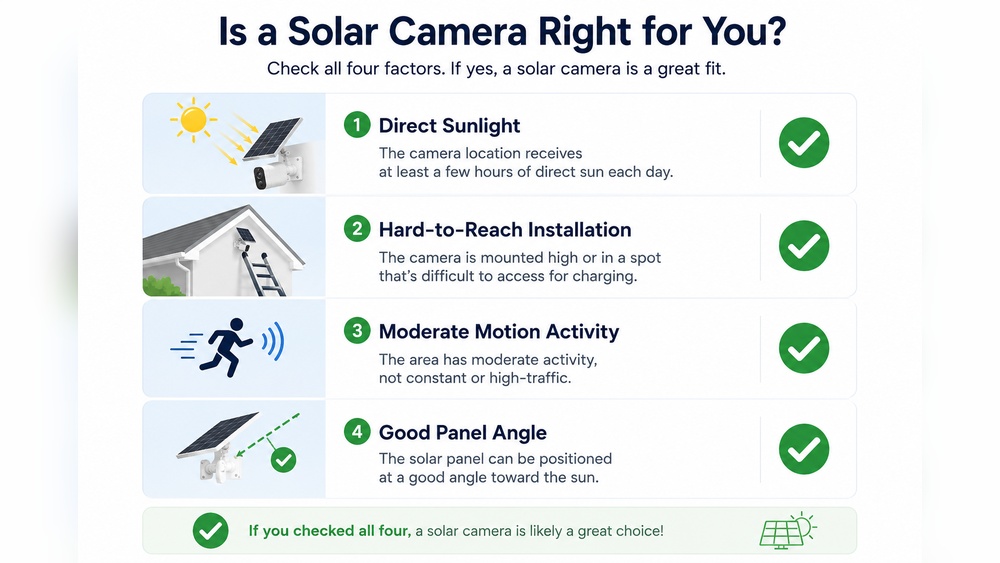
Solar powered cameras are changing the way people monitor their homes, businesses, farms, and even remote locations. They promise easy installation, lower energy costs, and the ability to work far from electrical outlets. But one question comes up often: Do solar powered cameras need direct sunlight to function properly? Understanding how these cameras operate, and how sunlight affects them, can help you decide if they are the right solution for your needs.
This article looks closely at solar powered cameras, how they use sunlight, what happens on cloudy days, and what you can do to get the best performance. Whether you’re thinking about buying your first solar security camera or already have one installed, you’ll find practical advice, real data, and some surprising facts that most beginners miss.
How Solar Powered Cameras Work
Solar powered cameras combine two main technologies: solar panels and surveillance cameras. The basic idea is simple. A solar panel collects sunlight and converts it into electricity. This electricity charges a battery, which powers the camera. The camera then records video, detects motion, or streams footage, just like a regular camera.
Key Components
Most solar powered cameras include:
- Solar panel: Captures sunlight and turns it into electrical energy
- Rechargeable battery: Stores the energy for use when sunlight isn’t available
- Camera unit: Contains the lens, sensors, and electronics
- Charge controller: Manages power flow to prevent overcharging
The system is designed so the battery keeps the camera running at night or during cloudy weather. However, the effectiveness of this setup depends heavily on how much sunlight the panel receives.
Energy Flow Explained
- Sunlight hits the solar panel.
- Solar cells convert sunlight into DC electricity.
- The charge controller directs energy to the battery.
- The camera draws power from the battery as needed.
The battery acts as a buffer. On bright days, excess energy charges the battery. At night or during poor weather, the battery supplies power.
Does Direct Sunlight Matter?
The short answer: Yes, direct sunlight is very important, but it’s not the only factor. Let’s break down why.
How Solar Panels Generate Power
Solar panels work best when sunlight strikes them directly. The power they generate depends on:
- Angle of sunlight: Direct rays are strongest.
- Length of exposure: More hours means more energy.
- Panel efficiency: Some panels convert more sunlight into electricity than others.
On a clear day, a solar panel in direct sunlight can produce its maximum rated output. If the panel is shaded, or if sunlight arrives at a steep angle (such as early morning or late afternoon), the output drops—sometimes dramatically.
Indirect Sunlight And Cloudy Days
Solar panels can still generate power from indirect sunlight and even on cloudy days. However, the amount of energy produced drops by 50% to 80% or more. This can be a problem if your camera uses a lot of power, or if the battery is already low.
Example:
On a sunny day, a 5-watt panel might produce close to 5 watts per hour. On a cloudy day, it might only produce 1 watt per hour, or even less.
The Role Of Battery Storage
The battery helps solar powered cameras survive periods without direct sunlight. If the battery is large enough, and if it was fully charged during sunny weather, the camera can keep working for several days with little or no new sunlight.
But if the battery is small, or if there are many days of bad weather, the camera may stop working until the sun returns.
Factors That Affect Solar Powered Camera Performance
Not all solar cameras are created equal. Several factors influence how well they work without direct sunlight.
Solar Panel Size And Efficiency
Larger panels can collect more sunlight. High-efficiency panels also help, especially in areas with less sun.
| Panel Size | Typical Power Output (Sunny) | Typical Output (Cloudy) |
|---|---|---|
| Small (2–3W) | 2–3W/hour | 0.4–1W/hour |
| Medium (5–8W) | 5–8W/hour | 1–2W/hour |
| Large (10–20W) | 10–20W/hour | 2–4W/hour |
Battery Capacity
A larger battery stores more energy. This means the camera can keep running longer without new sunlight. Some high-end models can last up to a week on a full charge, even in poor weather.
Camera Power Needs
Not all cameras use the same amount of power. For example:
- HD video uses more energy than low-resolution video.
- Motion detection or constant recording drains the battery faster.
- Night vision (using infrared LEDs) increases energy use at night.
Location And Installation
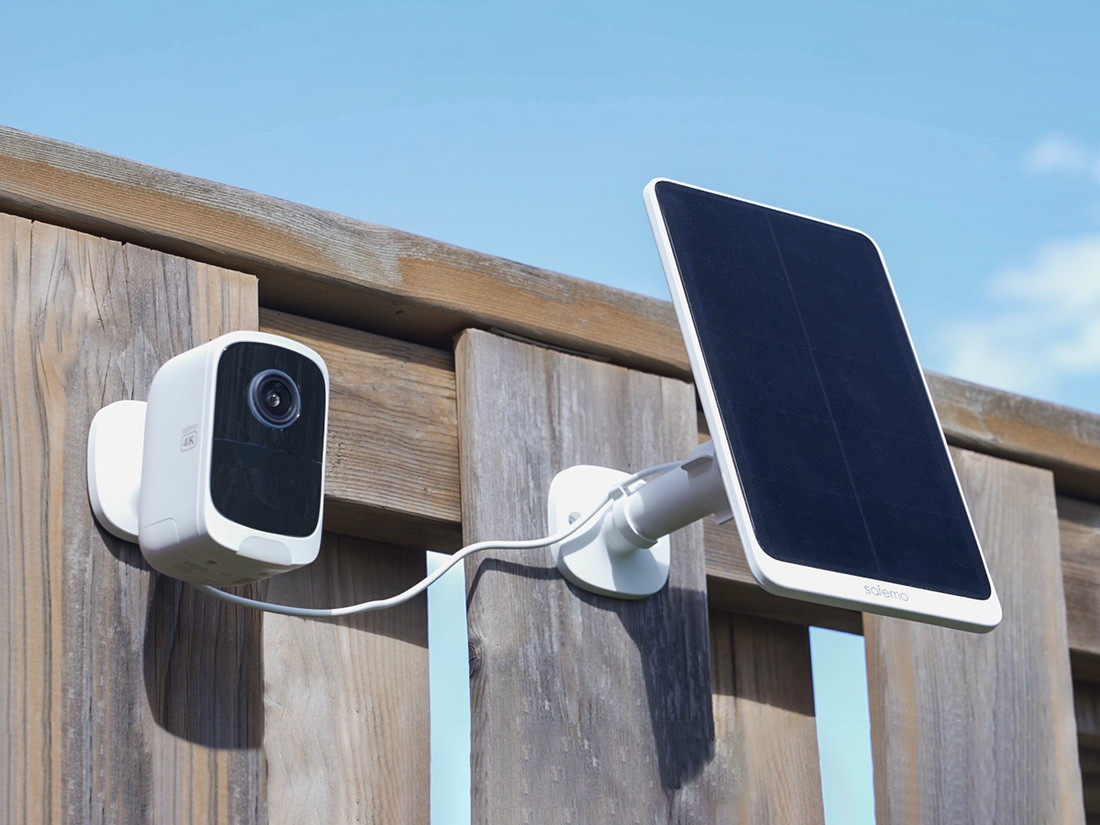
Where you place the camera and panel matters. Panels facing south (in the Northern Hemisphere) and tilted at the right angle get the most sunlight. Obstructions like trees, buildings, or dirt reduce performance.
Climate And Weather Patterns
If you live in an area with many cloudy or rainy days, you’ll need a bigger panel and battery, or you may have to accept less reliable camera operation during some times of the year.
Real-world Example
A user in Arizona (lots of sun) reports their solar camera runs for months without issue. A user in Seattle (many cloudy days) needs a larger panel and sometimes has to recharge the battery manually in winter.
How Long Can Solar Cameras Run Without Sunlight?
This is a common question, but the answer depends on several factors.
Battery Size Vs. Camera Consumption
Let’s look at a basic calculation. Suppose your camera uses 0. 5 watts per hour on average. The battery has a capacity of 10,000mAh at 3. 7V (about 37 watt-hours).
- Running time = Battery capacity / Camera power draw
- 37Wh / 0.5W = 74 hours (about 3 days)
If you have several cloudy days, the camera may run out of power. If the camera is only triggered by motion a few times per day, it will last longer.
Table: Expected Run Time Without Sunlight
| Battery Capacity | Camera Type | Average Daily Use | Run Time (No Sun) |
|---|---|---|---|
| 5,000mAh | Basic, 720p | 0.4W/hour | ~2 days |
| 10,000mAh | HD, Night Vision | 0.7W/hour | ~2 days |
| 20,000mAh | HD, Motion-Only | 0.3W/hour | ~7 days |
Two Common Beginner Mistakes
- Underestimating battery size: Many people buy the smallest battery to save money, not realizing it will run out quickly during bad weather.
- Ignoring camera settings: Leaving the camera in constant recording mode can drain the battery much faster than using motion detection.
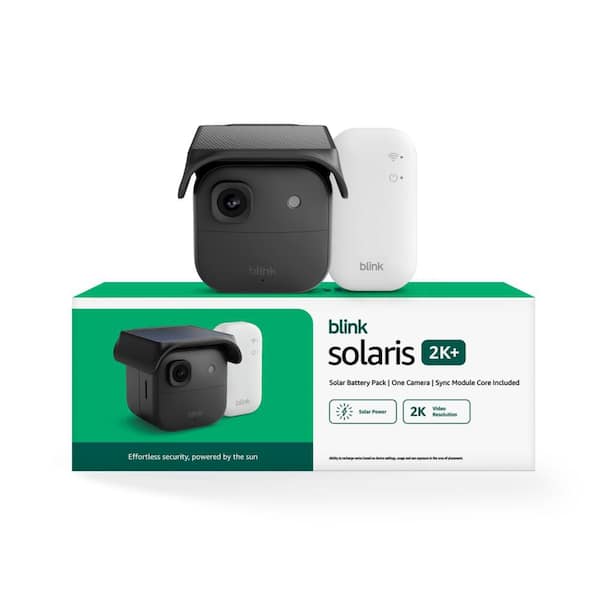
Credit: www.homedepot.com
Can Solar Powered Cameras Work Indoors Or In Shaded Areas?
People sometimes want to use solar cameras inside a building, in a garage, or under a porch. This can be a challenge.
Indoor Use
Most indoor spaces do not have enough light for the panel to work well. Even strong room lighting is much weaker than sunlight. You may get a small charge near a bright window, but it’s usually not enough for daily use.
Shaded Locations
Panels placed in the shade (behind trees, under eaves, or in narrow alleys) produce much less power. If the shade lasts for most of the day, your camera may not charge enough to keep working.
Workarounds
- Use extension cables: Place the solar panel outside, in direct sun, and run a wire to the camera inside.
- Supplement with manual charging: Some cameras let you charge the battery with a USB cable during long periods without sun.
- Hybrid systems: Some models allow plugging into AC power as backup.
Optimizing Solar Powered Camera Performance
You can get the most from your solar camera by following a few proven tips.
1. Choose The Right Location
- Aim the panel toward the sun (south in the US).
- Tilt the panel at an angle close to your latitude.
- Avoid obstructions that cast shadows during the day.
2. Clean The Panel Regularly
Dust, bird droppings, or leaves can reduce efficiency by 10–30%. Wipe the panel clean every few weeks.
3. Adjust Camera Settings
- Use motion detection instead of continuous recording.
- Lower video resolution if possible.
- Set shorter video clip lengths.
4. Check Panel And Battery Specs
- Look for panels rated at least 5W for most outdoor cameras.
- Choose batteries with at least 10,000mAh for better backup.
5. Monitor System Health
Many modern solar cameras have apps that show battery level, solar charging status, and alerts. Use these tools to spot problems early.
6. Plan For Your Climate
If you live in a region with long, cloudy winters, consider a larger panel or a hybrid system.
Two Non-obvious Insights
- Panel orientation matters more than panel size for many users. Even a big panel won’t help much if it’s facing the wrong way or shaded for most of the day.
- Temperature affects battery life. Extreme cold can reduce battery efficiency by up to 50%, meaning your camera might run out of power even with a full charge.
Credit: safemo.com
Comparing Solar Powered Cameras To Other Power Options
Solar is just one way to power an outdoor camera. Here’s how it stacks up against other options.
| Power Source | Pros | Cons | Best For |
|---|---|---|---|
| Solar | No wires, works off-grid | Needs sunlight, weather-dependent | Remote, outdoor areas |
| Battery-only | Portable, easy install | Manual recharging needed | Temporary or mobile use |
| AC Power | Reliable, unlimited power | Requires wiring, not always possible | Permanent installations |
Solar shines in places where running wires is hard or impossible, but it does require some planning and maintenance.
Common Problems And How To Fix Them
Even the best solar powered cameras can run into problems, especially if you’re not aware of how sunlight and battery storage work together.
Problem: Camera Stops Working After A Few Cloudy Days
- Likely cause: Battery drained, not enough sunlight to recharge.
- Solution: Upgrade to a larger panel or battery; optimize panel placement; reduce camera power settings.
Problem: Battery Never Fully Charges
- Likely cause: Panel is shaded or dirty; not enough sun exposure.
- Solution: Move the panel to a sunnier spot; clean the surface; check for loose cables.
Problem: Camera Works In Summer, Not In Winter
- Likely cause: Less sunlight in winter; panel angle not optimized.
- Solution: Adjust the panel to a steeper angle for winter sun; consider a larger panel or backup charging.
Problem: Video Feeds Cut Out At Night
- Likely cause: Night vision uses more power; battery drains faster.
- Solution: Use motion-triggered recording at night; check if your battery can handle the increased load.
Unique Beginner Insight
Many people forget that the length of the day changes throughout the year. In winter, even with direct sun, there may only be a few hours of good charging time each day. Planning for the shortest days ensures your camera works year-round.
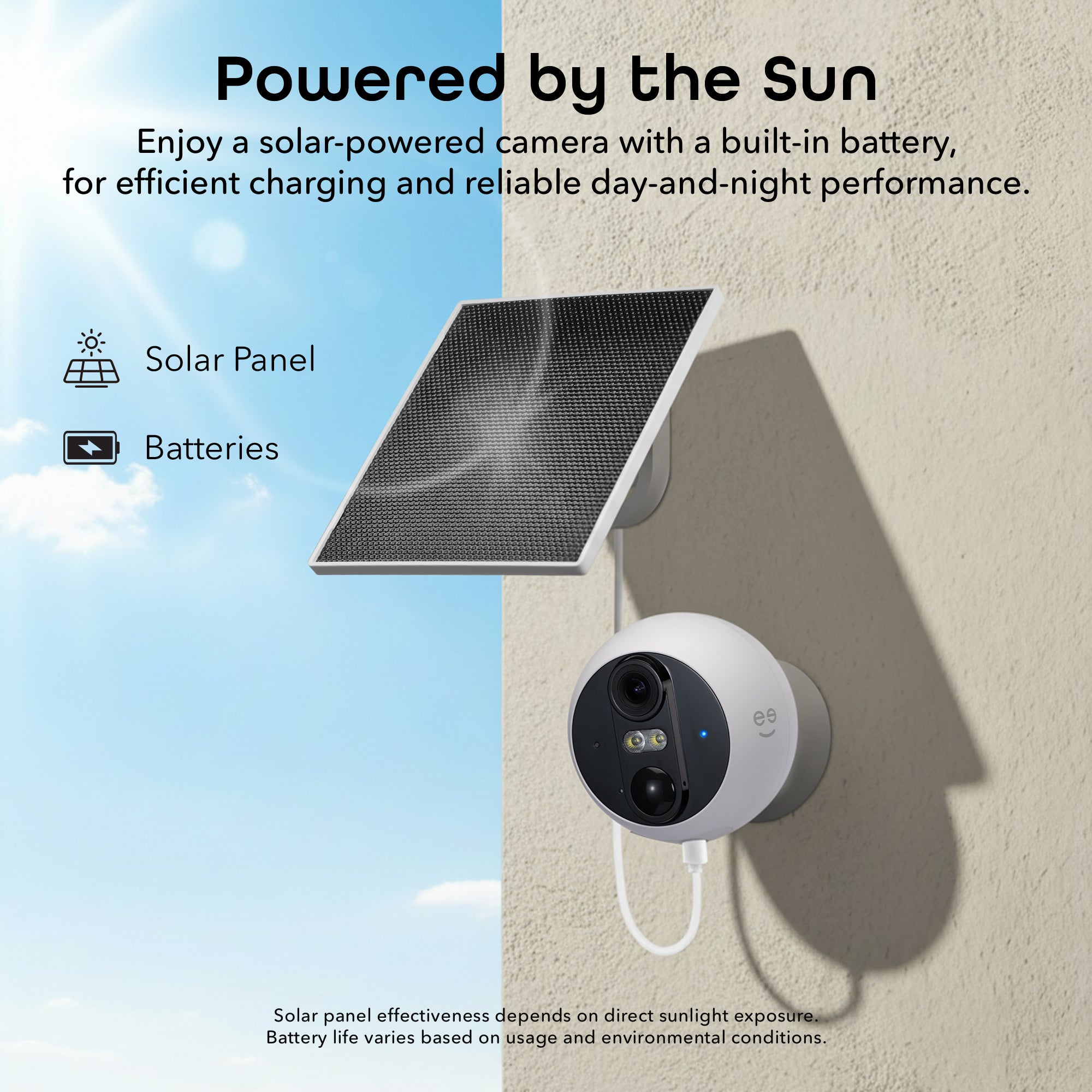
Credit: mygeeni.com
Choosing The Right Solar Powered Camera For Your Needs
With so many models on the market, picking the best solar camera for your situation can feel overwhelming.
What To Look For
- Panel wattage: At least 5W for average use; more for areas with less sun.
- Battery capacity: 10,000mAh or higher is safer for most users.
- Camera features: HD video, night vision, app integration, weather resistance.
- Ease of installation: Does the panel come with a long enough cable to place it in direct sun?
- User reviews: Look for comments about real-world battery and solar performance, not just features.
Popular Brands And Models
Some well-known brands include Arlo, Reolink, Ring, and Soliom. Each offers several solar powered camera models with different features.
Mistakes To Avoid
- Choosing a camera based only on price: Cheaper models often have small batteries or inefficient panels, leading to poor performance.
- Ignoring your local weather: A camera that works great in sunny California may struggle in cloudy England.
Real-world Case Studies
Case 1: Rural Farm Security
A farmer installs a solar camera to monitor livestock far from any power outlets. By positioning the panel in an open field facing south and using motion detection, the camera works year-round, even during cloudy weeks. Cleaning the panel monthly keeps performance strong.
Case 2: City Home With Trees
A homeowner places a solar camera in a backyard shaded by large trees. The battery never fully charges, and the camera often shuts down after a few days. Moving the panel to the roof, where it gets full sun, solves the problem.
Case 3: Construction Site Monitoring
A builder uses several solar cameras for a temporary job site. Large panels and high-capacity batteries ensure the cameras run for weeks without needing manual charging, even when it rains for several days.
Solar Powered Cameras And Sustainable Security
Using solar cameras isn’t just about convenience—it’s also about reducing your environmental footprint. Solar power is renewable and clean, unlike grid electricity, which often comes from fossil fuels. By choosing solar, you help cut down on carbon emissions.
However, it’s important to understand the limitations. Solar works best when you optimize panel placement, battery size, and camera settings. With a little planning, you can enjoy reliable, sustainable security without worrying about wires or high electricity bills.
For more on how solar energy works, check out this Wikipedia article on solar power.
Frequently Asked Questions
Can Solar Powered Cameras Work At Night?
Yes. The camera draws power from the battery, which was charged during the day. As long as the battery has enough charge, the camera will work at night. Night vision and frequent recording can use more power, so a larger battery may be needed.
Do Solar Powered Cameras Need To Be In Direct Sunlight All Day?
No, but the more direct sunlight, the better. Panels will charge even in partial or indirect light, but more slowly. For best results, aim for at least 4–6 hours of direct sun per day.
What Happens To Solar Cameras During Winter Or Rainy Seasons?
Solar cameras may get less sunlight, so the battery may not fully charge. To compensate, use a larger panel, a bigger battery, or adjust camera settings to use less power. In extreme cases, you may need to recharge the battery manually.
Can I Use A Solar Powered Camera Indoors?
Most indoor environments do not provide enough light for the panel to work well. If possible, place the solar panel outside and run a cable to your indoor camera. Otherwise, the battery may need to be charged with a USB cable.
How Do I Know If My Solar Panel Is Working Properly?
Most systems have an indicator light or app showing charging status. If the battery never fully charges, check for shade, dirt, or a loose connection. Cleaning the panel and repositioning it often solves charging problems.
Solar powered cameras offer a flexible and eco-friendly way to keep watch over your property. While direct sunlight is best, careful planning and smart choices can help you get reliable performance—even when the weather isn’t perfect. By understanding how solar energy, batteries, and camera technology work together, you can enjoy the benefits of wireless security wherever you need it.