

When you pick up a TV remote control and press a button, it feels simple—change the channel, turn up the volume, or power on your television. But have you ever wondered how your remote sends instructions to your TV from across the room? The secret lies in the kind of waves that travel silently through the air, carrying your command. Understanding these waves is not just a matter of curiosity; it unlocks a fascinating story of science, history, and technology. Let’s take a deep dive into the world of TV remote controls and discover which waves they use, how they work, why they were chosen, and what the future may hold.
The Science Of Remote Control Signals
What Are Waves?
Waves are disturbances that transfer energy from one place to another. In everyday life, we encounter many types of waves: sound waves, light waves, radio waves, and more. Each type travels differently, carries unique information, and interacts with objects in specific ways. For remote controls, two main types of waves have been used historically: infrared (IR) waves and radio frequency (RF) waves.
Why Use Waves For Remote Controls?
Waves are ideal for remote controls because they can travel through air without wires, reach a receiver from a distance, and transfer information quickly. Unlike wired connections, waves do not clutter your living room, and they allow you to control devices from across the space—even with obstacles in the way, depending on the type of wave.
Infrared Waves: The Standard For Tv Remotes
What Are Infrared Waves?
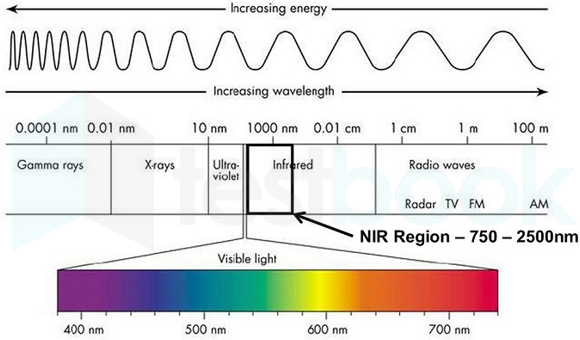
Infrared waves are a form of electromagnetic radiation, just like visible light, but with longer wavelengths. They are invisible to the human eye but can be detected as heat or with special sensors. Infrared waves sit just beyond the red end of the visible light spectrum, with wavelengths typically between 700 nanometers (nm) and 1 millimeter (mm).
How Do Tv Remotes Use Infrared Waves?
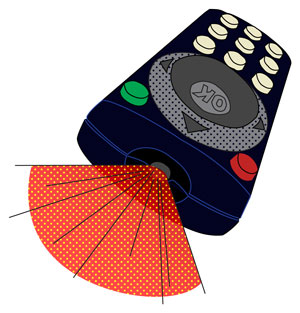
Most TV remote controls use a small infrared LED (light-emitting diode) to send out coded pulses of infrared light. When you press a button, the remote rapidly turns the LED on and off in a special pattern. This pattern carries information about which button was pressed. The TV, equipped with a photodiode sensor, picks up the infrared signal and decodes the pattern to perform the correct action.
Here’s a simplified flow:
- Button press: You press a button.
- Signal encoding: The remote’s chip converts your action into a digital code.
- Infrared transmission: The LED blinks in a specific sequence (modulation).
- Reception: The TV’s sensor receives the pattern.
- Decoding: The TV interprets the code and executes the command.
Why Infrared Waves Became The Standard
Infrared waves are popular for several reasons:
- Low cost: Infrared components are cheap to produce.
- Simple design: Both remotes and sensors are easy to manufacture.
- Line-of-sight control: Infrared does not pass through walls, reducing interference with other devices.
- Safety: Infrared is non-ionizing and safe for humans.
Frequency And Modulation In Infrared Remotes
Most infrared remotes use a frequency around 38 kHz. This frequency is not the infrared light’s wavelength, but the rate at which the LED blinks on and off. Modulating the signal at 38 kHz helps the TV’s sensor distinguish the remote’s signal from background infrared sources like sunlight or lamps.
Example Of Infrared Codes
Different brands use different code formats. For example, the NEC protocol is commonly used in Asian markets, encoding signals in pulses that last several microseconds. The Sony SIRC protocol uses a different pulse length.
Limitations Of Infrared Remotes
While infrared is reliable, it has some limitations:
- Must have a clear path: Walls or objects can block the signal.
- Short range: Typically works up to 10 meters (33 feet).
- Signal interference: Strong sunlight or fluorescent lights can cause errors.
Radio Frequency: The Alternative To Infrared
What Are Radio Frequency Waves?
Radio frequency (RF) waves are electromagnetic waves with much longer wavelengths than infrared, ranging from about 3 kHz to 300 GHz. They are used for radio, television broadcasts, Wi-Fi, Bluetooth, and more.
How Do Rf Remotes Work?
RF remotes use a small antenna to send coded signals as radio waves. The TV or receiver has its own antenna to detect these signals. Unlike infrared, RF waves can pass through walls, furniture, and other obstacles.
RF remote workflow:
- Button press: You press a button.
- Signal encoding: The remote creates a unique digital code.
- Radio transmission: The antenna sends the code as a radio wave.
- Reception: The TV’s RF receiver picks up the signal.
- Decoding: The TV decodes the command and responds.
Common Rf Frequencies In Remotes
RF remotes for TVs and similar devices typically use frequencies in the 315 MHz, 433 MHz, or 2.4 GHz bands. The choice depends on regulations and the specific technology (e.g., Bluetooth or proprietary RF).
Advantages Of Rf Remotes
- No line-of-sight needed: Can control devices through walls or cabinets.
- Longer range: Often works up to 30 meters (100 feet) or more.
- Less affected by light: Not disturbed by sunlight or room lighting.
Drawbacks Of Rf Remotes
- Higher cost: RF components and chips are more expensive.
- Potential for interference: RF can be affected by Wi-Fi or other wireless devices.
- Security concerns: Unencrypted RF can be intercepted or jammed.
Infrared Vs Radio Frequency: Side-by-side Comparison
To clearly see the differences, compare the main properties of infrared and RF remote technologies:
| Feature | Infrared (IR) | Radio Frequency (RF) |
|---|---|---|
| Common Frequency | 38 kHz (modulation) | 315 MHz, 433 MHz, 2.4 GHz |
| Line-of-Sight Needed | Yes | No |
| Signal Range | Up to 10 m (33 ft) | Up to 30 m (100 ft) or more |
| Cost | Low | Moderate to high |
| Susceptibility to Light | Yes | No |
| Potential for Interference | Low | Moderate |
| Used In | Most TV remotes | Streaming devices, smart TVs, game controllers |
How Does The Infrared Remote Control Protocol Work?
Encoding Information In Pulses
When you press a button, the remote’s microcontroller creates a unique digital code for that button. This code is then sent as a series of infrared pulses—short bursts of light—using on-off keying (OOK) modulation. Each button has a different pattern, allowing the TV to identify the command.
Error Checking
Most protocols include error checking to ensure the correct command is received. Some use repeated transmissions, while others include parity bits or checksums in the signal.
Example: The Nec Protocol
The NEC protocol sends a 32-bit code, including device and command information. It starts with a long lead pulse, then sends data bits as short or long bursts. This allows even older TVs to recognize the command reliably.
The Evolution Of Tv Remote Controls
Early Remotes: Ultrasonic Waves
Before infrared, some TV remotes used ultrasonic waves. These remotes created sound waves above the range of human hearing (typically 30–40 kHz). When a button was pressed, a hammer struck a metal rod, producing a unique tone for each command. The TV’s microphone picked up the tone and acted accordingly.
Ultrasonic remotes were popular in the 1960s and 70s, but they faded out due to several problems:
- Pets could hear the tones and were disturbed.
- Sounds from jingling keys or other sources could trigger the TV.
- Limited functions: Only a few commands were possible.
The Shift To Infrared
Infrared remotes replaced ultrasonic models in the 1980s. They were quieter, more reliable, and could handle complex commands. The cost of infrared LEDs and sensors dropped quickly, making them the global standard.
The Rise Of Rf And Smart Remotes
With the arrival of smart TVs, streaming devices, and home automation, RF remotes have become more common. Bluetooth and Wi-Fi are now used for complex controls, voice commands, and even controlling TVs from smartphones.
Credit: www.cablewholesale.com
Inside A Modern Tv Remote: Anatomy And Operation
A typical TV remote contains several key components:
- Buttons: Physical switches, each mapped to a unique command.
- Microcontroller: A small computer that encodes button presses.
- Infrared LED: Sends the signal (or RF antenna in RF models).
- Power source: Usually AA or AAA batteries.
- Plastic case: Designed for durability and comfort.
When you press a button, the microcontroller sends a coded signal to the LED, which flashes the correct infrared pattern. The TV’s sensor receives the pattern, decodes it, and performs the action.
Practical Examples: How Tv Remote Waves Work In Real Life
Case 1: Changing Channels In Direct Line Of Sight
You aim the remote directly at the TV, press “channel up,” and the TV responds instantly. The infrared signal travels in a straight line and is received without interference.
Case 2: Controlling A Tv Inside A Cabinet
With a traditional infrared remote, the signal cannot pass through the cabinet door. You must open the door or use a special infrared repeater. However, if your system uses RF, you can control the TV without opening the cabinet, as the RF waves pass through most objects.
Case 3: Using A Universal Remote
Universal remotes can be programmed to control many different devices. They store the IR codes for multiple brands and models. Some high-end universal remotes also include RF and Bluetooth, allowing control of both old and new devices.

Credit: x.com
Real-world Data: Market Share Of Remote Control Technologies
Let’s look at the estimated market share for different remote control wave technologies in consumer electronics:
| Technology | Market Share (2023) | Main Application |
|---|---|---|
| Infrared (IR) | ~75% | TVs, air conditioners, audio systems |
| Radio Frequency (RF) | ~20% | Streaming devices, game controllers, smart TVs |
| Bluetooth | ~4% | Smart TVs, consoles, smart home hubs |
| Ultrasonic | <1% | Rare, historic only |
This data shows that infrared still dominates, but RF and Bluetooth are growing as TVs become more advanced.
Why Not Use Other Types Of Waves?
Visible Light
Visible light could be used for remote controls, but it is easily blocked and can be seen by humans, causing distraction. It is also more likely to interfere with room lighting.
Sound Waves
As history shows, ultrasonic sound was once used, but it had too many practical problems. Audible sound is not an option because it would be annoying.
Microwave
Microwave frequencies are used for Wi-Fi, but they require more power, are overkill for simple commands, and could cause interference with other critical devices.
X-rays Or Gamma Rays
These types of waves are dangerous to human health and are completely unnecessary for home electronics.
The Future Of Remote Control Waves
Bluetooth And Wi-fi Remotes
Modern smart TVs and streaming boxes increasingly use Bluetooth and Wi-Fi for remotes. This allows for two-way communication, voice commands, and even updates over the internet. Bluetooth works at 2.4 GHz and offers secure connections, while Wi-Fi remotes can control TVs from anywhere in the home.
Smartphone Remotes
Many manufacturers now offer apps that turn your smartphone into a remote, using your home Wi-Fi to send commands. These can control multiple devices and offer advanced features like touchpads and voice search.
Gesture And Voice Control
Some high-end TVs use gesture sensors or built-in microphones to allow remote-free control. These systems rely on infrared cameras or microphones and advanced software, moving away from traditional remotes entirely.
Interoperability And Universal Standards
The Consumer Electronics Control (CEC) protocol over HDMI and new universal smart home standards may eventually allow all devices to be controlled by a single remote, app, or even voice assistant, regardless of brand.
Common Problems And Solutions With Remote Control Waves
Problem 1: Remote Not Working
- Check batteries first—most remotes fail due to weak batteries.
- Confirm line-of-sight for infrared remotes. Remove obstacles.
- Test in dim lighting—bright sunlight can flood the sensor.
Problem 2: Interference
- Fluorescent lights and direct sunlight can interfere with infrared signals. Try moving the TV or changing the lighting.
- RF remotes can be disturbed by Wi-Fi routers or cordless phones. Change the channel or location if possible.
Problem 3: Range Limitations
- For longer range, consider an RF remote or a universal remote with RF capability.
- Infrared repeaters can extend IR signal reach around corners or through cabinets.
Problem 4: Compatibility
- Not all remotes work with all devices. Universal remotes can be programmed for most TVs, but check compatibility first.
- Some smart remotes can update their code library via Wi-Fi or USB.
Problem 5: Security
- Most infrared remotes are not encrypted, but the risk is low.
- RF remotes using Bluetooth or Wi-Fi should support encryption to protect against hacking.
Credit: testbook.com
Surprising Insights Most People Miss
- Infrared remotes do not work well in sunlight. Many users are puzzled when their remotes become unreliable in bright rooms or outdoors. Sunlight contains lots of infrared energy, which can overwhelm the TV’s sensor and prevent it from recognizing the remote’s signal.
- RF remotes can be paired to prevent cross-talk. If you have multiple RF devices, pairing ensures each remote only controls its own receiver. This avoids accidental activation of the wrong device—something not possible with simple infrared remotes.
- Infrared LEDs are not all the same. Some remotes use higher-power LEDs for longer range, while others are limited to save battery. The material and design of the remote’s window also affect how much infrared passes through.
- Infrared remotes can be tested with a smartphone camera. Since most phone cameras can see infrared light, you can point a remote at your camera and press a button—the LED should flash on the screen, even though it’s invisible to your eyes.
How To Choose The Right Remote For Your Needs
If you’re buying a new remote or TV, consider the following factors:
- Device compatibility: Make sure the remote supports your brand and model.
- Control range: If you need to control devices from another room, choose RF or Bluetooth.
- Features: Voice control, backlighting, and programmable buttons add convenience.
- Battery life: Simpler remotes last years; advanced RF models may need frequent charging.
- Security: For smart home systems, check for encryption.
Summary Table: Key Differences Between Remote Control Waves
Here’s a final overview of the main technologies:
| Wave Type | Main Use | Range | Line-of-Sight | Cost | Other Notes |
|---|---|---|---|---|---|
| Infrared | TVs, basic devices | Up to 10 m | Yes | Low | Most common, simple, reliable |
| RF | Smart TVs, streaming devices | Up to 30 m | No | Medium | Works through walls, more features |
| Bluetooth | Advanced remotes, smart home | ~10 m | No | Medium | Voice, pairing, secure |
| Ultrasonic | Historic only | ~5 m | Yes | Obsolete | Prone to false triggers |
Frequently Asked Questions
What Type Of Waves Do Most Tv Remote Controls Use?
Most TV remote controls use infrared waves. These are invisible to the human eye and travel in a straight line from the remote to the TV. Infrared is reliable, cheap, and safe, making it the standard for decades.
Can Tv Remotes Work Through Walls?
Infrared remotes cannot work through walls, as infrared light does not penetrate solid objects. However, RF remotes (including Bluetooth) can send signals through walls and furniture, allowing control from other rooms or hidden areas.
Why Does Sunlight Sometimes Affect My Tv Remote?
Sunlight contains a large amount of infrared energy, which can interfere with the sensor on your TV. If too much background infrared is present, the TV may not recognize the remote’s signal, causing it to stop working properly in bright conditions.
How Can I Tell If My Remote Uses Infrared Or Rf?
Infrared remotes usually have a small LED at the front and must be pointed directly at the device. RF remotes may not have a visible LED, can work through obstacles, and often mention “RF,” “Bluetooth,” or “Wi-Fi” on the packaging. You can also check the product manual for details.
Are There Any Security Risks With Remote Control Waves?
Infrared remotes have low security risks, as they need close range and direct line of sight. RF remotes, especially those using Bluetooth or Wi-Fi, should use encryption to protect against hacking or interception, but risks are still low for home use.
As technology continues to evolve, the way we interact with our TVs and devices will change, but the science of waves—whether infrared, RF, or something new—will always be at the heart of remote control innovation. For a deeper technical dive into electromagnetic waves, see Wikipedia: Electromagnetic radiation. Whether you’re using the classic infrared remote or a new smart controller, understanding the waves behind the scenes helps you get the most from your home entertainment.