
Apartment living offers many benefits—community, convenience, and shared amenities. But with so many people living close together, safety becomes a top concern. Many residents wonder: Are apartments required to have security cameras? The answer is not as simple as yes or no. Laws vary, property owners have different responsibilities, and technology is rapidly changing. Understanding the rules and realities behind apartment security cameras can help residents, landlords, and property managers make better decisions about safety.
Understanding Apartment Security Camera Laws In The Us
The legal side of apartment security cameras is complex. There is no single federal law in the United States that requires apartments to have security cameras. Instead, the rules depend on state laws, local ordinances, and even city regulations. Some areas have strict guidelines, while others leave the decision up to the property owner.
Federal Laws: Privacy Takes Center Stage
At the federal level, privacy is the main concern. The Fourth Amendment of the US Constitution protects people from unreasonable searches and seizures, but it mainly limits government actions, not private landlords. However, other federal laws like the Video Voyeurism Prevention Act make it illegal to install cameras in places where people expect privacy, such as bathrooms and bedrooms.
State Laws: A Patchwork Of Rules
States often have their own rules about security cameras in apartments. For example:
- California has strict privacy laws. Landlords must not record audio without consent and cannot put cameras in private spaces.
- Texas allows cameras in public areas but restricts audio recording and private areas.
- New York requires landlords to keep certain areas safe but does not force them to install cameras.
Some states require notification to tenants if cameras are installed, while others do not. This patchwork makes it important for both landlords and tenants to check their local laws.
Local Ordinances: City And County Requirements
Some cities have added their own rules. For example, in Chicago, certain large apartment buildings must have cameras in common areas as part of the city’s crime prevention efforts. In other cities, there may be no such requirement.
The Bottom Line
There is no universal law requiring all apartments to have security cameras. Requirements depend on where the apartment is located and what the local rules say.
Landlord Responsibilities: Safety Vs. Surveillance
Landlords have a duty to keep their buildings reasonably safe. But does this mean they must install security cameras?
General Duty To Protect
Landlords are generally required to take reasonable steps to protect tenants from foreseeable harm. This could include:
- Keeping locks in good condition
- Providing proper lighting in hallways and parking lots
- Responding quickly to safety concerns
If a building is in a high-crime area or has a history of break-ins, a court might decide that installing cameras is a reasonable step. But in most places, cameras are not legally required unless local rules say so.
When Cameras Become Necessary
Some situations might push the need for cameras. For example:
- Past criminal activity: If there have been repeated break-ins, a landlord may be expected to add extra security, which could include cameras.
- Tenant requests: If many tenants ask for cameras and can show a safety need, this may increase the landlord’s responsibility.
- Insurance requirements: Some insurance policies for apartment buildings offer discounts for extra security, including cameras.
The Limits Of Surveillance
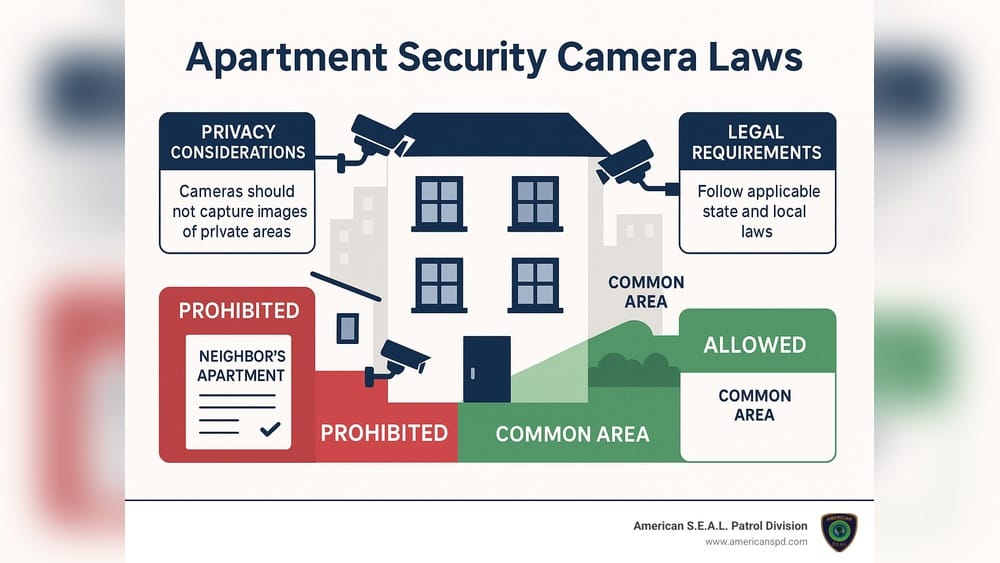
Landlords cannot put cameras everywhere. Laws ban cameras in areas where people expect privacy, such as inside apartments, bathrooms, or locker rooms. Cameras are usually allowed in:
- Building entrances and exits
- Parking lots
- Hallways
- Laundry rooms
But recording audio is much more restricted, often requiring consent in many states.
Privacy Rights: Balancing Safety And Personal Freedom
Adding cameras can improve safety, but it also raises privacy concerns. Both tenants and landlords have rights and responsibilities.
Where Cameras Are Allowed
Generally, cameras are only allowed in public or common areas. These include:
- Lobbies
- Elevators
- Parking garages
- Mail rooms
Areas where people expect privacy—inside apartments, restrooms, or changing rooms—are off-limits for surveillance. Recording in these areas can result in lawsuits or even criminal charges.
Notification And Consent
In many states, landlords must notify tenants before installing cameras. Some require written consent or a lease addendum. Notification helps avoid misunderstandings and builds trust.
Audio Recording: Stricter Rules
While video-only cameras are common, audio recording is much more limited. Many states have “one-party consent” laws, which means at least one person in the conversation must agree to recording. Others require “all-party consent. ” Landlords who record audio without following these rules can face serious penalties.
Resident Cameras: What If Tenants Install Their Own?
Some tenants want to add their own security—like cameras on their doors. This is also regulated. Most leases require landlord approval before making changes to doors, walls, or common areas. Tenants must be careful not to record neighbors’ private areas.
Benefits Of Security Cameras In Apartments
Even if not required, many apartment buildings install cameras for good reasons.
Crime Prevention
Visible cameras can discourage theft, vandalism, and break-ins. Many criminals look for easy targets, and the presence of cameras can make them think twice.
A study by the Urban Institute found that crime dropped by up to 50% in some neighborhoods after cameras were installed in public housing areas. This effect is strongest when cameras are well-placed and clearly visible.
Evidence Collection
When a crime does happen, video footage provides valuable evidence. Police can use it to identify suspects, and insurance companies may need it to process claims.
Resident Peace Of Mind
Knowing that common areas are monitored can make residents feel safer. This is especially important in large buildings or areas with higher crime rates.
Lower Insurance Premiums
Some insurance companies offer discounts to buildings with security cameras, since they lower the risk of claims.
Property Value And Reputation
Buildings with good security often attract more tenants and can charge higher rents. A reputation for safety is a strong selling point.
Credit: www.sepr.es
Drawbacks And Risks Of Apartment Security Cameras
While cameras offer many benefits, they also bring challenges.
Privacy Concerns
Some residents worry that cameras could be used to watch them too closely. If cameras are placed badly, they may record private moments—leading to complaints or lawsuits.
Cost Of Installation And Maintenance
Quality camera systems can be expensive. Landlords must pay for:
- Cameras and equipment
- Professional installation
- Regular maintenance
- Video storage (often cloud-based)
Over time, these costs can add up, especially for large buildings.
False Sense Of Security
Cameras cannot stop all crime. Sometimes, residents may feel too safe and become careless about locking doors or watching for suspicious activity.
Data Security And Hacking
Modern cameras often use internet connections. If not properly secured, these systems can be hacked, putting video footage at risk.
Legal Liability
If a landlord installs cameras but fails to keep them working, or does not review footage in time, this could create new legal risks. Residents might argue that the landlord should have done more.
Comparing Security Camera Laws By State
To see how rules differ, here is a comparison of security camera requirements in major states:
| State | Security Camera Requirement | Consent Needed? | Private Areas Covered? |
|---|---|---|---|
| California | No, but strict privacy laws | Yes, for audio | Never |
| Texas | No statewide requirement | Audio consent required | Never |
| New York | No, but safety required | Video: no, Audio: yes | Never |
| Illinois | No, but Chicago requires in some cases | Yes, for audio | Never |
| Florida | No | Audio: all-party consent | Never |
As shown, none of these major states force landlords to install cameras everywhere, but all protect privacy in private areas.
Types Of Security Cameras Used In Apartments
Not all cameras are the same. Different types are used for different needs.
Fixed Cameras
These are the most common. They point at one spot—like a door or hallway—and record what happens there.
Ptz Cameras (pan-tilt-zoom)
These cameras can move and zoom in to follow activity. They are often used in larger buildings or parking lots.
Wireless Cameras
Modern systems often use wireless cameras. They are easier to install and connect to the internet for remote viewing.
Doorbell Cameras
Many residents and landlords use doorbell cameras at individual units. These record anyone who approaches the door.
Hidden Cameras
While sometimes used for special reasons (like catching theft in laundry rooms), hidden cameras are risky. If residents do not know about them, this can lead to legal trouble.
Here is a simple comparison of camera types and where they are used:
| Camera Type | Best Location | Main Use | Privacy Risk |
|---|---|---|---|
| Fixed | Entrances, hallways | General monitoring | Low |
| PTZ | Parking lots, lobbies | Wide area coverage | Medium |
| Wireless | Anywhere | Flexible installation | Medium (if hacked) |
| Doorbell | Unit doors | Visitor recording | Low |
| Hidden | Common areas (rare) | Theft detection | High |
How Security Camera Footage Is Managed
Installing cameras is only part of the story. Managing and storing video is also important.
Storage Options
- Local storage: Video is saved on hard drives at the building. This is secure, but footage can be lost if equipment fails or is stolen.
- Cloud storage: Video is sent to secure servers online. This makes it easier to view footage from anywhere and keeps it safe from local disasters.
Retention Periods
Landlords must decide how long to keep footage. Common retention times are:
- 7 days (minimum for most insurance)
- 30 days (standard for many buildings)
- 90 days (for high-security areas)
Longer retention uses more storage and can be more expensive.
Who Can Access Footage?
Usually, only property managers or security staff can view footage. Tenants may request access if they are part of an incident, but this depends on building policy and local law.
Data Security
Good systems use strong passwords and encryption to protect video from hackers. Landlords should update software regularly and limit who can log in.

Credit: btmcomp.com
Common Mistakes Landlords Make With Security Cameras
Even with the best intentions, landlords sometimes make mistakes with security cameras.
- Placing cameras in private areas: This is the most serious mistake and can lead to lawsuits.
- Failing to notify tenants: Even if not required by law, failing to communicate can erode trust.
- Ignoring maintenance: Broken cameras do not help anyone and can create new liability.
- Not securing footage: Weak passwords or outdated software can lead to hacking.
- Failing to follow up on incidents: If cameras record a crime but no one checks the footage, the system is less useful.
- Over-relying on cameras: Cameras are just one part of a good security plan.
What Tenants Should Do If They Have Concerns
Tenants who are worried about security or privacy have options.
Talking To The Landlord
Start by having a conversation. Explain your concerns and ask about current security measures. If you feel unsafe, ask if cameras can be added to certain areas.
Reviewing The Lease
Check your lease for any mention of security cameras, privacy, or notification policies. This can give clues about what is allowed.
Knowing Your Rights
If you believe a landlord has put cameras in a private area, contact your local housing authority or a lawyer. There are strong protections for privacy in most states.
Installing Personal Security Devices
With approval, you can add extra security—like a doorbell camera or extra locks. Always get permission before making changes to property.
Credit: www.sepr.es
Key Factors To Consider Before Installing Security Cameras
For landlords and property managers thinking about adding cameras, it is important to consider several factors:
- Legal compliance: Check state and local laws before installing cameras.
- Purpose: Decide if cameras are for crime prevention, evidence, or both.
- Placement: Only install in common areas, never in private spaces.
- Notification: Let tenants know about cameras, even if not required.
- Data security: Use strong passwords and secure storage.
- Maintenance: Keep cameras and software updated.
- Cost: Budget for installation and ongoing expenses.
- Tenant feedback: Ask for input from residents; this builds trust.
How Technology Is Changing Apartment Security
The world of apartment security is evolving quickly. New technologies are making cameras smarter and more useful.
Ai And Video Analytics
Modern cameras can now detect motion, recognize faces, and even alert managers to unusual activity. These features help catch incidents faster and reduce false alarms.
Remote Monitoring
Many systems allow landlords to check footage from their phones or computers. This makes it easier to respond to issues quickly.
Integration With Other Security Systems
Cameras can now be linked to alarms, access control systems, and lighting. For example, if a camera detects movement at night, it can turn on lights or alert security staff.
Privacy Features
Some new cameras have privacy modes—allowing residents to cover lenses or turn off recording during certain hours. This helps balance safety with personal privacy.
Cybersecurity Improvements
As hacking becomes a bigger risk, manufacturers are adding better encryption and automatic software updates.
Real-world Examples And Case Studies
Looking at real examples helps show how camera rules work in practice.
Chicago’s Camera Requirement
In 2014, Chicago passed a rule requiring large apartment buildings (over 100 units) to install cameras at entrances, exits, and parking areas. Since then, many landlords have seen drops in car theft and break-ins. However, the city also had to create rules to protect privacy and limit where cameras could be placed.
Tenant Complaint In California
A group of tenants in Los Angeles sued their landlord for installing cameras in the laundry room that also captured part of their apartment windows. The court ruled that the landlord had to move the cameras to avoid recording private areas.
Insurance Discount In Texas
A landlord in Dallas added cameras to all common areas and received a 15% discount on their property insurance. The insurer required yearly checks to make sure cameras were working.
Hack Incident In New York
An apartment building in Brooklyn had its camera system hacked because the default password was never changed. Hackers accessed live feeds and posted them online. After this, the landlord upgraded to a more secure, encrypted system.
Security Cameras Vs. Other Security Measures
Cameras are just one tool in a complete security plan. How do they compare to other options?
| Security Measure | Pros | Cons |
|---|---|---|
| Security Cameras | Crime deterrence, evidence, remote access | Privacy issues, cost, maintenance |
| Security Guards | Immediate response, visible presence | Expensive, human error |
| Access Control (keycards, fobs) | Limits entry, easy to manage | Lost cards, technical problems |
| Lighting | Improves visibility, deters crime | Limited by power outages |
| Alarm Systems | Immediate alerts, loud deterrent | False alarms, may not be noticed |
A combination of these tools usually offers the best protection.
Future Trends: What’s Next For Apartment Security?
As technology improves and laws change, apartment security is likely to evolve.
- Smart building systems will link cameras with other devices for faster response.
- Privacy-by-design features will become more common, giving residents more control.
- Clearer laws may be passed as more cities and states address new security challenges.
- Affordable cameras will make it easier for even small landlords to add security.
One thing is clear: both safety and privacy will continue to be important in apartment living.
Frequently Asked Questions
What Areas Can Landlords Legally Put Security Cameras In An Apartment Building?
Landlords can usually put cameras in common areas like hallways, entrances, parking lots, laundry rooms, and lobbies. They cannot put cameras inside individual apartments, bathrooms, or any place where residents expect privacy.
Do Landlords Have To Tell Tenants If They Install Security Cameras?
In many states, landlords must notify tenants before installing cameras, especially if the cameras are new or record audio. Even where not required, it is best practice to inform tenants to build trust and avoid legal problems.
Can Tenants Install Their Own Security Cameras?
Tenants can sometimes install cameras—like a doorbell camera—on their own doors, but they must usually get landlord approval. Tenants must not point cameras at neighbors’ apartments or private areas.
What Should Tenants Do If They Feel A Camera Invades Their Privacy?
If a tenant believes a camera is in a private area or is being used inappropriately, they should talk to the landlord first. If the issue is not resolved, tenants can contact local housing authorities or seek legal advice.
Are There Any Federal Laws Requiring Security Cameras In Apartments?
There is no federal law that requires apartments to have security cameras. Most rules are set by state and local governments. However, federal privacy laws protect against hidden cameras in private spaces. For more details, you can check this Nolo guide.
Apartment security is a balance between safety and privacy. While cameras are not legally required in most places, they are an important tool in keeping residents safe. Both landlords and tenants should know their rights and responsibilities to ensure a secure and respectful living environment.
As technology and laws change, staying informed is the best way to protect everyone’s interests.