
Finding the right mount for astrophotography can be frustrating. You want your equipment to work, not get in the way of enjoying the night sky.
There are so many options. Some are simple adapters, others are full tracking systems. It’s hard to know which matters most: weight, tracking, adjustability, or price. Beginners worry about spending too much. Experienced users want precision but not extra complexity. Even a small detail, like the type of connection or power supply, can trip you up. Choosing a mount is about balancing stability, ease of use, portability, and cost. Most buyers have to accept some compromises to get what fits their camera, location, and budget.
This article will help you sort through these choices so you can pick the mount that suits your style and needs—without the guesswork.
What Actually Matters When Choosing A Mount
Think about how and where you plan to shoot. If you travel, weight and size are key. Long exposures need solid tracking. Simpler adapters work for casual shots, but advanced tracking is better for deep sky images. The right mount depends on your camera, your skill, and what you want to capture.
Below, you’ll find a range of mounts and adapters. Each suits different needs, whether you want something portable, precise, or budget-friendly. The right choice depends on what matters most to you.
Sky-watcher Star Adventurer Gti Mount Kit
The Best Mount for Astrophotography for enthusiasts seeking a portable, full GoTo EQ tracking solution with versatile features.

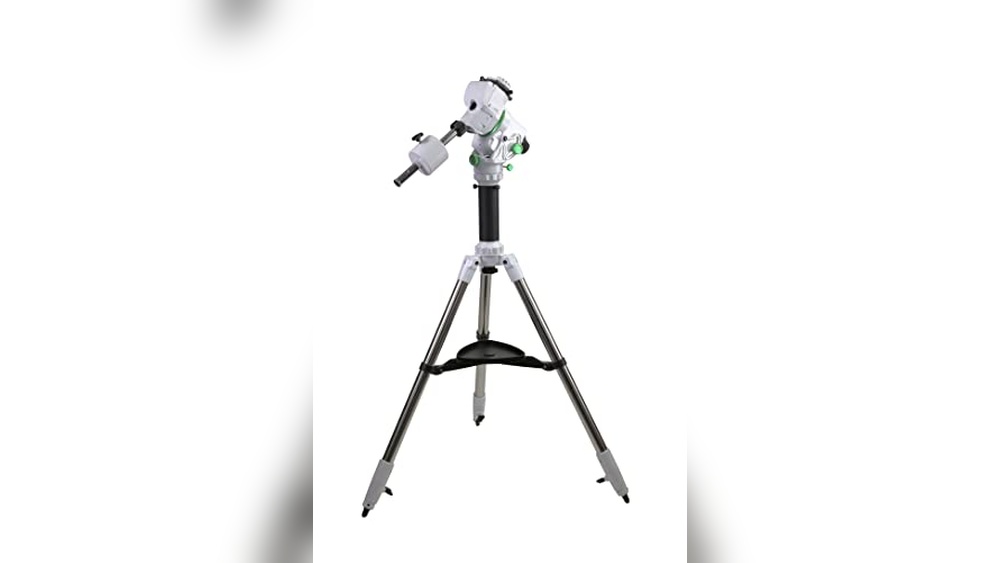
The Sky-Watcher Star Adventurer GTI Mount Kit is a complete portable astrophotography mount designed for precise equatorial tracking and GoTo capability. It solves the challenge of capturing sharp, long-exposure night sky images by integrating a full GoTo EQ mount head with built-in wifi and a polar scope for accurate alignment.
Using this mount feels intuitive and dependable, whether setting up in a backyard or traveling to darker skies. The included tripod with pier extension and counterweight bar adds stability, giving users confidence to focus on capturing stunning celestial photos without frequent adjustments or drift.
- Full GoTo star tracking with Star Adventurer GTi mount head
- Built-in polar scope with illuminator for quick and precise polar alignment
- Integrated wifi for seamless control via mobile devices
- Complete kit including tripod, pier extension, and counterweight for stability
Who Should Consider This Mount
This mount kit is ideal for astrophotographers who want a lightweight yet fully featured setup that combines portability with advanced tracking and GoTo convenience. Beginners who want to grow into more advanced imaging will appreciate the built-in alignment tools and wifi control, which simplify setup and operation.
If you prefer a fixed observatory mount or do not need GoTo functionality, you might find simpler mounts more suitable. However, for those needing a versatile mount that travels well and supports long exposures with precision, this kit removes the stress of manual tracking and complicated setups.
When setting up, take time to properly calibrate the polar scope and connect the wifi controls for the smoothest experience. Remember, consistent alignment is key to sharp astrophotography shots. With this mount, you can relax knowing the mechanical and digital aids support your imaging goals reliably.
Explore Scientific Equatorial Tracker Mount
The Best Mount for Astrophotography for hobbyists and advanced users who want precision tracking and user-friendly alignment.

The Explore Scientific Equatorial Tracker Mount is a complete tripod system designed to address the demands of accurate and stable astrophotography. Its innovative PMC-Eight multi-CPU system offers superior responsiveness, helping you capture sharp, long-exposure images by minimizing tracking errors during the night.
Setting up and aligning your telescope is straightforward, thanks to intuitive controls and the ExploreStars app. The smooth dual-axis gears and precise balancing make it easy to reposition and maintain focus, reducing frustration and allowing you to spend more time observing and imaging.
- Strengths:
- Exceptional tracking accuracy for long-exposure astrophotography
- Quiet precision stepper motors for minimal vibration
- App-based controls for quick alignment and navigation
- WiFi and Bluetooth compatibility for flexible operation
- Efficient polar alignment without needing a polar scope
- Limitations:
- May be bulky for frequent travel due to its size (Height: 6.75″, Width: 19.25″, Length: 29.25″)
- Requires compatible device for app use
Is This Mount Right For You?
If you want a reliable and advanced mount that makes astrophotography easier and more precise, this model is a solid choice. It’s ideal for anyone using mid-sized telescopes who values accuracy and intuitive operation. However, if portability is your top concern or you lack a compatible tablet or smartphone, you might want to consider smaller alternatives.
With its robust build and responsive electronics, you won’t have to worry about missed shots or frustrating alignment. Take a moment to get comfortable with the ExploreStars app—it’s worth the effort and will save you time under the stars. Rest assured, this mount removes much of the guesswork and lets you focus on the beauty of the night sky.
Ioptron Skyguider Pro Camera Mount
Best Mount for Astrophotography enthusiasts seeking a portable and stable solution for sharp, long-exposure night sky images.

The iOptron SkyGuider Pro Camera Mount is a compact, all-metal astrophotography mount designed to provide reliable tracking for night sky photography. By minimizing vibration and ensuring precision alignment, it offers sharper star images and reduces the blur that can ruin long-exposure shots—an essential advantage for anyone serious about capturing the cosmos.
Thanks to its lightweight build and integrated illuminated polar scope, setting up in the field is fast and frustration-free, even under dark skies. The adjustability for altitude and azimuth means you can dial in polar alignment quickly, making the whole experience smoother and leaving you more time to focus on actual shooting.
- Strengths:
- Exceptional stability from all-metal construction
- Easy to travel with at just 2.2 lbs (1.00kg)
- Supports heavier camera and lens combos (up to 11 lbs/4.99kg)
- Simple, accurate polar alignment—even in low light
- Limitations:
- Not designed for very large telescopes
- No electronic GoTo functionality
Who Will Appreciate The Skyguider Pro?
This mount is ideal for astrophotographers who want a stable, portable solution for DSLR or mirrorless setups—especially if you often shoot in remote locations. If you prefer a grab-and-go system that doesn’t sacrifice image quality or reliable tracking, it’s a top contender.
However, those using heavy telescopes or seeking full robotic control should look elsewhere.
The SkyGuider Pro removes the stress of poor alignment and blurry images, letting you focus on creativity and exploration. For best results, spend a few extra minutes learning the polar alignment routine at home before heading out under the stars—practice pays off and gives peace of mind when you’re on location.
Teseek Equatorial Star Tracker Gimbal
The Best Mount for Astrophotography for photographers seeking a compact, adaptable solution for long-exposure celestial shots.

The TeSeek Equatorial Mount Star Tracker with Ball-Head Gimbal is a compact telescope photo adapter designed to provide stable, accurate tracking for astrophotography. Its open-source control scheme, carbon fiber and PETG shell, and support for both hemispheres make it a practical choice for hobbyists aiming to shoot stars, the moon, or create time-lapse sequences without fussing over complicated setups.
In practical use, this mount is all about simplicity: it powers on instantly via any power bank, requires no extra app, and integrates with standard quick-release plates, so you spend less time fiddling and more time capturing the night sky. I appreciate that it covers the essentials without overcomplicating things, making it easy to trust for both spontaneous sessions and planned shoots.
- Strengths:
- Ready-to-use with no app required
- Lightweight and portable design (3.15 x 3.54 x 3.54 inches)
- Custom rotation speeds for stars and the moon
- Compatible with common ball-head and quick-release systems
- Can be powered by any USB power bank
- Limitations:
- No built-in battery—external power required
- Ball head not included (adapter may be needed for some ball heads)
Should You Choose The Teseek Mount?
If you are a beginner or intermediate astrophotographer who wants a straightforward, reliable mount that works out of the box, the TeSeek Equatorial Star Tracker Gimbal is a strong fit. It’s especially handy for those who value portability and want to avoid software or app headaches in the field.
However, if you require a built-in battery or advanced automation, you might want to explore more complex solutions. For most users, though, this mount removes the stress of complicated alignment and setup. Just remember to bring a compatible ball head and a power bank, and you’ll be ready to capture stunning sky images with confidence and ease.
Sky-watcher Star Adventurer 2i Pro Pack
The Best Mount for Astrophotography for travelers, beginners, and enthusiasts seeking an easy and portable solution for capturing the night sky.
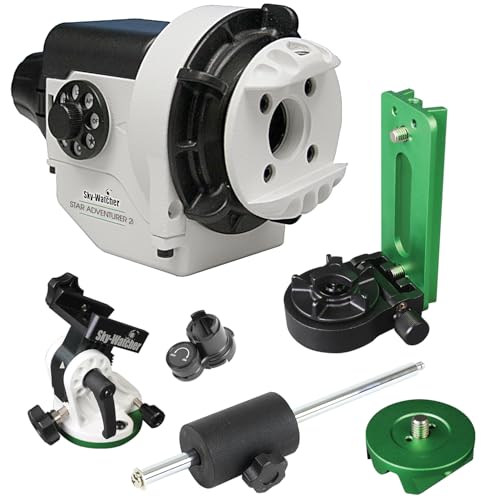
The Sky-Watcher Star Adventurer 2i Pro Pack is a compact, motorized equatorial mount designed for DSLR night sky tracking and astrophotography. It tackles the challenge of long-exposure star photography by automatically tracking the motion of the night sky, reducing star trails and making it easier to capture sharp, detailed images.
A standout feature is its built-in Wi-Fi, which lets you control the mount from your smartphone via the Sky-Watcher app.
In use, the Star Adventurer 2i feels intuitive and portable—its modular design means you can easily fit it into a backpack and set it up with your existing tripod. Aligning and operating the mount is straightforward, so you spend more time shooting and less time fiddling with equipment.
The result is a reliable tool that makes astrophotography more accessible, even if you’re just starting out.
- Strengths:
- Lightweight and portable—ideal for travel and field use
- Wi-Fi control with smartphone app for easy adjustments
- Compatible with a wide range of tripods and cameras
- Supports time-lapse, panoramic, and wide-field astrophotography
- Limitations:
- Payload capacity is best suited for DSLR or mirrorless cameras, not heavy telescopes
- Requires some practice for perfect polar alignment
Is This The Right Astrophotography Mount For You?
If you want to dive into astrophotography without hauling bulky gear, this mount is a solid choice. It’s especially well-suited for photographers who value portability and want a mount that’s easy to set up and control, even in remote locations.
Beginners will appreciate the user-friendly design, while seasoned astrophotographers will find its modular features and Wi-Fi control a time-saver.
However, if you plan to use very heavy telescopes or require advanced automation, you may want to consider a larger, more specialized mount. For most DSLR or mirrorless setups, though, the Star Adventurer 2i strikes a great balance between ease and performance.
Take your time with the initial polar alignment—the included equatorial base makes this easier than you might expect, and a little patience here pays off in the quality of your final images.
Astromania Canon Eos Telescope Adapter
The Best Mount for Astrophotography for Canon DSLR owners who want a simple, reliable way to connect their camera to a telescope.

The Astromania Telescope Camera Adapter is a practical solution for connecting Canon EOS SLR or DSLR cameras directly to a telescope’s 1. 25-inch focuser. Designed with a T-ring and universal T-adapter, it addresses the challenge of securely mounting your camera for astrophotography without fuss.
Its solid all-metal aluminum construction means you get a stable connection, which is crucial for capturing sharp images of the night sky.
In actual use, this adapter set feels robust and straightforward—just thread the adapter onto the T-ring, attach it to your camera, and connect to your telescope. The included hex wrench makes angle adjustments easy, and the grooved design helps with quick installation or removal, even in the dark.
You’ll spend less time fiddling with gear and more time focused on your imaging session.
- Strengths:
- Compatible with a wide range of Canon EOS and Rebel models
- Fits all standard 1.25-inch telescope focusers and accessories
- All-metal construction for durability
- Easy installation and adjustment
- Limitations:
- Manual focus and aperture adjustment required (no electronic contacts)
- Only suitable for Canon EF mount cameras
Is This The Right Fit For Your Setup?
If you have a Canon EOS DSLR and a telescope with a 1. 25-inch focuser, this adapter is a sensible choice to get started with astrophotography quickly and confidently. It takes away the stress of compatibility confusion and lets you focus on capturing lunar, planetary, or deep-sky images without worrying about stability or fit.
However, if your camera is not a Canon EF mount or you require electronic control of your lens, you’ll need a different solution. For best results, always double-check compatibility with your specific Canon model before purchase. With this adapter, you can rely on a firm, no-nonsense connection each time you set up—just remember to bring the included hex wrench for any last-minute tweaks.
Fanaue Skyguider Pro Low Latitude Mount
Best Mount for Astrophotography enthusiasts in low-latitude regions who need reliable polar alignment for long-exposure star tracking.

The FANAUE SkyGuider Pro Base Mount is a specialized platform designed for astrophotographers working in low-latitude areas, offering a precise adjustment range that solves the challenge of achieving accurate polar alignment near the equator. Its CNC-machined aluminum construction provides outstanding stability while keeping the mount lightweight and portable for field use.
Setting up under the stars with this mount feels reassuring, as its rock-solid build ensures your star tracker stays firmly in place all night. The compatibility with iOptron SkyGuider Pro systems means you can focus on capturing crisp, drift-free images without worrying about alignment shifting or wobble.
- Strengths:
- Excellent for low-latitude astrophotography (equator, southern regions)
- Stable and precise polar alignment for longer exposures
- Lightweight but rigid CNC aluminum body
- Seamless fit for iOptron SkyGuider Pro
- Considerations:
- Designed specifically for users with SkyGuider Pro systems
- Not ideal if you need a mount for higher-latitude locations
Who Will Appreciate This Mount?
If you’re working in a low-latitude location and struggle with tricky polar alignment for star tracking, this base mount is built for your needs. It takes the guesswork out of setup, letting you concentrate on your imaging rather than battling with hardware.
Serious astrophotographers who prioritize accuracy and stability during long sessions will find peace of mind here.
However, if you shoot mostly at higher latitudes or don’t use the SkyGuider Pro system, this model may not be your best fit. For those who do, a practical tip: take time to fine-tune your tripod placement first—this mount rewards careful alignment with truly impressive results. You can trust its solid build to handle long exposures so you can focus on the night sky.
Ioptron Skytracker Pro Camera Mount
Best Mount for Astrophotography enthusiasts seeking a portable, reliable solution for night sky imaging.

The iOptron SkyTracker Pro Camera Mount is a compact tracking mount designed specifically for astrophotographers looking to capture sharp, long-exposure images of the night sky. By providing precise tracking speeds including 1X Celestial, 1/2 Celestial, Solar, and Lunar, it helps eliminate star trails and keeps your shots clear, even as the Earth rotates.
Setting up this mount is straightforward, and its 6. 6 lbs payload means it’s ideal for most DSLR and mirrorless cameras with standard lenses. The included padded bag makes it easy to carry to remote locations, and with micro USB charging, you can power up almost anywhere—no need to worry about running out of battery during a long night of shooting.
- Strengths:
- Accurate tracking for stars, sun, and moon
- Lightweight and portable for travel
- Simple charging via micro USB
- Included padded bag adds protection
- Limitations:
- Not suitable for heavy professional camera rigs (over 6.6 lbs)
- Requires careful polar alignment for best results
Is It Right For Your Astrophotography?
If you’re a beginner or enthusiast looking to get sharp, well-tracked images of the night sky without investing in a heavy, complex setup, this mount will suit you well. It’s especially handy for travelers, hikers, or anyone shooting in the field, thanks to its manageable size and weight.
However, if your gear is on the heavier side or you need ultra-high precision for deep sky imaging, you might want to consider a more robust mount.
This mount removes the guesswork from tracking and setup, allowing you to focus on creativity rather than technical headaches. For best results, take your time with the initial polar alignment—it pays off in crisper photos. Rest assured, the iOptron SkyTracker Pro is a trusted companion for nights under the stars.
Yueoct Vixen Style Telescope Rail Bar
The Best Mount for Astrophotography for amateur and semi-pro astronomers needing a stable and versatile dovetail mounting solution.

The Yueoct Vixen Style Telescope Rail Bar is a robust mounting plate designed for astrophotography enthusiasts who need a reliable connection between their telescope and camera or tripod. It solves the problem of mounting compatibility by featuring Vixen-style dovetail acceptance and multiple threaded holes including M6, 1/4″, and 3/8″ sizes, allowing for versatile and secure attachment options.
Using this rail bar in real life offers a smooth and confident setup experience, thanks to its long slots that enable precise balancing of your equipment. The anti-slip rubber pads and safety stop screws ensure your gear stays firmly in place, giving you peace of mind during long exposure astrophotography sessions.
- Compatible with Vixen-style dovetail saddles for wide telescope support
- Multiple mounting holes and slots for flexible accessory attachment
- Anti-slip rubber pads and safety stop screws enhance device security
- Lightweight and slim profile (9.06″ length, 0.507 lbs) for portability
Who Should Consider This Mount
This mount is ideal for astrophotographers who require a versatile and stable dovetail plate compatible with a variety of telescopes and camera setups. If you frequently adjust your gear or use different accessories, the multiple mounting options and long slots will save you setup time and improve balance.
However, if you use a non-Vixen style mounting system or need a heavier-duty mount for larger equipment, you might want to explore other options. This plate excels in lightweight, flexible mounting rather than heavy load support.
Choosing this mount removes the stress of insecure attachments and frequent readjustments. A practical tip is to double-check the safety stop screws to prevent accidental drops, especially if your saddle supports drop-in loading. Overall, it’s a dependable choice that helps you focus more on capturing the night sky and less on equipment setup.
Neewer Telescope Finderscope Mount Adapter
A top pick for the Best Mount for Astrophotography, perfect for camera enthusiasts seeking a sturdy and versatile way to attach finderscopes or guide scopes to their setup.

The NEEWER Telescope Finderscope Mount Adapter is a compact, all-metal solution for securely mounting a finderscope or guide scope onto your camera’s hot shoe. With its universal 1. 3in/33mm dovetail base and sturdy cold shoe, it solves the common hassle of integrating telescope accessories with standard photography gear, making it easier to aim at celestial targets during astrophotography sessions.
The dual lock system, featuring both a knurled screw and thumb screw, ensures your equipment stays firmly in place.
In real-world use, this adapter feels reassuringly robust yet lightweight, so it won’t add unnecessary bulk to your setup. The precise fit and quick attachment allow you to set up or modify your configuration in minutes—giving you more time to focus on capturing the night sky, not fiddling with hardware.
- Strengths:
- Durable, all-metal construction for long-term reliability
- Universal dovetail base fits a wide range of finderscopes and guide scopes
- Lightweight (just 45g) but supports up to 2.2lb/1kg
- Versatile mounting via cold shoe or 1/4″ threaded hole
- Easy, tool-free installation with dual locking mechanism
- Considerations:
- Adapter size (42mm) may not suit very large accessories
- No included finderscope or guide scope—this is a mount only
Final Thoughts
If you’re building a lightweight, portable astrophotography kit and want a no-fuss way to add a finderscope or guide scope to your camera setup, the NEEWER Adapter is a smart choice. Hobbyists and advanced users alike will appreciate its secure hold and compatibility with standard accessories.
However, if you use unusually large or heavy optics, double-check sizing and weight compatibility before purchase.
This mount helps reduce setup stress and gear confusion by providing a reliable, universal connection point. For best results, always double-check the tightness of both locking screws before a night in the field—small steps like this keep your equipment safe and your focus on the stars.
How To Approach Choosing An Astrophotography Mount Or Adapter
Consider how and where you plan to photograph the night sky. Decide if portability or stability matters most for your workflow. Think about whether you need advanced tracking, simple adapters, or compatibility with your existing gear. Balance your interest in deep-sky imaging against ease of use and maintenance.
Filter options by what fits your equipment and goals, not just by features.
Common Mistakes And Who Should Avoid These Astrophotography Mounts And Adapters
- Expecting professional results without learning polar alignment or basic setup.
- Choosing advanced mounts when only casual wide-field photography is intended.
- Assuming all mounts fit every camera or telescope without checking thread sizes and compatibility.
- Overlooking the need for additional accessories such as counterweights or dovetail plates.
- Buying without considering the weight and portability for travel or field use.
Frequently Asked Questions About Finding The Best Mount For Astrophotography
Do I Need An Equatorial Mount For Astrophotography?
Equatorial mounts help with accurate tracking of stars, reducing blur in long exposures. For simple nightscapes, a basic tracker or adapter can be enough.
How Important Is Polar Alignment?
Polar alignment is key for sharp images in astrophotography. Some mounts simplify this, but most require careful setup each session.
Will My Dslr Or Mirrorless Camera Fit Any Mount Or Adapter?
Not all mounts or adapters are universal. Check thread sizes, dovetail compatibility, and whether your camera brand is supported before buying.
What’s The Biggest Regret Among Buyers?
Many regret choosing a mount that is too complex or heavy for their actual needs. Others wish they had checked compatibility with their camera or tripod.
How Can I Avoid Common Mistakes With Astrophotography Mounts?
Learn what your equipment requires and match the mount or adapter accordingly. Avoid buying based only on price or brand reputation.
Do I Need Wi-fi Or App Control For Night Sky Tracking?
Wi-Fi or app control adds convenience, especially for precise adjustments. However, it’s not essential for all users or situations.
Are Lightweight Mounts Stable Enough For Long Exposures?
Lightweight mounts can be stable if properly set up and not overloaded. Always check weight limits and use with care for best results.
Settling Your Astrophotography Mount Decision
Choosing a mount or adapter comes down to understanding your own astrophotography style and the type of images you want to capture. It’s normal to feel uncertain, but focusing on compatibility, ease of use, and your real needs will guide you to a suitable choice.
Every photographer’s journey is unique, and there’s no perfect product for everyone. Trust your practical requirements and experience—your equipment should fit your vision, not force it.