
Can Blackhawks Be Remotely Controlled
The Blackhawk helicopter is a symbol of modern military power and reliability. When people see this aircraft, they think of search and rescue, troop transport, and rapid response missions. But as technology changes, so do the questions about what these helicopters can do. One question often asked is: Can Blackhawks be remotely controlled? The idea of controlling a full-sized military helicopter from a distance seems futuristic, but it is not as far away as many believe.
Today, as drones and unmanned systems become more common, the line between piloted and remote-controlled aircraft is changing. This article will explain if Blackhawks can really fly without a person inside, how this technology works, and what it means for military operations.
We will also look at safety, risks, and how this could change the future of warfare. Whether you are curious about technology, interested in aviation, or want to know about military strategies, this guide will give you clear answers—using simple language and real examples.
Understanding The Blackhawk Helicopter
The UH-60 Blackhawk is the main utility helicopter for the U.S. Army. First flown in the late 1970s, it replaced the older Bell UH-1 “Huey.” There are several versions, but all share a strong design and the ability to handle many tasks.
Key features of the standard Blackhawk:
- Crew: 2 pilots, 2 crew chiefs (but can be operated by just two pilots)
- Capacity: Up to 11 fully equipped soldiers
- Speed: Maximum speed of 183 mph (294 km/h)
- Range: Around 362 miles (583 km) without refueling
- Roles: Troop transport, medical evacuation, cargo lift, search and rescue, special operations
The Blackhawk has a solid reputation for reliability and versatility. Its twin engines and tough airframe allow it to fly in harsh weather and under enemy fire. It is used by over 30 countries, not only for military but also for emergency and disaster relief.
What Does Remotely Controlled Mean?
Before we focus on Blackhawks, it helps to define remotely controlled. In aviation, this means flying an aircraft from a distance, without a pilot inside. The control can be:
- Fully remote (unmanned): No crew on board; all actions managed by a ground operator, usually with radio or satellite links.
- Optionally piloted: The aircraft can be flown with or without a pilot. When unmanned, it is controlled remotely or follows a programmed route.
- Assisted control: Pilots are on board, but some tasks (like hovering or landing) are aided by remote systems or automation.
Most people know about drones (UAVs), which are always unmanned. But making a large, crewed helicopter work without pilots is a much bigger challenge. This is because of the complexity of the controls, the need for safety, and the risk to people on the ground.
Has The Blackhawk Ever Been Remotely Controlled?
Yes—but with important details. The standard Blackhawk is not built for remote control. However, there have been successful projects to add this ability. These projects are called optionally piloted vehicle (OPV) programs.
Darpa And Sikorsky’s Experiment
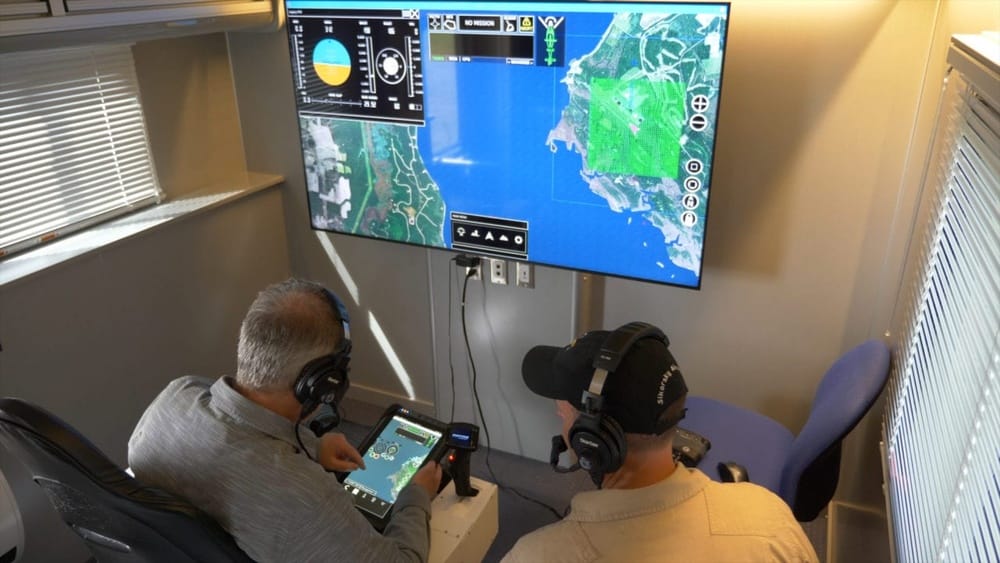
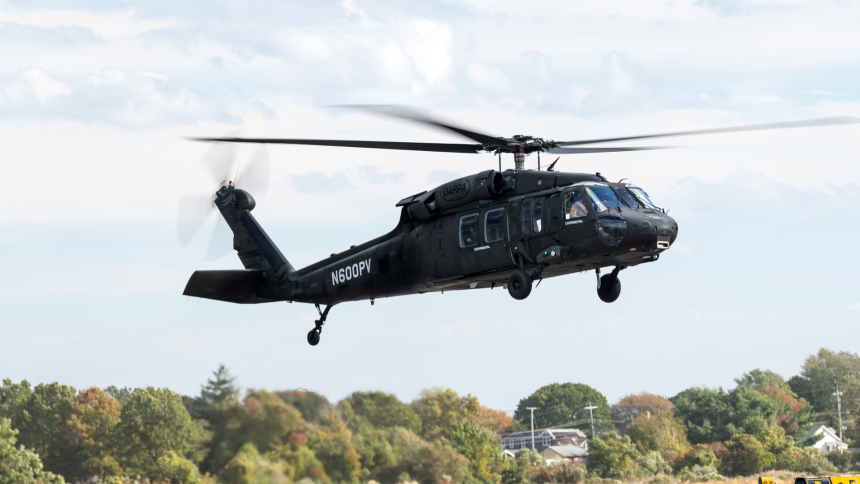
In 2022, the U.S. Defense Advanced Research Projects Agency (DARPA) and Sikorsky, the helicopter’s maker, showed a Blackhawk flying without any pilots inside. This was done at the U.S. Army’s Yuma Proving Ground in Arizona.
Key points from the test:
- The helicopter was a standard UH-60A model, modified with new controls and sensors.
- It took off, completed a mission, avoided obstacles, and landed—all under remote control.
- No one was inside; the ground team managed the flight using a remote operator station.
- The system used was called Sikorsky MATRIX™, a set of hardware and software that can turn a manned helicopter into an unmanned one.
This test was part of DARPA’s Aircrew Labor In-cockpit Automation System (ALIAS) project. The goal was to prove that complex aircraft like Blackhawks can be flown safely by remote or automatic means.
Other Military Experiments
The U.S. Army and Sikorsky have also flown Blackhawks with optional piloting. In these cases, the pilot can hand over control to the computer, which follows a pre-set route. If needed, a ground operator can take over.
Other countries have explored similar technology, but the U. S. is the clear leader with real-world, full-scale tests.
How Does Remote Control Of Blackhawks Work?
Turning a Blackhawk into a remotely controlled aircraft is not as simple as adding a remote control. The technology must handle all the complex movements of a helicopter—collective, cyclic, pedals—and respond instantly to changes.
Main Systems Needed
- Automated Flight Controls: The helicopter’s mechanical controls are linked to electric systems (actuators) that can be moved by computers instead of human hands and feet.
- Sensors: Cameras, radar, LIDAR, and GPS give the remote pilot “eyes” and “ears.” These tools help the system know its position, speed, and environment.
- Data Links: Secure radio or satellite connections send commands from the ground to the helicopter and return data (video, sensor readings) for monitoring.
- Onboard Computers: Smart software makes decisions, such as avoiding obstacles or adjusting flight if something goes wrong.
- Backup Systems: In case of data loss or hacking, the helicopter can return home or land safely.
Here’s a basic comparison of standard and remotely controlled Blackhawks:
| Feature | Standard Blackhawk | Remotely Controlled Blackhawk |
|---|---|---|
| Pilots onboard | Yes (always) | Optional or none |
| Flight control | Manual | Automated/Remote |
| Sensors | Basic (for pilots) | Advanced (for remote ops) |
| Data link | Radio (voice) | Secure digital link |
| Automation | Minimal | High (AI/Autopilot) |
The Role Of Artificial Intelligence
Modern AI helps the system make quick decisions. For example, if a sudden gust of wind changes the helicopter’s position, the onboard computer reacts faster than a human could. AI also helps with:
- Obstacle detection: Using LIDAR and cameras to avoid trees, wires, or buildings.
- Mission planning: Choosing the safest or fastest route.
- Emergency response: Landing safely if something fails.
However, human operators are still needed for complex decisions or unexpected events.
Why Make Blackhawks Remotely Controlled?
There are strong reasons for wanting to control Blackhawks from a distance.
Reducing Risk To Human Life
One of the most important reasons is safety. Military missions often mean flying into dangerous areas—battlefields, areas with anti-aircraft weapons, or disaster zones. By removing the crew, you:
- Protect pilots from enemy fire or crashes.
- Allow risky missions (like resupply or evacuation) in high-threat areas.
- Respond to chemical, biological, or nuclear incidents without risking exposure.
Expanding Mission Capabilities
Remote control means helicopters can do jobs they could not before. Examples:
- Supply drops into battlefields where landing is unsafe.
- Surveillance over hostile territory for longer times, since no crew gets tired.
- Medical evacuation from areas where it is too dangerous to send medics.
Cost And Efficiency
Remote-controlled Blackhawks could lower training and operational costs. Fewer pilots are needed, and missions can run longer, since machines do not tire.
Flexibility
With optional piloting, the helicopter can switch between manned and unmanned as needed. This is useful if some missions need a human touch, while others are better run by a remote team.
What Are The Risks And Challenges?
While remote control brings benefits, it also adds new risks.
Communications And Hacking
The biggest challenge is the data link. If the signal is jammed or hacked, the helicopter could lose control. Military systems use strong encryption, but nothing is 100% safe.
- Jamming: Enemies can block signals, causing the helicopter to lose contact.
- Hacking: If someone breaks into the system, they could take control or crash the aircraft.
Backup systems and strict cybersecurity help, but this risk never goes away.
Technical Failures
Unlike drones, Blackhawks are complex and heavy. More moving parts mean more things can break. If a sensor or computer fails, the helicopter must respond quickly to avoid a crash.
- Redundancy is key. There are backup computers and emergency landing systems.
- However, these add weight and complexity, which can reduce payload and range.
Legal And Ethical Issues
Remotely controlled helicopters raise questions:
- Who is responsible if something goes wrong?
- What if the helicopter crashes and causes civilian harm?
- Should machines make life-or-death decisions in war?
These are questions that militaries and governments are still debating.
Training And Human Factors
Operators still need high skill. Flying a Blackhawk remotely is not like flying a small drone. The controls are more complex, and delays in communication can make reaction times slower.
- Simulator training is used, but real-world experience is hard to replace.
- If an emergency happens, human judgment is often better than AI.
Real-world Examples And Missions
The technology is not just a lab experiment. Blackhawks have flown real missions in remote or semi-remote mode.
Autonomous Flight Demonstrations
In 2022, Sikorsky showed a Blackhawk flying 83 miles without pilots, delivering supplies, and returning. The mission included:
- Avoiding obstacles like towers and power lines using LIDAR.
- Responding to simulated engine failures by landing safely.
- Carrying a full load of supplies to a remote site.
This was the first time a full-size helicopter did all these actions without a person inside.
Medical Evacuation
Imagine a battlefield where medics cannot reach the wounded. A remotely piloted Blackhawk can land, pick up injured soldiers, and fly them to safety—all without risking additional lives. This has been tested in military exercises, where the helicopter followed remote commands and even used sensors to scan for survivors.
Future Scenarios
Experts predict that in the next 10-15 years, more Blackhawks will be flown remotely for:
- Urban combat: Navigating between buildings where drones can’t carry enough weight.
- Disaster relief: Dropping supplies after earthquakes or floods when it’s too dangerous for humans.
- Logistics: Moving fuel, ammo, or food to front lines, even under fire.
How Does Remote Control Affect Military Strategy?
Adding remote control to Blackhawks changes military planning.
Force Multiplication
A single operator can control several helicopters, increasing the reach of the military without putting more people at risk. This means:
- Faster response to threats.
- More missions can happen at once.
- Smaller teams can do bigger jobs.
More Flexible Tactics
Commanders can send helicopters into dangerous areas without waiting for special approvals, since no pilots are at risk. This allows surprise attacks, quick evacuations, and creative use of air power.
Changing The Enemy’s Strategy
When the enemy knows helicopters might be unmanned, their tactics change. They can no longer count on capturing pilots or stopping missions by threatening crews. This can reduce the enemy’s power to intimidate or negotiate.
However, it also means they may focus on jamming or hacking, leading to a new kind of electronic warfare.

Credit: www.youtube.com
Comparing Blackhawk Remote Control To Other Aircraft
The Blackhawk is not the only aircraft getting remote control. Here’s how it compares to other systems:
| Aircraft Type | Manned | Remote Option | Typical Role |
|---|---|---|---|
| UH-60 Blackhawk | Yes | Yes (OPV) | Transport, rescue, supply |
| MQ-9 Reaper (drone) | No | Yes (always) | Surveillance, strike |
| CH-47 Chinook | Yes | In development | Heavy transport |
| Apache AH-64 | Yes | Limited (test phase) | Attack, close support |
The Blackhawk is unique because it combines the payload and flexibility of a manned helicopter with the new abilities of remote control.
Civilian Uses And Potential
While remote-controlled Blackhawks are mainly military, the technology could soon help civilian operations.
Disaster Response
During wildfires or floods, sending a crewed helicopter is risky. Remotely controlled Blackhawks could:
- Drop fire retardant or water without risking pilots.
- Deliver medical supplies to cut-off areas.
- Scan disaster zones using sensors and cameras.
Search And Rescue
In storms, mountains, or over the sea, these helicopters can search for survivors where it’s too dangerous for humans. AI can spot heat signatures or movement, guiding teams to those in need.
Heavy Cargo Delivery
Remote helicopters can move cargo to oil rigs, remote camps, or mines—especially in bad weather or at night.
Challenges For Civilian Use
- Regulations: Civil aviation authorities must approve unmanned flights, especially over cities.
- Cost: Adding remote systems is expensive, but prices will drop as technology improves.
- Training: Operators need different skills than pilots.
Still, the potential is large, and companies are watching military progress closely.
Common Misunderstandings About Remotely Controlled Blackhawks
Many people have the wrong idea about what remote control means. Here are a few myths:
“they Can Be Hacked Easily.”
In reality, military-grade encryption and backup systems make hacking extremely hard. While not impossible, it is much safer than most home networks or consumer drones.
“they Are Just Like Big Drones.”
Blackhawks are far more complex. They can carry heavier loads, fly in worse weather, and do missions drones cannot. The technology is also more expensive and advanced.
“you Just Need A Joystick.”
Remote flying a Blackhawk is more like managing a team of smart robots. The operator gives high-level commands, and the system manages the details—unlike a remote-control toy.
“they Will Replace Pilots Soon.”
Pilots are still needed for the hardest missions, emergencies, and to train the AI. Remote control adds options, but does not remove the need for skilled humans.
The Future Of Blackhawk Remote Control
Experts predict that within 10 years, optionally piloted Blackhawks will become common in the U.S. Army and allies. As costs drop, more countries will add the technology.
Key trends:
- AI advances will make flights safer and more flexible.
- Miniaturized sensors and better data links will let helicopters fly in new places.
- Civilian adoption will follow, first in rescue and cargo, then in passenger flights.
However, the debate over safety, privacy, and ethics will continue. Governments must set rules to protect both people and property.
Credit: theaviationist.com
Real-world Data And Market Growth
The market for unmanned aerial vehicles (UAVs) and optionally piloted vehicles (OPVs) is growing fast. Here’s a look at current trends:
| Year | Global UAV Market Size | OPV/Remote-Control Helicopter Share |
|---|---|---|
| 2020 | $20 billion | ~2% |
| 2023 | $28 billion | ~4% |
| 2027 (projected) | $42 billion | ~7% |
- The U.S. Department of Defense has invested over $100 million in Blackhawk automation research.
- Civilian interest is rising, especially in disaster response and cargo.
For more details on current military projects, check Wikipedia’s Blackhawk page.
Non-obvious Insights For Beginners
- Remote control does not mean pilotless forever. Most missions will use a mix: Humans for complex tasks, remote or AI for routine or dangerous jobs. Fully autonomous helicopters are still rare.
- The biggest barrier is not technology, but trust. Pilots, commanders, and the public must trust that a remote-controlled Blackhawk will not crash, get hacked, or make mistakes. Building this trust is as hard as building the tech.
- Remote control adds options, not always efficiency. In some cases, having a skilled pilot onboard is faster and safer—especially when flying in complex environments or making snap decisions.
- Training operators is a new challenge. Even experienced pilots need extra training to handle the unique demands of remote control and to manage unexpected situations from a distance.
Frequently Asked Questions
What Is An Optionally Piloted Blackhawk?
An optionally piloted Blackhawk is a standard helicopter that can be flown by a pilot or by remote control. It has extra hardware and software that allow a ground operator (or computer) to fly the helicopter for some or all of the mission. This offers flexibility and safety for dangerous or routine tasks.

Credit: pracyva.com
How Far Can A Remotely Controlled Blackhawk Fly?
A remotely controlled Blackhawk can fly as far as its fuel allows—usually about 362 miles (583 km)—as long as it stays within communication range. With satellite data links, the range can be global, but in practice, military missions are often limited by line-of-sight or secure relay stations.
What Prevents Hackers From Taking Over A Blackhawk?
Military Blackhawks use encrypted data links, multi-factor authentication, and backup systems to guard against hacking. If the main link is lost or compromised, the helicopter can switch to a backup channel or land safely. Still, no system is 100% safe, so cybersecurity is always a priority.
Can Civilians Buy Or Use Remotely Controlled Blackhawks?
No, civilians cannot buy military Blackhawks with remote control today. The technology is restricted to military and some government users. However, similar systems may become available for rescue, firefighting, or cargo in the future, once approved by civil aviation authorities.
Will Remote-controlled Blackhawks Replace Regular Helicopters?
Remote-controlled Blackhawks will not replace all manned helicopters. Instead, they add new options for dangerous, routine, or long missions. Pilots will still be needed for complex tasks, emergencies, and when human judgment is critical.
As technology and trust in automation grow, the line between manned and unmanned flight will continue to blur. For now, the Blackhawk stands as a symbol of how old designs can adapt to new technology—keeping people safer and missions more flexible in a changing world.