
Mounting a TV above a fireplace is a design trend that has become popular in many modern homes. It seems like a smart way to save space and create a central point in the living room. But is it the best choice for everyone?
While the idea may look great in magazines and online, there are important things to consider before making this decision in your own home.
You may be thinking about how it will change your living room, how safe it is for your TV, and whether it’s comfortable for watching. These are smart questions. Mounting a TV above a fireplace is not as simple as just hanging it on a wall.
There are technical, safety, and comfort factors that play a big role. Many people make mistakes because they don’t realize the details involved. In this article, you’ll find clear, honest advice about when this setup works well, what problems can happen, and how to do it the right way.
By the end, you’ll know if mounting a TV above your fireplace is a good idea for your home and how to avoid common mistakes.
The Main Reasons People Mount A Tv Above A Fireplace
For many, the space above the fireplace is unused and in a perfect spot for viewing. Mounting the TV there can make the room feel modern and save floor space. Here are the most common reasons people choose this setup:
- Saving space: In small living rooms, every inch counts. Placing the TV above the fireplace frees up room for furniture or walking space.
- Aesthetic appeal: Many designers like the look of a TV above a fireplace because it creates a single, stylish focal point.
- Central viewing position: The fireplace is often in the middle of the main wall, making it a logical spot for everyone to see the TV.
- Keeping electronics away from kids and pets: Mounting the TV high can keep it out of reach of curious hands or paws.
- Hiding wires easily: When you mount the TV, you can often run the wires behind the wall, keeping things tidy.
The Big Challenges And Risks
Mounting a TV above a fireplace is not always a perfect solution. There are real risks to your TV and your comfort. Before you start, it’s important to understand these challenges:
Heat Damage
The biggest risk is heat exposure. Fireplaces (especially wood-burning and gas models) produce a lot of heat. High temperatures can:
- Shorten the life of your TV
- Cause screen or internal part damage
- Void your TV’s warranty (since most manufacturers warn against exposure to heat)
A study by the Consumer Electronics Association shows that TVs should be kept under 90°F (32°C) for safe operation. Fireplace mantels can reach much higher than that. If you use your fireplace often, this risk becomes serious.
Poor Viewing Angles
Mounting a TV high above the fireplace means you’ll need to look up to watch. This is not natural for most people and can cause:
- Neck and back strain
- Eye discomfort over long periods
- Reduced picture quality (colors and brightness may look different from below)
Cable Management And Power Supply
Fireplaces can make it tricky to run cables and power. You may need to:
- Drill through brick or stone
- Hire a professional electrician
- Deal with local building codes
Wall Type Matters
Not all fireplace walls are the same. Some are made of brick, others of stone, drywall, or tile. Each material needs special anchors and installation methods. Mistakes here can cause your TV to fall—a costly and dangerous accident.
Audio Problems
Mounting your TV high changes how sound travels. Built-in speakers may sound worse, and you might need a soundbar or different speakers to fix it.
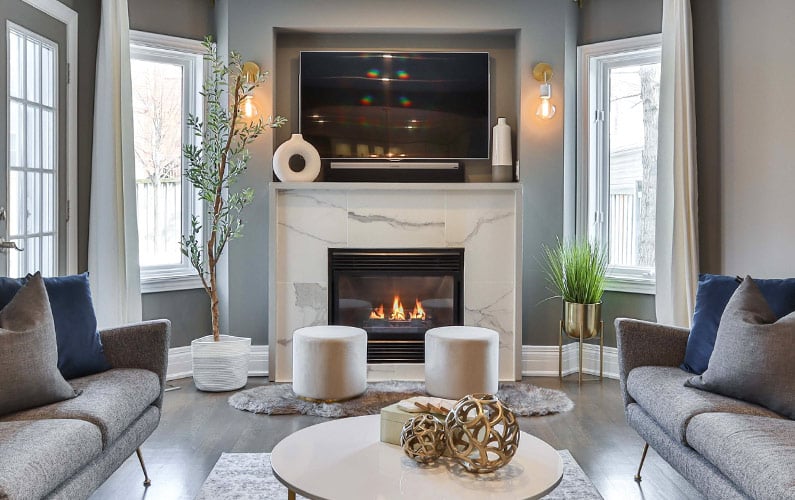
Credit: fullservicechimney.com
How To Know If Mounting Above The Fireplace Is Right For You
Before you start drilling holes, take time to decide if this is the best option for your room and needs. Here are some steps and checks you should do:
1. Measure Heat Levels
This step is often missed, but it’s critical. Light your fireplace as normal. After 1-2 hours, use a thermometer to check the temperature at the spot where the TV will be. If it’s consistently over 90°F (32°C), it’s not safe for your TV.
2. Check The Viewing Height
Sit on your main sofa and look at the spot above your fireplace. Is it much higher than your eye level? Experts suggest that the center of the TV screen should be at or just below eye level when seated—usually about 42–48 inches from the floor. If the fireplace pushes the TV much higher, you may want to reconsider.
3. Look At Your Fireplace Type
- Wood-burning fireplaces: Produce the most heat and smoke. Usually riskier for TV mounting.
- Gas fireplaces: Less heat, but can still get hot above the mantel.
- Electric fireplaces: Usually safe, as they produce less heat at the top. But always check the manufacturer’s guidelines.
4. Consider The Wall Surface
- Brick and stone: Need strong anchors and drilling equipment.
- Drywall: Needs to be checked for studs and strength.
- Tile: Can crack if not handled correctly.
5. Plan For Wires And Power
Ask yourself:
- Is there an electrical outlet above the fireplace?
- Can you hide HDMI and power cables safely?
- Do you need professional help to run wires inside the wall?
6. Think About Room Layout
If your seating is far from the fireplace, a high-mounted TV may not be a problem. But in smaller rooms, the angle can cause discomfort.
Alternatives To Mounting A Tv Above The Fireplace
If you find that mounting above the fireplace is not ideal, there are other ways to create a stylish, space-saving setup.
- Place the TV on a low media console next to the fireplace: This keeps the TV at the right height and still close to the center of the room.
- Use a corner TV stand: This can work well in rooms with unusual shapes or where wall space is limited.
- Install a motorized TV lift: These allow the TV to rise from behind furniture or lower from above when needed.
- Create a separate media wall: Sometimes, the best option is to split the fireplace and TV into two focal points.
How To Mount A Tv Above A Fireplace Safely
If you decide to go ahead, careful planning and the right materials will help you avoid problems. Here’s a step-by-step guide:
Step 1: Check Fireplace And Wall Conditions
Before any installation, check:
- Heat levels after using the fireplace
- Wall structure (find studs or solid surfaces)
- The presence of vents or other hazards
Step 2: Choose The Right Mount
Use a tilting or full-motion TV mount. These allow you to angle the TV downward, which can improve viewing comfort and reduce glare.
Step 3: Measure And Mark
Decide on the exact placement. Use a measuring tape to find the center and mark the height. Remember, lower is better if possible.
Step 4: Secure The Mount
- For brick or stone: Use masonry anchors and heavy-duty screws.
- For drywall: Anchor directly into wall studs, not just the drywall surface.
Step 5: Run Power And Cables
Install a power outlet behind the TV if one is not already there. Run HDMI and other cables through wall-rated conduit for safety.
Step 6: Attach The Tv
Follow the manufacturer’s instructions for attaching the mounting bracket to your TV. Always use the right screws and double-check for stability.
Step 7: Tilt And Test
After mounting, use the tilt feature to angle the TV down. Sit in your usual viewing spot and test for comfort.
Step 8: Improve Sound
Consider adding a soundbar or external speakers, as built-in TV speakers often sound worse when mounted high.
Pros And Cons: A Quick Comparison
To help you weigh your options, here’s a side-by-side look at the main pros and cons.
| Pros | Cons |
|---|---|
| Saves floor space | Heat can damage TV |
| Modern, stylish look | Uncomfortable viewing angle |
| Keeps TV out of reach | Harder to run cables |
| Central room focal point | Possible audio problems |
| Easy to hide wires | Can void TV warranty |
What The Experts Say
Many home theater professionals warn against mounting a TV above a fireplace without careful checks. The Society of Motion Picture and Television Engineers (SMPTE), for example, recommends that the center of the screen be at or just below eye level for the best viewing comfort.
A survey by the American Institute of Architects found that only about 12% of new homes are designed with a TV above the fireplace. Most new designs separate the TV and fireplace to avoid these issues.
Still, some experts say that with an electric fireplace or a deep mantel that blocks heat, it can be done safely. The key is to measure and test before you commit.
Real-life Examples: When It Worked (and When It Didn’t)
Success Story
Sarah, a homeowner in Ohio, wanted to save space in her small living room. She measured the heat above her electric fireplace and found it stayed cool, even after hours of use. She used a tilting wall mount and a slim soundbar. Her TV has worked perfectly for three years, and she enjoys the clean look.
When Problems Occurred
Jake from Colorado mounted his TV above a wood-burning fireplace. After one winter, he noticed color fading and lines across his screen. The heat had damaged the TV. He later moved the TV to a side wall and replaced it with a piece of art above the fireplace instead.
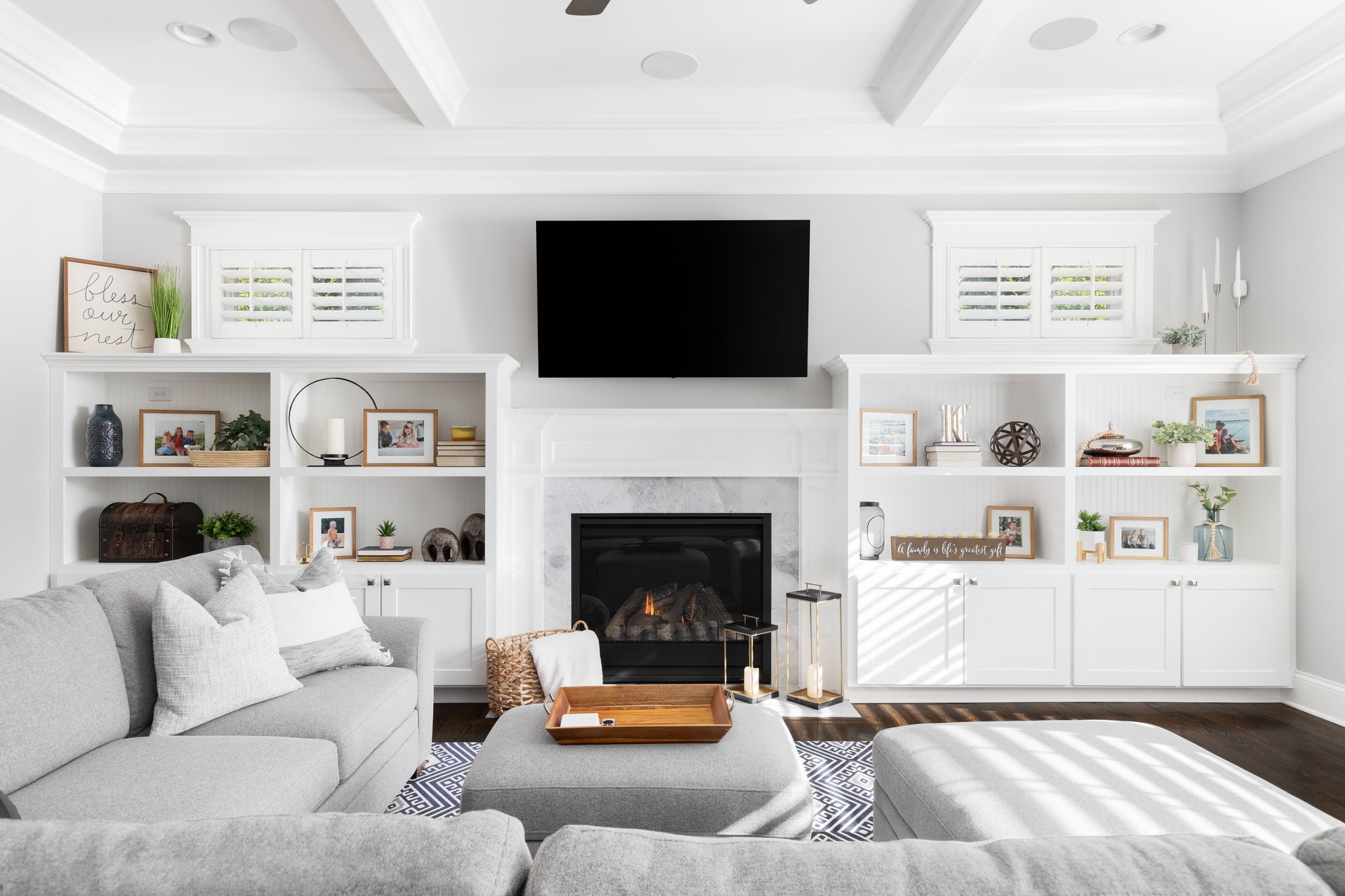
Credit: www.mantelmount.com
Choosing The Right Tv Mount For Above The Fireplace
Not all mounts are the same. Here’s what you should look for:
1. Tilting Mounts
These allow you to angle the screen downward, reducing neck strain. They work well if your seating is not too far away.
2. Full-motion Mounts
These mounts extend, tilt, and swivel. They’re best if you want to adjust the angle often or have seating in different parts of the room.
3. Pull-down Mounts
Some mounts are designed specifically for above-fireplace use. They let you pull the TV down to eye level and push it back up when not in use. They are more expensive, but very comfortable.
4. Fixed Mounts
Not recommended for high placements, as they do not allow any angle adjustment.
Key Features To Consider
- Weight rating: Always check that the mount supports your TV’s weight.
- VESA compatibility: Make sure the mount fits your TV’s mounting pattern.
- Extension distance: If using a full-motion mount, check how far it pulls out from the wall.
- Cable management: Some mounts have channels to help hide wires.
Here’s a quick comparison of mount types:
| Mount Type | Best For | Typical Price Range | Adjustability |
|---|---|---|---|
| Tilting | High placements | $30–$100 | Up/down tilt |
| Full-Motion | Flexible seating | $50–$200 | Tilt, swivel, extend |
| Pull-Down | Above fireplace | $150–$400 | Pull down, tilt |
| Fixed | Low, eye-level installs | $20–$60 | No adjust |
Practical Tips For A Better Experience
- Install a deep mantel: A mantel that sticks out at least 10–12 inches can help block heat rising from the fireplace.
- Use a digital thermometer: Check temperatures above the mantel often, especially during the first few fires each season.
- Paint behind the TV with heat-resistant paint: This can prevent wall discoloration and reduce heat transfer.
- Buy a TV with a good vertical viewing angle: Some TVs, especially OLED and higher-end LED models, look better from below.
- Test with cardboard: Tape a piece of cardboard the size of your TV where you want to mount it. Sit in your usual spot and see how it feels for a few days before making holes in the wall.
Common Mistakes To Avoid
- Ignoring heat risks: Always check temperatures before and after installing.
- Mounting too high: Measure carefully and keep the TV as low as possible.
- Using the wrong mount: Choose one that tilts or pulls down for better comfort.
- Poor cable planning: Plan for outlets and cable runs before you start.
- Not checking wall strength: Heavy TVs need strong anchors in brick, stone, or wall studs.
Cost Breakdown: What To Expect
Mounting a TV above a fireplace can be more expensive than a standard wall mount. Here’s a rough breakdown:
| Item | Typical Cost |
|---|---|
| TV wall mount (tilt/full-motion) | $30–$200 |
| Professional installation | $100–$400 |
| Electrician (for new outlet) | $100–$250 |
| Heat shield or mantel extension | $50–$200 |
| Soundbar/external speakers | $50–$300 |
Tip: Prices can go up if you have a stone or brick fireplace, since these materials are harder to drill and work with.
When To Call A Professional
Some people try to do this as a DIY project. But you should consider professional help if:
- You’re not comfortable with power tools or heavy lifting.
- The wall is made of stone or brick.
- You need a new electrical outlet installed.
- You want to hide all cables for a clean look.
A professional will have the right tools and experience to ensure your TV is safe and secure.
The Future Of Fireplace Tv Mounting
As technology changes, new solutions are making it easier to safely mount TVs above fireplaces. New mounts, better heat shields, and TVs with wider viewing angles have improved the experience. Electric fireplaces, which produce less heat, are also making this setup more practical in many homes.
Some smart homes now use motorized mounts that bring the TV down to eye level when you want to watch and move it back up when not in use. These high-tech solutions are still more expensive, but prices are dropping as they become more common.
Non-obvious Insights That Beginners Often Miss
- Not all mantels block heat effectively: Many people think any mantel will protect their TV from heat. In reality, the shape, depth, and material of the mantel matter a lot. A thin mantel won’t stop much heat from rising to the TV. Consider a mantel at least 12 inches deep, made of wood or stone, for the best protection.
- TV settings matter for high mounting: Most TVs have a setting for “picture mode” that you can adjust. When your TV is mounted high, setting it to a brighter mode (like “Dynamic” or “Vivid”) can make the picture easier to see from below. This small tweak can make a big difference in comfort.
- Fire codes and local laws: Some areas have building codes about how close electronics can be to a heat source. Always check your local rules before starting the project.
Frequently Asked Questions
What Is The Minimum Safe Distance Between The Tv And The Fireplace?
A safe distance depends on the type of fireplace and the mantel. Experts usually recommend at least 12 inches between the top of the fireplace opening and the bottom of the TV. If your mantel is deep and blocks heat, you may be able to mount the TV a bit lower. Always check temperatures with a thermometer first.
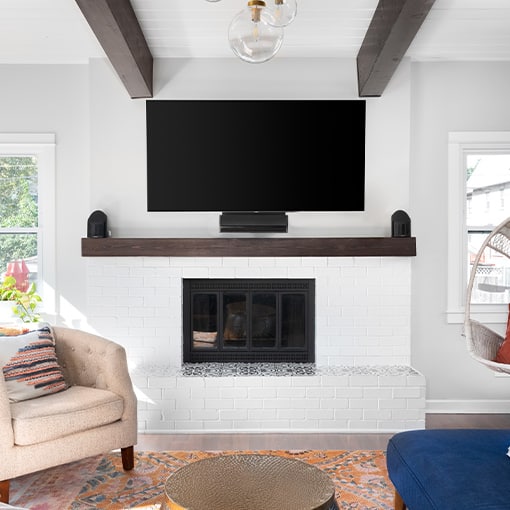
Credit: fullservicechimney.com
Will Mounting My Tv Above A Fireplace Void The Warranty?
Most TV manufacturers warn against exposing TVs to heat and smoke. If your TV fails and they find out it was mounted above a working fireplace, they may void the warranty. Always check your warranty details before mounting.
Is It Safe To Use A Gas Fireplace With A Tv Above It?
Gas fireplaces produce less heat than wood-burning ones, but the area above can still get hot. Always test the temperature after running the fireplace for a few hours. If it stays below 90°F (32°C), it’s generally considered safe. For extra peace of mind, install a deep mantel to block heat.
Can I Mount A Soundbar Above The Fireplace Too?
Yes, but you may get better sound by placing the soundbar below the TV, closer to ear level. If you mount it above, make sure it’s not blocked by the TV or mantel, and use a model designed for wall mounting.
Where Can I Find More Information About Safe Tv Mounting?
You can read more about TV mounting safety and best practices from sources like the CNET website, which offers expert guides and up-to-date advice.
Mounting a TV above a fireplace can work well if you plan carefully and check all the risks. By understanding the pros and cons, testing for heat, choosing the right mount, and adjusting your viewing setup, you can create a stylish and functional living space.
Always put safety first, and don’t be afraid to get professional help if you need it. If you’re not sure, remember that there are many other great ways to set up your TV for comfort and enjoyment.