
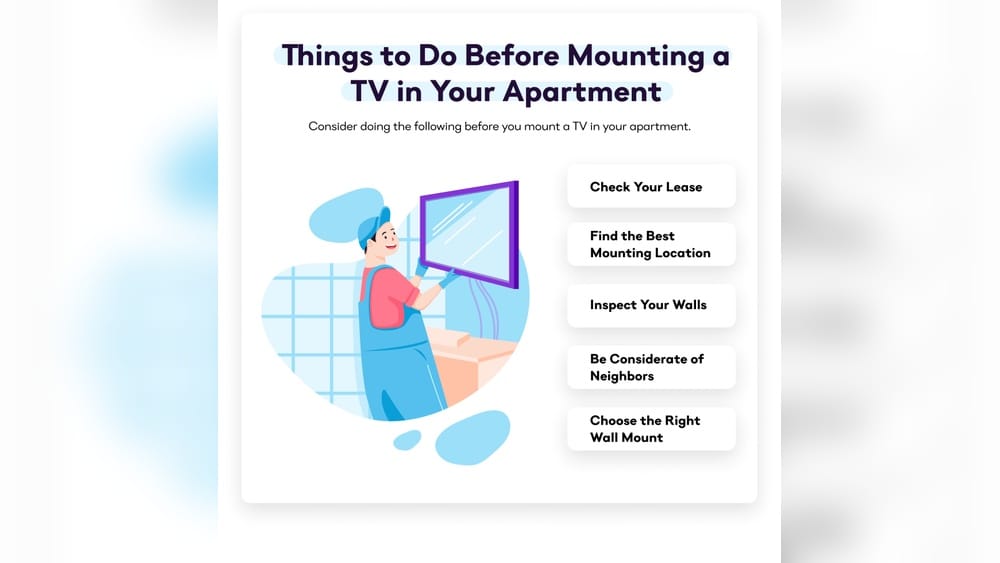
Mounting a TV in an apartment can feel confusing. You want a modern, clean look, but you worry about damaging walls, breaking lease rules, or losing your security deposit. The good news: with some knowledge and planning, you can enjoy a mounted TV even if you’re a renter. Landlords aren’t always against TV mounts, but there are important things you should know before you start drilling.
In this article, you’ll learn the real challenges of mounting a TV in an apartment, smart solutions for different wall types, and how to avoid common mistakes. Whether you’re a tech lover or just want extra floor space, you’ll find answers here.
We’ll cover landlord permission, tools you need, the best types of TV mounts, patching holes, and even no-drill alternatives. By the end, you’ll be ready to decide if mounting a TV is right for your rental—and how to do it safely.
Why Mounting A Tv In Apartments Is Different
Mounting a TV in a house is simple: you own the walls, so you can drill wherever you want. Apartments, however, are different. You’re living in someone else’s space, and that means extra rules.
Lease Agreements And Property Rules
Most apartments have a lease agreement that lists what you can and cannot do. Many leases specifically mention wall damage, drilling holes, or installing fixtures. Some allow small nail holes but not larger ones. Others may ban all wall changes without written permission.
Landlords worry about damage because large holes weaken walls, especially if you hit a stud or pipe. Repairing these can be expensive, and they might keep part of your deposit to fix them. Some property managers are flexible if you promise to repair any holes when you move out.
Differences In Wall Types
Another challenge is wall type. Not all apartment walls are made the same. Some are drywall, others are plaster, and some are even concrete. Each type needs different anchors and tools. Using the wrong method can make your TV unsafe or cause big, hard-to-fix holes.
Temporary Vs Permanent Living
If you’re renting short-term, you might not want the hassle of big repairs when you leave. But if you plan to stay several years, mounting a TV could be worth it. Either way, you need solutions that match your living situation.
The Pros And Cons Of Mounting A Tv In An Apartment
Before you get out the drill, it’s smart to weigh the pros and cons.
Benefits
- Saves floor space: Wall-mounting means no need for a bulky TV stand or cabinet.
- Sleek, modern look: A floating TV makes your room feel bigger and tidier.
- Better viewing angles: You can adjust the mount for the best view from anywhere.
- Keeps TV safe: Less risk of bumping or knocking over the TV, especially with kids or pets.
Downsides
- Wall damage: Drilling large holes may upset your landlord or cost you money later.
- Lease violations: Not following rules can lead to fees or even eviction.
- Complex installation: Mounting can be harder in apartments, especially with old walls or hidden wires.
- Extra repairs: When you move out, you’ll need to patch holes and repaint, which takes time and skill.
Non-obvious Insights
Many renters miss two things:
- Studs aren’t always where you want them. In apartments, wall studs may not be placed for perfect TV placement. You might need to compromise on height or location.
- Utilities behind walls: Apartments often have more hidden wires or pipes in walls, especially older buildings. Drilling blindly risks hitting something dangerous.
Getting Permission: How To Talk To Your Landlord
Most property managers just want their property returned in good condition. If you communicate clearly, many landlords will allow TV mounts with conditions.
Steps To Get Approval
- Read your lease: Check for rules about wall fixtures, drilling, or TV mounts.
- Prepare your request: Explain what you want to do, how you’ll minimize damage, and that you’ll repair holes before moving out.
- Offer a repair plan: Promise to fill and paint holes. Some landlords appreciate seeing the products you’ll use.
- Get permission in writing: Even if your landlord says “okay” in person, ask for an email or note. This protects you if things change.
What If They Say No?
If your landlord refuses, don’t risk your lease. There are creative, no-drill mounting solutions that won’t break the rules (covered later in this article).
Choosing The Right Tv Mount For Apartments
Not all TV mounts are the same. Some are better for renters than others. Here’s what to consider.
Types Of Tv Mounts
There are three main types:
- Fixed mounts: Keep the TV flat against the wall. Best for simple setups.
- Tilting mounts: Let you angle the TV up or down.
- Full-motion mounts: Extend, swivel, and tilt in many directions. Great for corner or flexible viewing.
Comparison Of Tv Mount Types
Here’s a quick look at how the main types compare:
| Type | Movement | Wall Holes | Best For |
|---|---|---|---|
| Fixed | None | Fewest | Simple, centered TVs |
| Tilting | Up/Down | Moderate | Above eye level |
| Full-motion | Swivel, Extend | Most | Flexible seating |
What Really Matters For Renters
- Number of holes: Fixed mounts usually need fewer and smaller holes, making repairs easier.
- Weight rating: Make sure the mount supports your TV’s size and weight.
- Wall compatibility: Some mounts are designed for drywall, others for concrete or plaster. Read the box!
- VESA pattern: Check your TV’s mounting hole spacing (the VESA pattern) to match the right bracket.
Common Buyer Mistakes
- Ignoring wall type: Many people buy mounts for drywall but live in apartments with plaster or brick.
- Overbuying: Full-motion mounts are cool but need bigger holes and heavier anchors—often not worth it for renters.
- Cheap hardware: Low-quality anchors can fail and cause damage.

Credit: www.reddit.com
Tools And Materials You’ll Need
Mounting a TV safely means using the right tools. Here’s a typical list for apartment renters:
- Stud finder: Finds wood or metal studs behind the wall.
- Drill and bits: For making precise holes. Use the right size for your anchors.
- Level: Ensures your TV isn’t crooked.
- Tape measure: For marking accurate hole spots.
- Screwdriver: Tightens screws into anchors or studs.
- Wall anchors: Choose high-quality anchors for your wall type.
- Patch kit: Needed to repair holes when you move out.
- Painter’s tape or masking tape: Helps mark positions without damaging paint.
Special Tools For Apartments
- Magnetic stud finders: These work better in old apartments with metal studs.
- Cable concealers: Hide power and HDMI cords without in-wall wiring.
Wall Types In Apartments And How To Mount A Tv On Each
Not all apartment walls are the same. Knowing your wall type is critical to a safe, successful install.
1. Drywall Over Wood Studs
This is the most common wall type in US apartments. The drywall is a thin, soft sheet, and wood studs are vertical beams behind it.
- How to mount: Use a stud finder to locate studs. Drill directly into the center of the stud for maximum strength.
- Anchors needed: If you can’t find a stud, use heavy-duty drywall anchors, but only for small TVs (under 30 inches).
- Pro tip: Always use at least two screws into studs for TVs over 32 inches.
2. Drywall Over Metal Studs
Some newer apartments use metal studs, which are lighter but less strong than wood.
- How to mount: You’ll need special metal stud anchors or toggle bolts.
- Drill type: Use a small pilot bit, then a larger bit for toggle anchors.
- Extra caution: Full-motion mounts can pull out of metal studs if not installed perfectly.
3. Plaster Walls
Older apartments, especially pre-1950, may have thick plaster over wood lath.
- How to mount: Go slowly—plaster can crack. Use a masonry bit if it’s very hard.
- Anchors: Use expanding anchors or toggle bolts.
- Pro tip: If you can, always aim for a stud, not just the plaster.
4. Concrete Or Brick
Some city apartments, especially basements or lofts, have concrete or brick walls.
- How to mount: Use a hammer drill with a masonry bit.
- Anchors: Use concrete screws or sleeve anchors.
- Safety tip: Wear eye protection—concrete dust is sharp.
Wall Type And Mounting Method Comparison
To help you match your wall type and mounting method, see this chart:
| Wall Type | Best Anchor | Mounting Difficulty | Repair Needed |
|---|---|---|---|
| Drywall/Wood Stud | Wood screws | Easy | Simple patching |
| Drywall/Metal Stud | Toggle bolts | Medium | Medium patching |
| Plaster | Expanding anchors | Hard | Harder to fix cracks |
| Concrete/Brick | Concrete anchors | Hard | May need pro repair |
Non-obvious Insight
Many renters assume all anchors are the same. But plastic drywall anchors (the cheap kind in most kits) are not strong enough for TVs. Always use metal or toggle anchors for anything over 20 lbs.
Step-by-step: How To Mount A Tv In An Apartment
Once you have the right permission, tools, and mount, you’re ready to install. Here’s a simple guide.
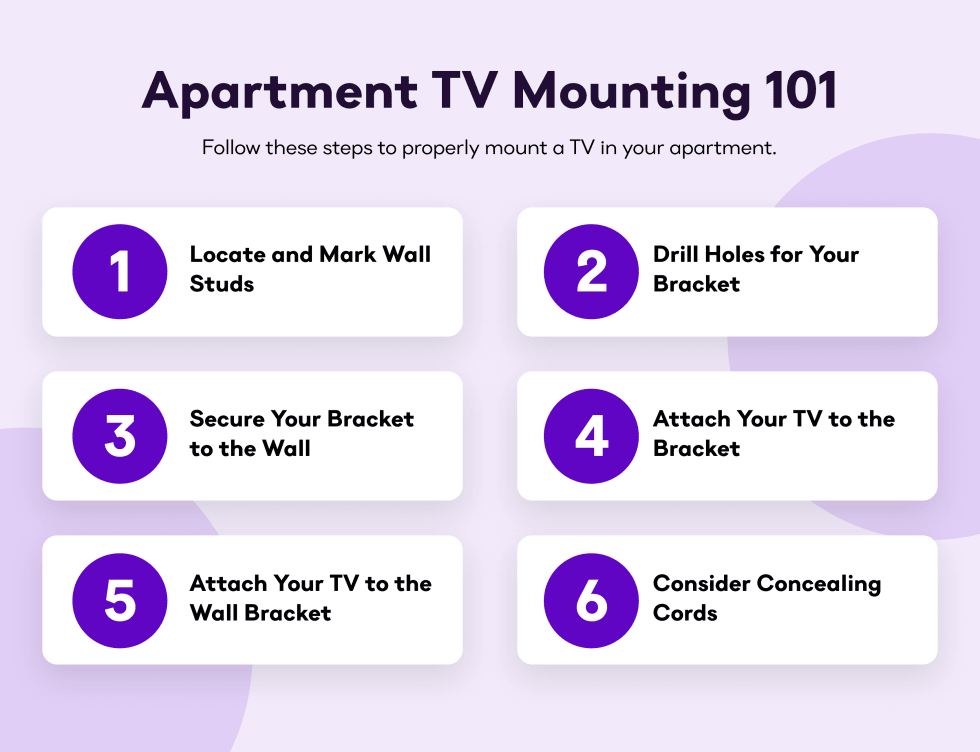
1. Plan The Location
- Choose a spot near a power outlet and cable jack.
- Check for glare from windows.
- Use blue painter’s tape to outline the TV on the wall so you can “see” it before drilling.
2. Find The Studs
- Use a stud finder to locate at least two studs.
- Mark stud centers lightly with pencil or tape.
- If you can’t find studs in the right place, consider a different spot or a no-drill solution.
3. Mark And Drill Pilot Holes
- Hold the mount on the wall, use a level, and mark holes.
- Drill small “pilot” holes first to avoid splitting wood or cracking plaster.
- For brick or concrete, start with a masonry bit.
4. Attach The Mount
- Screw the bracket into the wall, making sure all bolts are tight.
- Give it a gentle pull to check strength before hanging the TV.
5. Mount The Tv
- Attach mounting arms to the back of your TV.
- With a friend’s help, lift the TV onto the wall bracket.
- Double-check that it clicks or locks into place.
6. Hide Wires Safely
- Use surface cable covers for a clean look—never run power cords inside the wall unless you’re qualified.
7. Test And Adjust
- Turn on the TV, check viewing angles, and adjust tilt if needed.
- Make sure nothing wobbles.
Common Mistakes To Avoid
- Not checking for pipes or wires: Always check for hidden utilities before drilling.
- Using the wrong anchors: Weak or cheap anchors can fail, risking your TV and wall.
- Mounting too high: For best comfort, the center of your TV should be at eye level when sitting.
Alternatives: No-drill Tv Mounting Solutions
If drilling holes is not allowed, you still have options. Modern technology offers no-drill ways to mount a TV.
1. Tv Stand With Mount
These are floor stands with an attached pole and bracket. They look like wall mounts but rest on the floor.
- Pros: No wall holes, works with any wall type, fully movable.
- Cons: Takes up a bit more space than a wall mount.
2. Rail Or Track Systems
Some systems use long rails attached with tiny nails or adhesive that spread the TV’s weight. These can hold TVs up to 55 inches safely.
- Pros: Minimal wall damage, easy to remove and patch.
- Cons: Not as sleek as a real wall mount, limited movement.
3. Adhesive And Tension Mounts
Heavy-duty adhesives and tension poles (like shower rods) have become more popular.
- Pros: No holes, quick setup.
- Cons: Not for big TVs (usually max 40 inches), not as secure as drilling.
4. Renters’ Tv Mounting Kits
New kits offer special anchors that leave micro holes—easy to patch with a dab of spackle. Some brands even guarantee “deposit-safe” removal.
Comparing No-drill Options
Here’s a quick look at how no-drill options stack up:
| Option | TV Size Limit | Wall Damage | Cost |
|---|---|---|---|
| TV Stand with Mount | Up to 75″ | None | $$ |
| Rail/Track System | Up to 55″ | Minimal | $$$ |
| Adhesive/Tension | Up to 40″ | None | $ |
| Deposit-Safe Kits | Up to 55″ | Tiny holes | $$ |
How To Patch And Repair Walls When Moving Out
No matter how careful you are, mounting a TV usually leaves some holes. But with the right products and a little effort, you can make repairs so good your landlord won’t notice.
Patching Steps
- Remove all hardware: Take out screws, anchors, and brackets.
- Fill holes: Use spackle or wall filler. Press it in with a putty knife.
- Smooth the surface: Let the filler dry, then sand gently until flat.
- Prime and paint: Use matching paint for a perfect look. Most landlords appreciate the extra effort.
- Clean up: Wipe dust and make sure the wall blends in with the rest.
Pro Tips
- Color match: If you don’t have the original paint, bring a chip to the hardware store for matching.
- Deep holes: For bigger holes, use a wall repair patch behind the spackle.
- Timing: Patch holes a few days before move-out, so filler and paint can dry.
Non-obvious Insight
Small holes are easy to patch, but many renters forget to sand smooth. An un-sanded patch will always look bumpy and may cost you money from your deposit.
Safety Considerations When Mounting A Tv
A falling TV is dangerous and expensive. Take these safety steps:
- Check TV weight: Never exceed the weight rating of your mount or anchors.
- Test all bolts: After mounting, pull gently to make sure nothing moves.
- Hide cords safely: Loose wires are a tripping hazard and look messy.
- Secure kids and pets: If you have small children, make sure the mount is out of reach and all cords are secured.
If You’re Not Sure, Hire A Pro
Professional installers have tools to find studs, avoid pipes, and mount TVs safely. If you’re worried about damage or safety, spending $100–$200 for expert help can save money in the long run.
Real-world Examples: How Renters Made It Work
Sometimes, it helps to see what other people have done.
- Samantha (Chicago): Her lease banned drilling, so she used a TV stand with a mount. “It looked just like a wall-mounted TV, and when I moved, there wasn’t a single mark.”
- Alex (New York): Got written permission from his landlord, mounted into two wood studs, and used color-matched paint to repair holes. “My landlord never even noticed.”
- Priya (San Francisco): Concrete walls made drilling hard, so she hired a pro. “He had the right tools, and the whole job took one hour.”
- Miguel (Dallas): Used a track system for his 50-inch TV—only four tiny nail holes to patch when moving out.
Non-obvious Insight
Even in strict apartments, landlords sometimes allow mounting if you offer a deposit or proof of insurance for repairs. Always ask before giving up.
Environmental Impact: Should You Even Mount?
Mounting a TV means drilling holes and using anchors, which creates waste. It’s not a huge footprint, but if you move often, no-drill options are better for the planet. Reusing stands or renting pro install kits also reduces waste.

Credit: www.reddit.com
When You Should Not Mount A Tv
Sometimes, it’s best not to mount at all. Here are signs you should use a stand instead:
- Short-term lease: If you’re staying less than a year, the hassle isn’t worth it.
- Historic apartments: Older buildings may have rules about wall changes to protect original features.
- Unstable walls: If the wall feels soft or crumbly, don’t risk it.
- Landlord says no: Never risk eviction or lost deposit for a TV.
Final Thoughts
Mounting a TV in an apartment is possible, but it takes planning, the right tools, and clear communication with your landlord. For most renters, a small number of well-placed holes can be patched later, but always check your lease and ask for written permission.
If you can’t drill, today’s no-drill solutions look great and won’t risk your deposit.
The key is to match your method to your apartment, your lease, and your own DIY skills. If you’re unsure, a professional can help. With the right approach, you can enjoy a modern, mounted TV—without headaches when you move out.
For more technical information on wall anchors and TV mounts, check out the Consumer Reports TV Mounting Guide.
Credit: www.apartmentlist.com
Frequently Asked Questions
Can I Mount A Tv In My Apartment Without Losing My Deposit?
Yes, if you get written permission, use the right anchors, and patch all holes before moving out, most landlords will return your deposit. Using no-drill mounting options is the safest way to avoid any risk.
What Should I Do If I Can’t Find Studs In My Apartment Wall?
If studs aren’t in the right spot, use heavy-duty toggle bolts for drywall or choose a no-drill mounting solution like a TV stand with a mount. Never try to hang a heavy TV with only basic plastic anchors.
How Do I Hide Cords When My Tv Is Wall-mounted In An Apartment?
Use surface-mounted cable covers that stick to the wall. These are paintable and removable. Never run power cords inside the wall unless you are qualified and your landlord allows it.
Are There Tv Mounts Made Just For Renters?
Yes, some brands offer “deposit-safe” mounting kits with special anchors that leave tiny holes. There are also floor stands and rail systems designed for renters who can’t drill.
Is It Legal For My Landlord To Refuse Tv Mounting In My Apartment?
Yes, your landlord owns the property and can set rules about wall changes. Always follow your lease and get permission in writing. If refused, use a no-drill solution instead.