
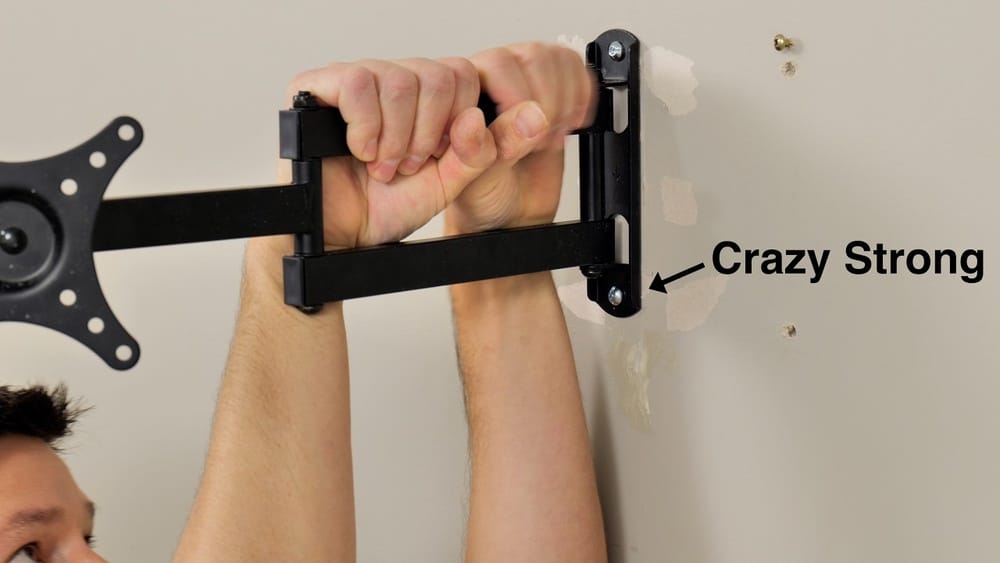
Mounting a TV on drywall is a common idea for many homes and offices. It saves space, looks modern, and lets you enjoy your favorite shows from the perfect angle. But is it safe? Can you really hang a heavy TV on drywall without damaging your wall or risking an accident?
Many people worry about their TV falling or the wall cracking. In this guide, you will learn exactly what you need to know about mounting a TV on drywall. We’ll look at the risks, the right tools, the step-by-step process, and smart solutions for different wall types.
Whether you’re a first-time DIYer or just want to avoid mistakes, this article will give you the confidence to do it right.
Can You Really Mount A Tv On Drywall?
The short answer is yes, you can mount a TV on drywall—but you must do it correctly. Drywall by itself is not strong enough to support heavy objects for long periods. If you try to screw a TV bracket directly into drywall, it may hold for a short time, but it’s likely to pull out, causing damage and possible injury. The secret is to use the wall studs or strong anchors designed for drywall.
Wall studs are vertical pieces of wood or metal behind your drywall, usually spaced 16 or 24 inches apart. These provide the strength needed to hold a TV securely. If you can attach your TV bracket to at least one or two studs, your mount will be much safer.
For situations where wall studs are not available or not in the right spot, there are special drywall anchors and toggle bolts that can help. However, not all anchors are created equal—some are much stronger than others. Understanding your wall structure and using the right mounting method is key to a safe installation.
Understanding Drywall Strength And Tv Weight
Drywall is not designed to hold heavy loads. On its own, drywall can usually support no more than 10-15 pounds before starting to crack or crumble. Most modern TVs, even flat ones, weigh more than this. For example, a 55-inch TV often weighs between 25 and 50 pounds, while larger models can reach 80 pounds or more.
This is why relying on drywall alone is risky.
Typical Tv Weights
Here’s a quick look at average TV weights by size:
| Screen Size | Average Weight |
|---|---|
| 32 inches | 10 – 15 lbs |
| 43 inches | 15 – 25 lbs |
| 55 inches | 25 – 50 lbs |
| 65 inches | 45 – 70 lbs |
| 75 inches | 65 – 100 lbs |
Key insight: The larger the TV, the more important it is to use strong mounting methods. Never trust drywall alone for TVs over 15 lbs.
Types Of Drywall And Their Limits
Most homes in the US have 1/2-inch or 5/8-inch drywall. Thicker drywall is a bit stronger, but even the best drywall is weak compared to studs or masonry.
- 1/2-inch drywall: Standard for most walls, supports less weight.
- 5/8-inch drywall: Used for ceilings and some walls, a bit stronger but still not enough for TVs without anchors or studs.

Credit: mountingdreamonline.com
Choosing The Right Mounting Method
The safest way to mount a TV on drywall is to attach the bracket directly into wall studs. But sometimes, the studs aren’t where you want the TV, or there aren’t enough studs in the right place. Here are your main options:
1. Mounting Into Wall Studs
This is the strongest and safest method. Screws go through the drywall and into the studs, which can hold heavy loads.
- Pros: Very secure, holds even large TVs.
- Cons: Studs may not be in the perfect spot; requires finding studs.
2. Using Drywall Anchors Or Toggle Bolts
If you can’t use studs, heavy-duty anchors or toggle bolts are the next best thing. They spread the load over a larger area and are much stronger than regular screws.
- Pros: Can be used anywhere on the wall, works even if studs aren’t available.
- Cons: Not all anchors are strong enough; some have weight limits.
3. Hybrid Approach
Some people use a mix—attaching to one stud and using anchors on the other side. This can work for medium-sized TVs but is less ideal for very heavy models.
4. Mounting Rails Or Plywood Backing
If you want to mount a TV where there are no studs at all, you can install a horizontal mounting rail or a piece of plywood screwed into several studs. The TV bracket then attaches to the rail or plywood, which spreads out the weight.
- Pros: Allows flexible TV placement, very strong.
- Cons: More work, may require painting/touch-up.
Non-obvious insight: For rental apartments, mounting a plywood board and painting it to match the wall can let you move the TV later with less wall damage.
What You Need To Mount A Tv On Drywall
Before you start, gather the right tools and materials. This makes the job faster and safer.
- TV wall mount bracket (choose one rated for your TV’s size and weight)
- Stud finder (electronic or magnetic)
- Power drill (with drill bits and screwdriver bits)
- Level (to keep the TV straight)
- Tape measure
- Pencil or marker
- Screws and bolts (usually included with the mount)
- Drywall anchors or toggle bolts (if needed)
- Socket wrench (for lag bolts)
- Vacuum or broom (for cleanup)
For more complex walls, you may also need a utility knife, extra drywall anchors, or a piece of plywood.
How To Find Wall Studs Behind Drywall
Finding studs is important for a safe mount. Here’s how to do it:
- Electronic stud finder: Move it slowly along the wall. It will beep or light up when it senses a stud.
- Knock test: Tap the wall with your knuckles. Studs sound solid; empty spots sound hollow.
- Look for clues: Outlets and switches are usually attached to a stud. Measure 16 or 24 inches from one to find more.
- Magnet method: A small magnet will stick to the nails or screws in the studs behind the drywall.
Pro tip: Mark the edges of each stud, not just the center. Studs are usually about 1.5 inches wide.
Step-by-step Guide: Mounting A Tv On Drywall
Let’s walk through the process, step by step. These instructions work for most situations, but always follow the directions that come with your TV mount.
1. Decide On The Tv Height And Location
Think about where you’ll be sitting. The center of the TV should be at eye level when you’re seated. For most people, this is about 42 inches from the floor to the center of the screen.
- Sit in your favorite spot and mark eye level on the wall.
- Use a tape measure to help with precise placement.
2. Find And Mark The Studs
- Use your stud finder to locate at least two studs near your chosen spot.
- Mark both edges of each stud with a pencil.
- Double-check your marks by tapping or using a magnet.
3. Position The Wall Mount Bracket
- Hold the wall mount bracket against the wall.
- Use a level to make sure it’s perfectly straight.
- Mark the screw holes on the studs.
Insider tip: If the mount is heavy, ask someone to help hold it while you mark.
4. Drill Pilot Holes
- Use a drill bit slightly smaller than your screws or bolts.
- Drill into the center of the studs at your marked points.
- For toggle bolts, drill holes large enough for the toggle to fit through.
5. Attach The Bracket To The Wall
- Hold the bracket in place.
- Insert the screws or bolts through the bracket and into the studs (or anchors).
- Tighten with a power drill or socket wrench.
- Do not overtighten—you could strip the wood or damage the wall.
6. Attach The Mounting Plate To Your Tv
- Lay the TV face-down on a soft surface (like a blanket).
- Find the mounting holes on the back.
- Attach the mounting plate using the screws from your kit.
Common mistake: Using the wrong size screws. Never force a screw—it should fit smoothly.
7. Hang The Tv On The Wall Bracket
- With help, lift the TV and hook the mounting plate onto the wall bracket.
- Make sure it clicks or locks in securely.
- Some mounts need extra screws to secure the TV to the bracket.
8. Double-check Everything
- Make sure the TV is level.
- Test by gently wiggling the TV—there should be no movement.
- Clean up any dust or debris.
Non-obvious insight: Leave a little space behind the TV for cables and ventilation. Overheating can shorten your TV’s life.
Types Of Drywall Anchors And When To Use Them
If you can’t hit a stud, you’ll need strong anchors. Here’s a look at popular types:
| Anchor Type | Max Load (in drywall) | Best For |
|---|---|---|
| Plastic expansion anchors | 10-25 lbs | Small shelves, light frames |
| Self-drilling anchors (metal/plastic) | 20-50 lbs | Medium wall decor |
| Toggler Snaptoggle bolts | 80-100 lbs | TVs, heavy shelves |
| Spring toggle bolts | 70-100 lbs | TVs, ceiling mounts |
| Molly bolts | 50-100 lbs | Medium to heavy items |
- Pro tip: Always check the weight limit on the anchor’s box. Never exceed it.
- Important: Use at least two anchors for balance and safety.
Mistakes To Avoid When Mounting On Drywall
Many TV mounting problems come from simple mistakes. Watch out for these:
- Mounting only into drywall: This is the #1 cause of TVs falling off the wall.
- Using weak anchors: Not all drywall anchors are strong enough for a TV.
- Ignoring stud location: Trying to “make it work” in the wrong spot puts your TV at risk.
- Overtightening screws: This can strip the stud or crack the drywall.
- Not checking for wires or pipes: Drilling into live wires is dangerous. Use a wire detector if you’re not sure.
- Skipping the level: A crooked TV is annoying and looks unprofessional.
- Not reading the mount’s instructions: Each mount is a little different—check the manual before starting.
Insider insight: Some older homes have metal studs, not wood. For metal studs, use toggle bolts specifically designed for metal.
What To Do If Your Tv Location Doesn’t Match The Studs
Sometimes, your perfect TV spot is between the studs. Don’t worry—you still have options.
1. Use A Mounting Rail Or Plate
Install a horizontal mounting rail (available at hardware stores) that spans two or more studs. The TV bracket attaches anywhere along the rail.
- Advantage: Lets you place the TV exactly where you want, with full support.
2. Add A Plywood Backer
Screw a piece of 3/4-inch plywood (painted to match your wall) across two or more studs. Mount the TV bracket to the plywood.
- Advantage: Spreads the TV’s weight safely; easier to adjust or move later.
3. Use Multiple Heavy-duty Anchors
For lighter TVs (under 40 lbs), using several high-strength anchors can be enough. But always check the anchor’s rating and use at least four for balance.
How To Hide Wires And Cables For A Clean Look
A wall-mounted TV looks much better without messy cables hanging down. Here’s how to keep things neat:
- Cable covers: Snap-on plastic raceways that stick to your wall and paint to match.
- In-wall cable kits: Allow you to run power and HDMI cables inside the wall (check local codes).
- Cord management sleeves: Wrap multiple cables together behind the TV.
- Power bridge kits: Safe, code-approved way to extend power behind the TV.
Expert insight: Never run a regular extension cord behind the wall—use a proper in-wall rated power kit.

Credit: www.youtube.com
Mounting A Tv On Different Wall Types
Not all walls are the same. Here’s how drywall compares to other common wall types:
| Wall Type | Mounting Difficulty | Best Method |
|---|---|---|
| Drywall with wood studs | Easy | Direct to studs |
| Drywall with metal studs | Medium | Toggle bolts for metal |
| Plaster walls | Hard | Studs or masonry anchors |
| Concrete or brick | Medium | Masonry anchors/bolts |
- For plaster: Drill slowly to avoid cracking. Always use studs if possible.
- For brick/concrete: Use a masonry bit and anchors designed for stone.
Safety Tips For Tv Mounting
- Always use two people: TVs are heavy and awkward to lift alone.
- Double-check stud location: Missing the stud by even half an inch weakens the hold.
- Secure all screws: Loose hardware can lead to accidents.
- Test before letting go: Gently pull on the bracket before hanging the TV.
- Keep kids and pets away: Don’t let anyone near the area until you’re done.
Bonus tip: Write down the TV’s serial number before mounting—it’s hard to see once the TV is on the wall.
When To Call A Professional
Mounting a TV is a doable DIY project for most people, but sometimes it’s best to call an expert. Consider hiring help if:
- Your TV is over 65 inches or weighs more than 75 lbs.
- You have very old or damaged drywall.
- There are complicated wiring or electrical needs.
- You’re not comfortable with power tools.
- You want a very clean, in-wall cable solution.
Professional installers have the right tools and experience. They can usually finish the job in less than an hour.
Real-world Examples: Successes And Fails
Success Story
Mary wanted her 55-inch TV above her fireplace, but there were no studs in the right spot. She installed a painted plywood board across three studs and mounted her TV bracket to the plywood. After three years, the TV is still rock solid, and the wall looks great.
Common Fail
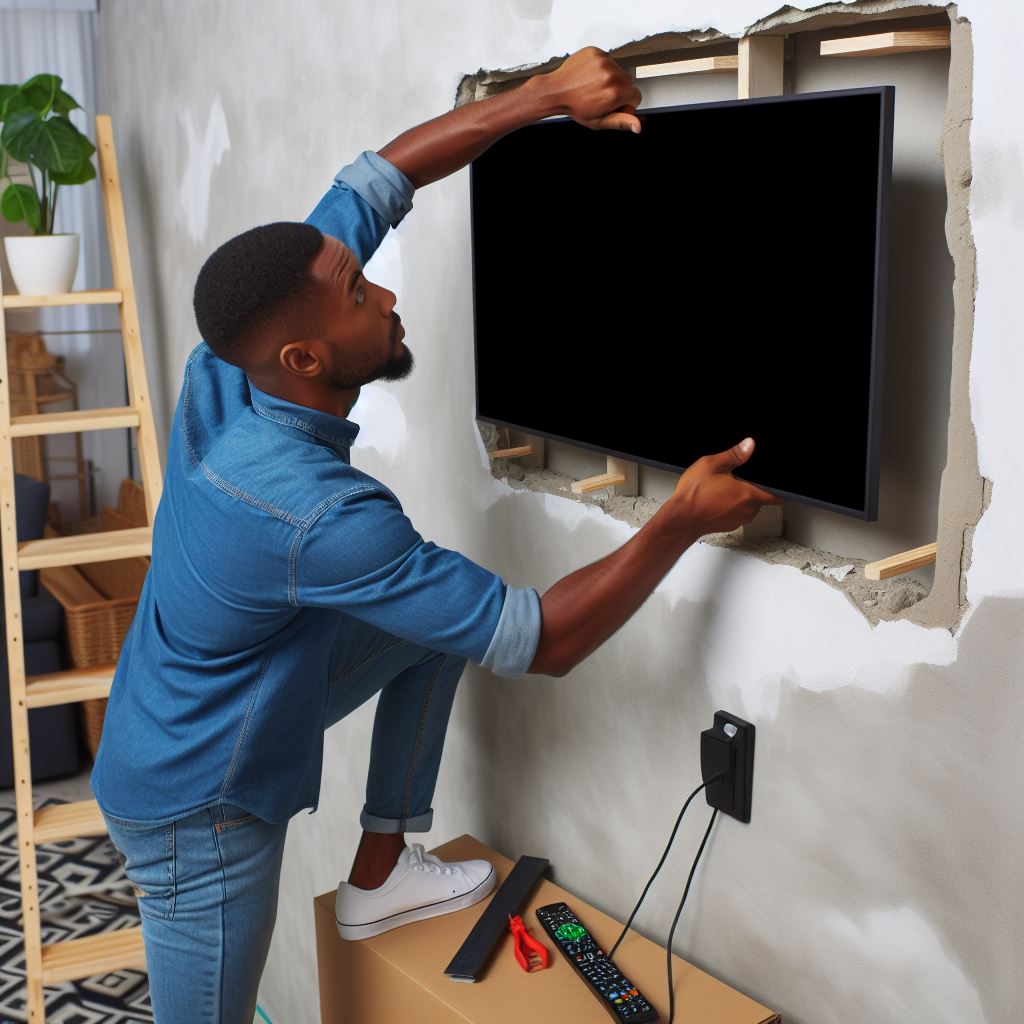
James tried to mount his 65-inch TV using only plastic anchors. After two weeks, the anchors pulled out, and his TV crashed to the floor. He learned the hard way that wall studs or heavy-duty anchors are a must.
Key takeaway: Never cut corners on safety. The right tools and methods make all the difference.
Credit: condomounts.com
Cost Breakdown: Diy Vs Professional Mounting
Mounting a TV yourself is usually cheaper, but here’s what to expect:
- TV wall mount bracket: $30 – $100 (depending on size and features)
- Stud finder: $10 – $25
- Drill and bits: $40 – $100 (if you don’t have one)
- Anchors/toggle bolts: $10 – $20
- Cable covers/management: $15 – $40
- Professional install: $100 – $300 (varies by location and TV size)
Non-obvious insight: Good quality anchors and a solid mount are much cheaper than replacing a broken TV or repairing damaged walls.
Maintenance And Long-term Care
After mounting your TV, check it every few months:
- Make sure all screws and bolts are still tight.
- Look for any signs of wall cracking or movement.
- Dust behind the TV to prevent overheating.
- Check cables for wear or loose connections.
If you ever need to move the TV, patch the old holes with spackle and touch up with paint.
Environmental Factors To Consider
- Humidity: High moisture can weaken drywall over time. Avoid mounting TVs in bathrooms or damp basements unless you’re using special moisture-resistant anchors.
- Temperature: Don’t mount TVs above fireplaces unless the wall stays cool during use. Heat can damage electronics.
- Vibrations: In earthquake zones, use safety straps or anti-tip kits for extra security.
Tv Mount Types: Which Is Best For Drywall?
There are several types of TV mounts, each with pros and cons:
- Fixed mounts: Hold the TV flat against the wall. Simple, strong, and low risk.
- Tilting mounts: Allow the TV to tilt up or down. Good for reducing glare.
- Full-motion (articulating) mounts: Move the TV in several directions. Great for corner placements, but require stronger mounting.
Key insight: Full-motion mounts put more stress on the wall, so always use studs and/or heavy-duty anchors.
Smart Tv Placement: Tips For The Best Viewing Experience
- Place the TV so the center is at eye level.
- Avoid mounting in direct sunlight to reduce glare.
- Leave space for airflow behind the TV.
- Consider the distance from your seating area:
- 32-inch TV: 4–6 feet away
- 55-inch TV: 7–11 feet away
- 75-inch TV: 10–15 feet away
Pro tip: Use painter’s tape to outline the TV’s size on the wall before drilling any holes.
Frequently Asked Questions
How Much Weight Can Drywall Hold Without Studs?
Drywall alone can usually hold 10–15 pounds with standard anchors, but this is not safe for TVs. Always use wall studs or heavy-duty anchors for anything over 15 pounds.
Can I Mount A 65-inch Tv On Drywall?
Yes, if you anchor the mount into wall studs or use multiple heavy-duty toggle bolts. Never rely on drywall alone for a TV this large.
What If I Drilled Into The Wrong Spot?
If you drilled a hole in the wrong place, fill it with spackle or a wall repair kit. Let it dry, sand smooth, and paint over. Then mark and drill your new holes carefully.
Are Drywall Anchors Safe For Tv Mounting?
Only certain heavy-duty anchors (like Toggler Snaptoggle or spring toggle bolts) are safe for TVs. Check the weight rating and use at least two or more anchors for balance.
Is It Safe To Mount A Tv Above A Fireplace On Drywall?
It can be safe if the wall does not get hot and you use studs or a plywood backer. Always check the wall temperature during fireplace use and avoid mounting if it gets warm to the touch.
Mounting a TV on drywall is possible, but it’s important to do it right. With careful planning, the right tools, and strong anchors or studs, you can enjoy a safe, stylish entertainment setup for years to come. For more detailed info on wall mounts and safety, check Family Handyman. Take your time, measure twice, and don’t be afraid to ask for help if you need it. Your TV—and your wall—will thank you.