
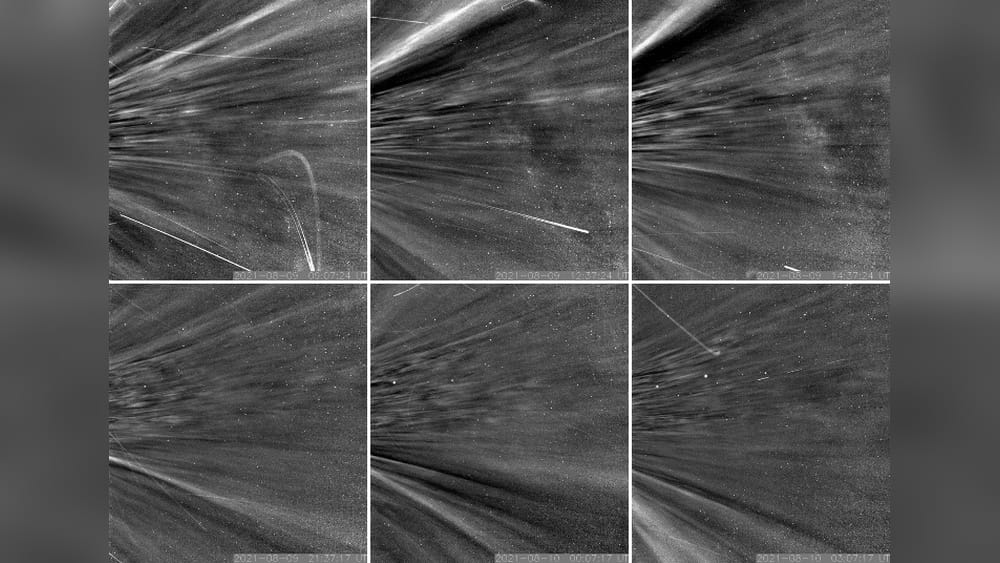
The Sun has always been a source of fascination for scientists and everyday people alike. Its immense power shapes our solar system, fuels life on Earth, and creates both beauty and danger through phenomena like solar flares and auroras. Despite being so essential, much about the Sun remains a mystery. To understand our star better, NASA launched the Parker Solar Probe in 2018—a mission designed to go closer to the Sun than any spacecraft before it. This raises a question for many: *Does the Parker Solar Probe have a camera?* And if so, what kind of images can it capture so close to the Sun’s surface?
This topic is more complex than it seems. Cameras, as we know them from Earth and planetary missions, face severe challenges near the Sun. The Parker Solar Probe’s unique design and scientific goals mean its approach to imaging is very different from most space missions.
In this article, you’ll discover what instruments the Parker Solar Probe carries, how it observes the Sun, and why its imaging capabilities matter for science and for us back on Earth.
Understanding The Parker Solar Probe Mission
The Parker Solar Probe is a revolutionary spacecraft built to answer fundamental questions about the Sun’s outer atmosphere, known as the corona. It’s the first mission to “touch” the Sun, flying through regions of space that no spacecraft has ever visited. This proximity is crucial for understanding why the corona is much hotter than the Sun’s visible surface, how the solar wind is accelerated, and what drives solar energetic particles that sometimes threaten our technology and astronauts.
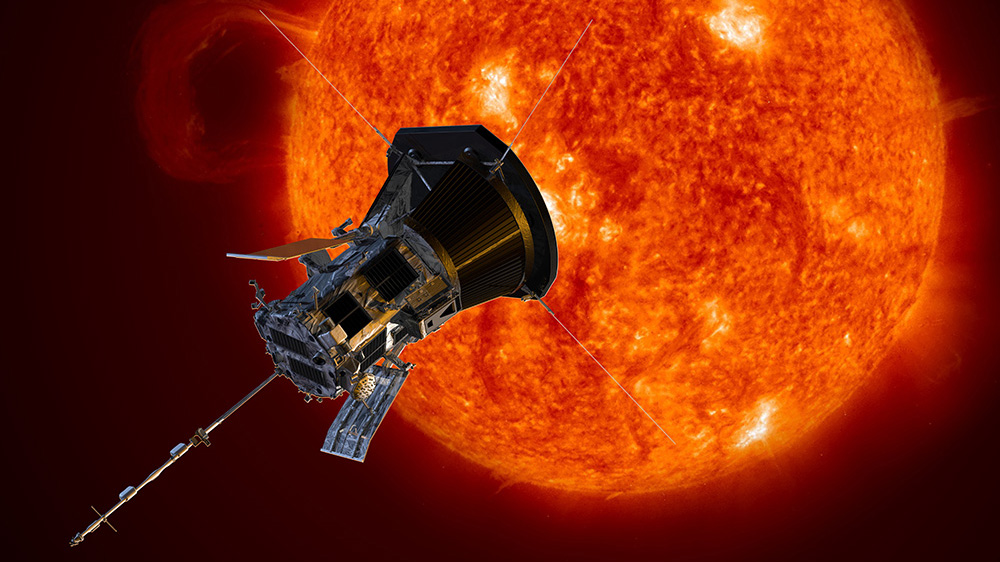
To survive the Sun’s extreme heat and radiation, the Parker Solar Probe uses a special Thermal Protection System (TPS)—a heat shield made of reinforced carbon-carbon composite. This shield keeps most of the spacecraft’s instruments cool enough to function, even as temperatures reach over 2,500°F (about 1,377°C) on the shield’s sun-facing side.
The probe’s orbit is elliptical, meaning it swings very close to the Sun at its closest point (perihelion) and then travels farther away, looping back in for repeated encounters. Over seven years, it will complete 24 orbits, each time diving closer to the Sun.
Does The Parker Solar Probe Have A Camera?
The simple answer is: Yes, the Parker Solar Probe does have a camera. However, it’s not a camera in the traditional sense like those found on Mars rovers or the Hubble Space Telescope. Instead, the probe carries a set of specialized imaging instruments designed to observe the Sun’s corona and solar wind in ways that standard cameras cannot.
The main imaging instrument on the Parker Solar Probe is called WISPR—the Wide-Field Imager for Parker Solar Probe. WISPR is responsible for taking pictures, but it works differently from typical space cameras. Let’s look deeper at what WISPR does and why it’s so important.
The Wispr Instrument: The Eyes Of Parker Solar Probe
What Is Wispr?
WISPR stands for Wide-Field Imager for Parker Solar Probe. It’s the only traditional imaging instrument onboard the probe and is designed specifically for capturing images of the solar corona, the solar wind, and related structures like coronal mass ejections (CMEs).
WISPR is not just one camera but two optical telescopes working together. These telescopes are mounted on the side of the spacecraft, peeking out from behind the heat shield. This clever placement allows WISPR to take images while still being protected from the Sun’s intense heat.
How Wispr Works
Unlike cameras that take pictures in visible light, WISPR is designed to observe the Sun’s outer atmosphere in visible and near-infrared light. This allows it to capture structures in the corona that are otherwise difficult to see from Earth or even from other spacecraft.
WISPR takes sequences of images, which can be combined to create movies showing the movement of solar material. This helps scientists watch how the solar wind flows and how CMEs—huge clouds of solar plasma—move through space.
WISPR’s field of view is very wide, covering from just off the Sun’s disk out to 13. 5 degrees away. This lets it capture large-scale events and track them as they travel away from the Sun.
Technical Specifications
Here’s an overview of WISPR’s key technical details:
| Feature | Specification |
|---|---|
| Number of telescopes | 2 (inner and outer) |
| Field of view | Inner: 40°, Outer: 58° (combined 96°) |
| Wavelength range | Visible & near-infrared (500–750 nm) |
| Image resolution | 2048 x 2048 pixels per image |
| Placement | Side of spacecraft, behind heat shield |
Why Wispr Matters
WISPR gives scientists a unique view of the solar corona and solar wind from much closer than any previous mission. It helps map out the structure and motion of the Sun’s outer atmosphere. By watching events like CMEs as they erupt and travel into space, researchers can better predict when these events might reach Earth and disrupt our satellites or power grids.
WISPR’s design also allows it to see faint details that are invisible from Earth, where our planet’s atmosphere and distance limit what we can observe.
What Does Wispr See? Sample Images And Discoveries
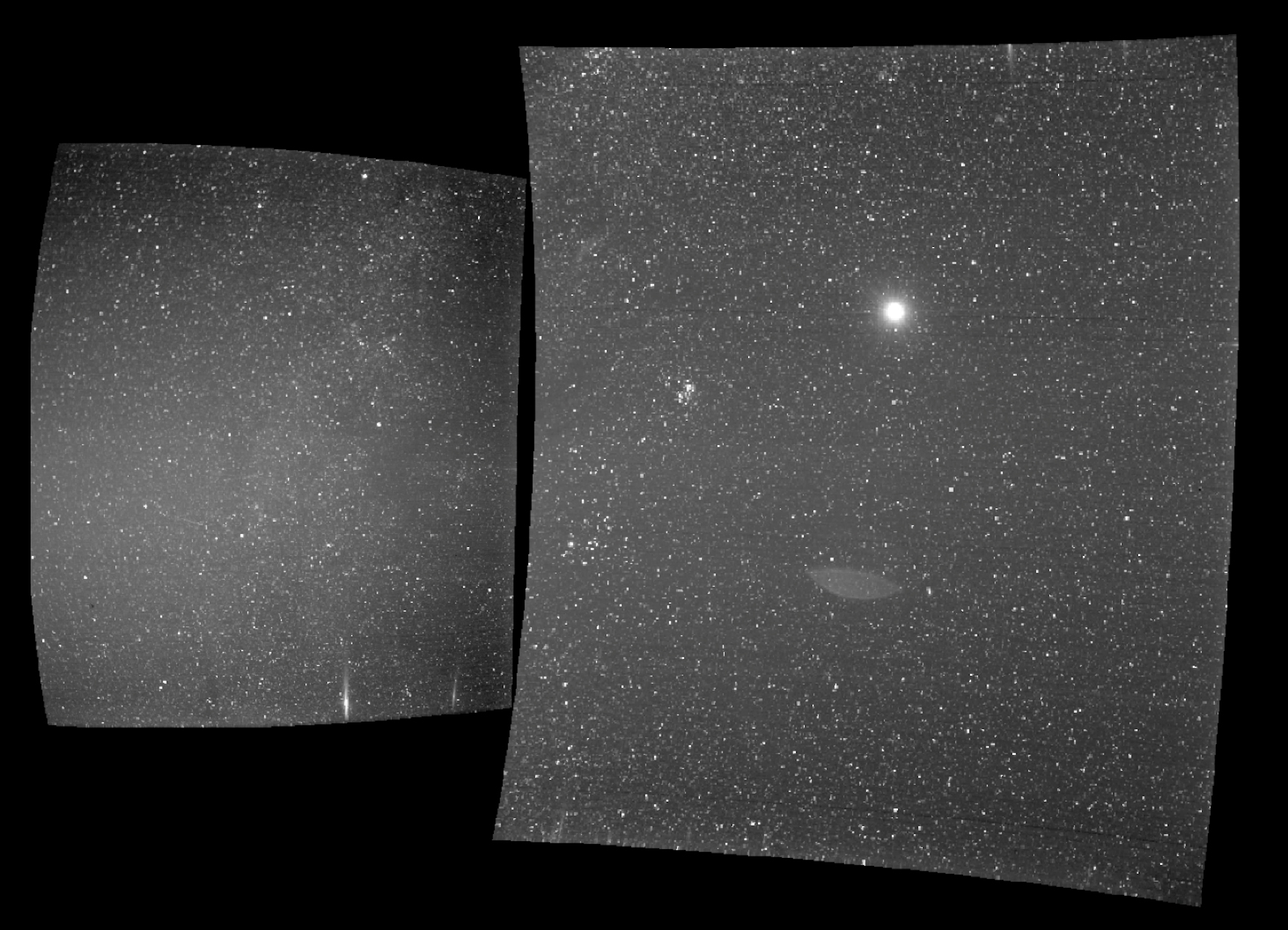
Since its launch, WISPR has sent back images that have amazed scientists and the public. Some of the first pictures showed the solar wind flowing away from the Sun, full of fine structures and moving waves. In one famous image, WISPR caught Venus as a bright spot in the background, demonstrating just how wide its field of view is.
WISPR’s images have revealed:
- The structure of the solar corona close to the Sun, including streamers and jets
- The detailed flow of solar wind as it leaves the corona
- Coronal mass ejections (CMEs) in their early stages
- Dust clouds in the inner solar system, helping us map the distribution of space dust
Here’s a comparison of what WISPR can see versus cameras on earlier solar missions:
| Instrument | Closest Approach to Sun | Type of Images | Main Focus |
|---|---|---|---|
| WISPR (Parker Solar Probe) | as close as 6.2 million km | Wide-field, visible & near-infrared | Corona, solar wind, CMEs |
| SECCHI (STEREO) | over 100 million km | Coronagraph, visible light | Corona, CMEs |
| LASCO (SOHO) | about 150 million km | Coronagraph, visible light | Corona, CMEs |
Because Parker Solar Probe gets so much closer to the Sun, WISPR can see structures and flows in the solar wind that are blurred or invisible to instruments farther away.

Credit: phys.org
Why Not Use A “regular” Camera?
Many people wonder why the Parker Solar Probe doesn’t just carry a normal camera, like those used on Mars or the Moon. There are several reasons why this isn’t practical or helpful for this mission.
Extreme Heat And Radiation
The main challenge is heat. Near the Sun, temperatures are high enough to destroy most camera electronics and optics. The Parker Solar Probe’s heat shield protects its instruments, but any device poking out from the shield would be at risk.
The Sun’s Brightness
The Sun is so bright up close that a normal camera would be overwhelmed, even with strong filters. The corona and solar wind are much fainter than the Sun’s surface, so WISPR uses special optics and sensors to capture these subtle details without being blinded.
Scientific Goals
The Parker Solar Probe’s main goal is not to take pretty pictures but to gather data about the Sun’s magnetic fields, plasma, and particles. WISPR’s images are a tool for science, not for public outreach or exploration photos.
Other Instruments On Parker Solar Probe
WISPR is just one part of the Parker Solar Probe’s science suite. The spacecraft carries four main sets of instruments, each designed to answer key questions about the Sun:
- FIELDS: Measures electric and magnetic fields in the corona.
- SWEAP (Solar Wind Electrons Alphas and Protons): Measures properties of the solar wind.
- ISʘIS (Integrated Science Investigation of the Sun): Measures energetic particles.
- WISPR: Takes images of the corona and solar wind.
Each instrument is carefully placed and protected to survive the harsh environment. For example, FIELDS uses antennas that extend out into space but are made of materials that can withstand the Sun’s heat.
Here’s a summary comparison of the four instrument suites:
| Instrument | Main Function | Data Type |
|---|---|---|
| FIELDS | Measures electric & magnetic fields | Waveforms, field strength |
| SWEAP | Measures solar wind particles | Particle counts, velocities, temperatures |
| ISʘIS | Studies energetic particles | Particle energy, type, direction |
| WISPR | Imaging of corona & solar wind | Photos & movies |
Notice that WISPR is the only instrument dedicated to imaging, while the others focus on measuring invisible fields and particles.
Credit: www.jhuapl.edu
Insights From Wispr And Parker Solar Probe
Since its launch, Parker Solar Probe and WISPR have already provided several important discoveries:
Revealing The Solar Wind’s Structure
WISPR has shown that the solar wind is not a smooth flow but is full of fine structures, “switchbacks” (sudden reversals of magnetic field direction), and waves. This helps scientists understand how energy is transferred from the Sun into space.
Capturing Coronal Mass Ejections Up Close
WISPR has imaged CMEs from their birth in the corona out into interplanetary space. By seeing these eruptions up close, researchers can test models of how CMEs form and grow—improving our ability to forecast space weather that can impact Earth.
Mapping Dust In The Inner Solar System
Unexpectedly, WISPR has also been able to map the zodiacal dust—tiny particles left over from comets and asteroids—near the Sun. This helps us understand the environment close to the Sun and how dust interacts with solar radiation.
Observing Planets From The Sun’s Neighborhood
From its unique viewpoint, Parker Solar Probe has captured images of planets like Venus and Mercury as bright points in the background. This not only helps calibrate WISPR’s measurements but also provides rare views of the solar system from a new angle.
How Wispr Images Are Sent Back To Earth
One common question is how Parker Solar Probe sends its pictures back to Earth, considering it’s millions of miles away and operates in a challenging environment.
Data Storage And Transmission
Parker Solar Probe has onboard computers and data storage. WISPR takes many images during each close pass by the Sun, storing them on the spacecraft. When the probe is farther from the Sun and in contact with Earth, it uses a high-gain antenna to transmit the data back.
The process can take days or weeks, depending on the probe’s position.
Data Processing
Once received on Earth, raw WISPR images are processed to remove noise and enhance features. Scientists use special software to combine images, create movies, and analyze faint details.
Limited Bandwidth
Because the Parker Solar Probe is so far from Earth (and sometimes behind the Sun), it can’t send back every image it takes. Scientists choose the most important data to transmit, often focusing on images of particular events or structures.
Credit: www.space.com
Comparing Parker Solar Probe’s Imaging To Other Missions
The Parker Solar Probe is not the first spacecraft to image the Sun, but it’s the first to do so from such a close distance. Here’s how its imaging compares to other solar missions:
- SOHO (Solar and Heliospheric Observatory): Launched in 1995, SOHO’s LASCO instrument uses a coronagraph to block out the bright Sun and image the corona from Earth’s orbit (~150 million km away).
- STEREO (Solar TErrestrial RElations Observatory): Twin spacecraft launched in 2006, providing 3D views of the Sun’s atmosphere. Their SECCHI imager also uses coronagraphs but never gets closer than Earth’s distance.
- Solar Orbiter: A European mission launched in 2020, equipped with cameras to image the Sun’s poles and corona. It gets closer than SOHO but not as close as Parker Solar Probe.
What sets Parker Solar Probe apart is its proximity. By flying through the corona itself, WISPR can see small-scale structures and flows that are blurred or invisible from farther away.
Why Imaging The Sun Up Close Matters
Some might ask why we need images from so close to the Sun, especially if other missions can observe the corona from a safe distance.
Uncovering The Corona’s Secrets
Many mysteries about the Sun—such as why the corona is so hot, how the solar wind is accelerated, and how space weather begins—can only be answered by observing these processes up close. WISPR’s images, combined with data from the other instruments, allow scientists to connect changes in the corona to the movement of particles and fields.
Better Space Weather Forecasting
Space weather caused by solar storms can disrupt satellites, communication, power grids, and even airline flights. By seeing CMEs and solar wind structures as they form and leave the Sun, WISPR helps improve forecasts, giving us more time to prepare for potential impacts.
Testing Solar Theories
Previous missions could only see the Sun’s corona from afar, making it hard to test scientific theories. Parker Solar Probe and WISPR can “ground truth” these ideas by directly sampling the region where the action happens.
Common Misunderstandings About The Parker Solar Probe’s Camera
Many people expect “space pictures” to look like those from Hubble or Mars rovers—sharp, colorful, and immediately recognizable. WISPR’s images look very different and can even seem confusing at first.
Not Like Earth Photography
WISPR’s images are often gray or white, showing faint wisps and streaks rather than bright colors or clear surfaces. These are not “photos” in the everyday sense, but scientific records of the corona’s structure.
Data, Not Just Pictures
Most of the Parker Solar Probe’s discoveries come from measuring magnetic fields, particles, and plasma, not from images alone. WISPR supports this work by giving context—showing where structures are located and how they move.
Limited “pretty Pictures”
Because the Sun’s surface is so bright, WISPR avoids pointing directly at the solar disk. Most images show the space just around the Sun, capturing the corona and solar wind, not the fiery surface itself.
The Human Side: How Scientists Use Wispr’s Images
WISPR’s pictures are not just for scientists. They help inspire the public and connect us to our star. When the first images were released, many people were surprised to see how dynamic and complex the Sun’s atmosphere really is.
Scientists use these images to:
- Identify regions of interest for further study
- Track the movement of CMEs and solar wind features
- Compare with data from other spacecraft for a complete picture
For example, when Parker Solar Probe and Solar Orbiter observe a CME from different angles, combining their images helps build a 3D model of the event.
Surprising Insights: What Beginners Often Miss
Two common surprises for those new to Parker Solar Probe’s mission:
- Imaging is just one part of the science: Most of the probe’s instruments don’t take pictures at all. They measure invisible particles and fields that are crucial for understanding the Sun.
- “Camera” means something different in solar science: WISPR is not designed to take beautiful color images but to reveal structures in the corona and solar wind that are invisible to the naked eye.
The Future: What Will Wispr Show Us Next?
Parker Solar Probe will continue flying closer to the Sun over the next few years, reaching a minimum distance of just 6.2 million kilometers from the Sun’s surface by the end of its mission. As it gets closer, WISPR will capture even more detailed images of the corona and solar wind.
Scientists expect to see:
- Finer details in the Sun’s magnetic “switchbacks”
- The birth of CMEs with higher clarity
- More about the transition from the corona to the solar wind
These discoveries will help us understand not just our Sun but also stars everywhere in the universe.
For more detailed technical information, visit the official NASA Parker Solar Probe page.
Frequently Asked Questions
What Kind Of Camera Does The Parker Solar Probe Use?
The Parker Solar Probe carries the WISPR instrument, which is a pair of wide-field telescopes. These cameras are designed to image the solar corona and solar wind in visible and near-infrared light, not the Sun’s surface or planets in high resolution.
Can Parker Solar Probe Take Pictures Of The Sun’s Surface?
No, Parker Solar Probe does not image the Sun’s surface directly. WISPR is aimed at the corona and the solar wind, not the bright surface, to avoid damage and to focus on the mission’s science goals.
Where Can I See Images From Parker Solar Probe?
NASA regularly releases WISPR images and movies on the mission’s official website. These are also shared through NASA’s social media accounts and sometimes in scientific journals.
Is Wispr The Only Imaging Instrument On Parker Solar Probe?
Yes, WISPR is the only true imaging instrument. The other instruments focus on measuring electric and magnetic fields, plasma, and energetic particles.
How Does Parker Solar Probe Survive The Sun’s Heat?
A strong Thermal Protection System (heat shield) made of carbon composite protects the spacecraft’s instruments. WISPR’s telescopes peek out from behind the shield, using special materials and careful design to avoid overheating.
The Parker Solar Probe’s journey is one of the most daring explorations in space science. While it does have a camera, this camera is a highly specialized tool—not for vacation snapshots, but for unlocking the secrets of our star. As the probe continues its mission, the images and data it returns will change our understanding of the Sun and its influence on our solar system for years to come.