
Replacing engine mounts is one of those car repairs that often sneaks up on people. The symptoms can start off subtle—a small vibration here, a clunk when shifting gears there. But if left unchecked, bad engine mounts can turn into a much bigger problem, affecting not just your comfort but also your car’s safety and performance. If you’re reading this, you’re probably wondering: how much does it cost to replace engine mounts? The answer isn’t simple, but understanding the factors involved can help you plan for the expense and avoid surprises at the repair shop.
Below, we’ll break down what engine mounts do, the signs they need replacement, what goes into the cost, and how prices compare for different vehicles. By the end, you’ll know exactly what to expect—whether you’re a hands-on car enthusiast or just want to keep your daily driver running smoothly.
What Are Engine Mounts And Why Do They Matter?
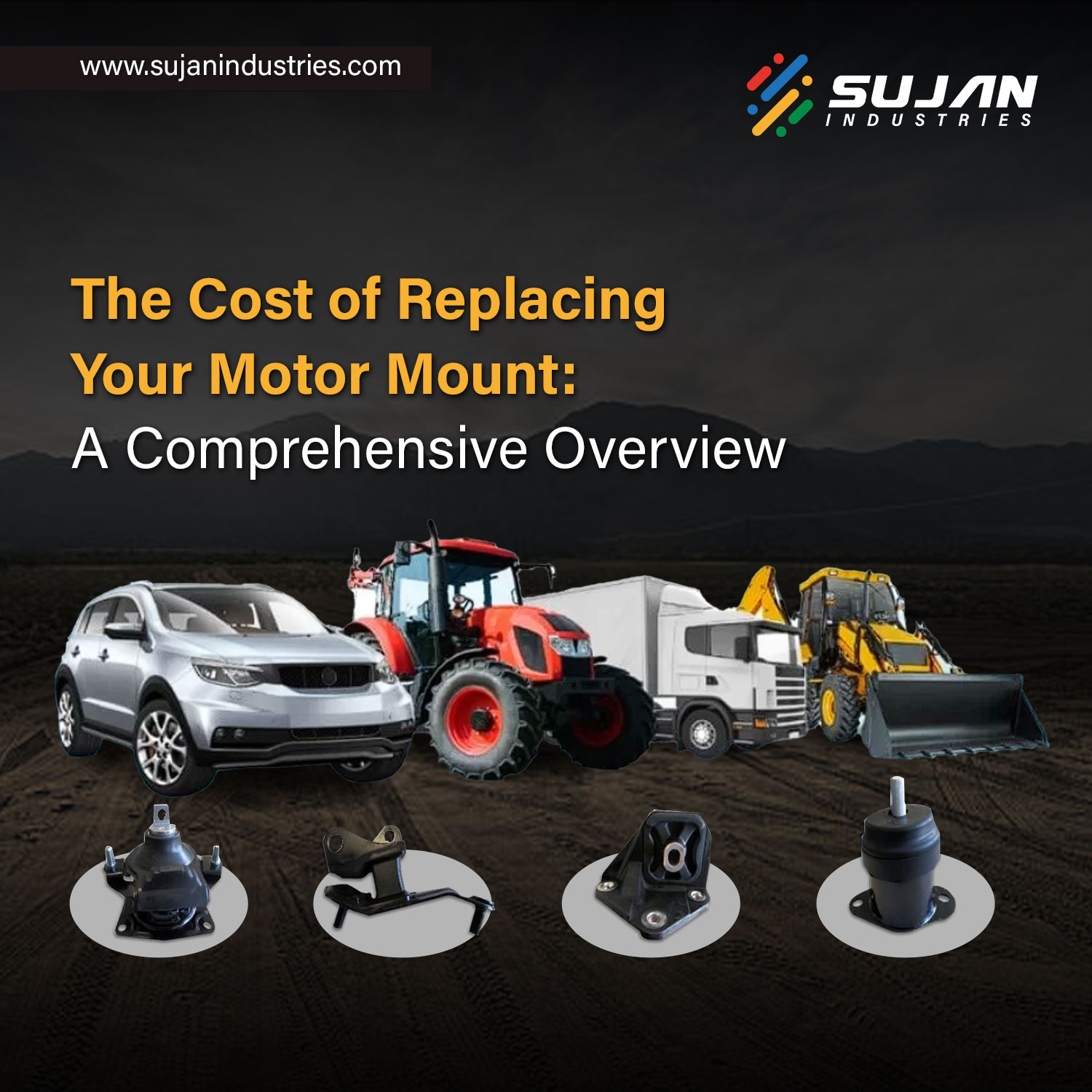
Every car engine needs to stay solidly in place, but it also needs to flex a little as it runs. Engine mounts are the parts that hold your engine to the frame of your car. They’re usually made of rubber and metal, sometimes with hydraulic or electronic components in newer models.
The main jobs of engine mounts:
- Absorb vibration so you don’t feel the engine shaking inside the car.
- Keep the engine aligned during driving, braking, and cornering.
- Protect other parts by preventing the engine from moving around and damaging hoses or wires.
When engine mounts wear out, they can’t do these jobs well. This leads to rough rides, more noise, and even damage to your transmission or exhaust system.
Signs Your Engine Mounts Need Replacement
Engine mounts don’t have a set lifespan, but most last between 60,000 and 100,000 miles. Here are the most common signs you might need new ones:
- Excessive vibration: If your steering wheel, seat, or dashboard shake more than usual, worn mounts could be the cause.
- Clunking or banging noises: These sounds when starting, stopping, or shifting gears often mean the engine is moving more than it should.
- Engine movement: Open the hood and gently rev the engine in park. If you see the engine rock or twist, the mounts may be failing.
- Visible wear or cracks: Sometimes you can see broken rubber or leaking fluid in hydraulic mounts.
- Increased cabin noise: As mounts wear out, engine sounds get louder inside the car.
- Misaligned parts: If exhaust pipes, hoses, or belts seem out of place, a sagging engine mount might be the reason.
Many of these symptoms can also come from other issues, so a mechanic will usually check the mounts during a diagnosis.
Credit: www.sujanindustries.com
What Affects The Cost To Replace Engine Mounts?
The price to replace engine mounts varies a lot. The total cost depends on several factors:
Number Of Mounts To Replace
Most cars have three or four engine mounts. Some only need one replaced at a time, but often mechanics recommend changing them all if one is bad—especially if they’re the same age.
Type Of Vehicle
- Small cars: Usually cheaper because the engine bay is less crowded.
- Luxury or performance cars: Higher cost due to more complex designs or special parts.
- SUVs and trucks: Sometimes pricier because of heavier engines and more labor.
Type Of Engine Mount
- Standard rubber mounts: Most affordable, $15–$50 each for parts.
- Hydraulic mounts: Use fluid to dampen vibration, $40–$150 each.
- Active/electronic mounts: For high-end vehicles, can reach $200 or more each.
Labor Costs
This is often the biggest part of the bill. Replacing engine mounts usually takes 1.5 to 4 hours. Labor rates in the US range from $70 to $150 per hour depending on location and shop type.
Oem Vs Aftermarket Parts
- OEM (Original Equipment Manufacturer): Designed by your car’s maker, usually more expensive.
- Aftermarket: Made by third parties, can be cheaper but quality varies.
Location And Shop Type
Repair shops in cities with a high cost of living charge more. Dealerships usually cost more than independent mechanics.
Additional Repairs
If the failing mount caused other damage (like a torn exhaust flex pipe or broken hoses), you’ll pay more for those repairs.
Average Cost To Replace Engine Mounts
So, what’s the actual price range? Here are some typical costs you might see in the US:
- Parts (per mount): $15–$250
- Labor (per mount): $100–$600
- Total for one mount: $120–$850
- Total for all mounts: $300–$2,000
Let’s compare a few sample vehicles to see how prices vary.
| Vehicle | Parts (All Mounts) | Labor (All Mounts) | Total Cost |
|---|---|---|---|
| Toyota Corolla (2015) | $120–$350 | $250–$500 | $370–$850 |
| Honda Accord (2017) | $180–$400 | $300–$700 | $480–$1,100 |
| BMW 3 Series (2018) | $350–$800 | $600–$1,200 | $950–$2,000 |
| Ford F-150 (2016) | $200–$500 | $400–$900 | $600–$1,400 |
As you can see, replacing engine mounts on a luxury or performance car is usually more expensive. The complexity of the engine bay and mount design drives up labor costs.
Detailed Breakdown: Parts Vs. Labor
It helps to understand where your money goes.
Parts Cost
- Standard rubber mounts: $15–$50 each. Most common and easy to find.
- Hydraulic mounts: $40–$150 each. Found in many newer sedans and SUVs.
- Active/electronic mounts: $150–$250+ each. Used in some luxury and high-performance vehicles.
Buying all mounts at once usually costs a bit less per part (bundle pricing or bulk purchase discounts).
Labor Cost
Labor depends on how hard it is to reach the mounts.
- Easy access (older cars, roomy engine bays): 1–2 hours per mount.
- Difficult access (tight spaces, AWD vehicles): 2–4 hours per mount.
- Some mounts require lifting the engine slightly with a jack or special tool.
Shops may quote a lower labor price per mount if several are done at once, since some steps overlap.
Diy Vs. Professional Replacement
If you’re handy with tools, you might think about replacing engine mounts yourself. Here’s what to consider.
Diy Replacement
Pros:
- Save money on labor (often half the total cost)
- Learn about your car
Cons:
- Requires jack and jack stands, sometimes an engine hoist
- Mistakes can damage your engine or transmission
- Not recommended for most people unless you have mechanical experience
Typical DIY cost: Just the price of parts ($30–$250 per mount), plus a few specialty tools if you don’t own them.
Professional Replacement
Pros:
- Work is usually guaranteed
- Faster and safer for most drivers
- Mechanics can check for related damage
Cons:
- Higher cost due to labor
Non-obvious insight: If you try DIY and get stuck, towing your car to a shop could erase any savings. For most drivers, paying for professional service is worth it for this job.
Cost Comparison: Engine Mounts Vs. Other Suspension Repairs
How does engine mount replacement compare to other common repairs? Here’s a quick look:
| Repair Type | Parts Cost | Labor Cost | Total Cost |
|---|---|---|---|
| Engine Mounts (all) | $120–$800 | $250–$1,200 | $370–$2,000 |
| Transmission Mounts | $40–$200 | $150–$500 | $190–$700 |
| Struts/Shocks (pair) | $100–$400 | $150–$500 | $250–$900 |
| Lower Control Arms | $80–$300 | $120–$400 | $200–$700 |
Engine mount replacement sits in the middle of the price range for car repairs. It’s not as cheap as brakes or oil changes, but it’s less than a major engine or transmission overhaul.
Real-world Examples: Engine Mount Replacement Quotes
Let’s look at a few real quotes from US repair shops to give you a sense of what to expect:
- 2016 Nissan Altima: One front engine mount, $380 total ($95 part, $285 labor)
- 2014 Chevrolet Malibu: Two mounts, $670 total ($240 parts, $430 labor)
- 2012 Mercedes C-Class: All mounts, $1,450 total ($600 parts, $850 labor)
- 2019 Honda Civic: Main mount, $520 total ($130 part, $390 labor)
Prices can swing up or down based on your region and the shop’s rates.
Pro tip: Always ask for a detailed quote. Some shops include alignment or fluid checks, others don’t.
Is It Worth Replacing All Engine Mounts At Once?
Many drivers wonder if they should change just the bad mount, or all of them together.
Most mechanics recommend: Replace all mounts if your car is over 100,000 miles or if several are worn. This prevents future breakdowns and saves on labor, since the engine is already lifted.
But: If only one mount is clearly bad and the others look solid, you can replace just the failed one—especially if money is tight.
Non-obvious insight: Sometimes, replacing just one old mount can make the remaining mounts wear out faster, since the new one absorbs more of the load.
How To Save Money On Engine Mount Replacement
Engine mount repairs can be expensive, but there are smart ways to keep costs down:
- Shop around: Get quotes from at least three shops (dealer, independent, and chain).
- Ask about aftermarket parts: Quality aftermarket mounts can cost half as much as OEM.
- Bundle repairs: If other work (like timing belt or transmission service) is due, combine them to save on labor.
- Check for warranties: Some parts and labor come with a 12-month/12,000-mile guarantee.
- Look for specials or coupons: Many shops run discounts on labor or parts.
Avoid cheap, no-name mounts from unknown brands—these can fail quickly and cost you more in the long run.

Credit: www.youtube.com
What Happens If You Don’t Replace Bad Engine Mounts?
Delaying engine mount replacement can lead to more serious (and costly) problems:
- Increased engine movement can break exhaust pipes, hoses, or wiring.
- Rougher ride affects comfort and can stress other suspension parts.
- Transmission alignment may get thrown off, leading to shifting problems.
- Safety risks: In rare cases, a broken mount can let the engine shift enough to affect steering or braking.
Replacing worn mounts early prevents these issues and keeps your car running smoothly.
How Long Does Engine Mount Replacement Take?
For a professional mechanic, engine mount replacement usually takes 1.5 to 4 hours for one mount, depending on difficulty. Doing all mounts at once can take 3–6 hours.
Example: On a simple sedan, a shop might finish in two hours. On a luxury SUV, it could take half a day if the mounts are buried under other parts.
If you need your car for work or errands, ask the shop for an estimated timeline so you can plan ahead.
How To Tell If A Mechanic’s Price Is Fair
With big repairs like this, it’s easy to worry about being overcharged. Here’s how to protect yourself:
- Request a written estimate with parts, labor, and taxes listed separately.
- Check the mount prices online using your car’s make, model, and year.
- Ask about the labor rate per hour—$70–$150/hour is typical in the US.
- See if the shop will show you the worn mounts after replacement.
Non-obvious insight: Some shops add “shop supply fees” or “environmental fees” of 5–10%. Make sure these are explained before you agree to the work.
If a quote seems much higher than others, politely ask why. Sometimes it’s due to higher-quality parts or extra repairs included.
Are Aftermarket Engine Mounts Worth It?
Many drivers wonder if they should stick with OEM mounts or try aftermarket brands. Here’s what matters:
- Reputable aftermarket brands (like Anchor, Westar, DEA) often match OEM quality at a lower price.
- Cheap, no-name mounts can wear out quickly or fit poorly.
- Performance mounts (polyurethane or solid) are stiffer, good for racing but can increase cabin vibration.
If you plan to keep your car for years, it’s usually best to choose OEM or high-quality aftermarket mounts.
Engine Mount Replacement And Vehicle Value
Replacing engine mounts doesn’t usually raise your car’s resale value, but it does keep it running well and avoids costly breakdowns.
If you’re selling your car: A recent engine mount replacement shows buyers the car is well maintained, which can make it easier to sell.
If you’re keeping your car: Fresh mounts mean a smoother ride, less noise, and lower risk of expensive damage.
Common Mistakes To Avoid When Replacing Engine Mounts
Engine mount replacement isn’t the hardest job, but mistakes can be costly:
- Using the wrong part: Always match the mount to your car’s exact year, make, model, and engine type.
- Incorrect installation: Over- or under-tightening bolts can cause mounts to fail early.
- Not supporting the engine: Failing to use a jack or support bar can let the engine drop, damaging hoses or the oil pan.
- Skipping alignment: Some cars need a quick alignment after mount replacement, especially if the subframe was moved.
- Ignoring other worn parts: If nearby bushings or brackets are cracked, fix them at the same time to avoid repeat repairs.
If you’re not confident, professional installation is almost always worth the extra cost.
When Engine Mount Replacement Makes Sense
You should definitely replace engine mounts if:
- There’s obvious damage (cracks, broken metal, leaking fluid).
- Your car vibrates or thumps when starting, stopping, or shifting.
- The mechanic confirms movement during a visual inspection.
But if your car is old, has other expensive issues, or you’re planning to sell soon, weigh the repair cost against the car’s value.
Example: Spending $1,500 on mounts for a car worth $2,000 may not make sense unless you need it to last another year or two.
Tips To Make Engine Mounts Last Longer
Proper care can stretch the life of your engine mounts:
- Drive smoothly: Avoid hard starts, sudden stops, and aggressive shifting.
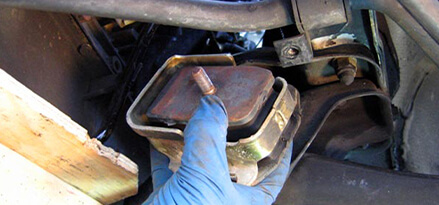
- Fix oil leaks quickly: Oil can rot rubber mounts.
- Inspect mounts every 30,000 miles: Especially if you drive in rough conditions.
- Use quality parts: When replacing, choose OEM or trusted brands.
Non-obvious insight: Regular engine and transmission fluid changes keep mounts from being exposed to damaging leaks.
Credit: www.mobil.com
Frequently Asked Questions
How Many Engine Mounts Does My Car Have?
Most vehicles have three or four engine mounts. Some cars (especially those with larger engines or all-wheel drive) may have five or more. Check your owner’s manual or ask your mechanic for your specific model.
Can I Drive With Bad Engine Mounts?
You can drive for a short time with worn engine mounts, but it’s risky. Bad mounts can cause more vibration, noise, and damage to other parts. If a mount fails completely, the engine could shift and cause serious problems. It’s best to replace bad mounts as soon as possible.
How Do I Know Which Engine Mount Is Bad?
A mechanic will usually inspect mounts by looking for visible cracks, leaks, or movement when the engine is revved. Sometimes, special tools or a pry bar are used to check for excess play. If you notice new vibrations or noises, have a shop check all mounts.
Do I Need An Alignment After Replacing Engine Mounts?
Most engine mount replacements do not require an alignment. However, if the subframe or suspension components were moved during the repair, an alignment check is a good idea. Your mechanic will let you know if it’s needed.
Where Can I Find Reliable Engine Mount Prices?
You can find engine mount prices on parts retailer websites, your local auto parts store, or by asking a mechanic for a quote. For more details, check resources like RepairPal, which collects real-world repair estimates.
Replacing engine mounts isn’t the cheapest repair, but it’s one of the most important for your car’s long-term health. Knowing the costs, what affects the price, and how to spot problems early will help you make smart decisions and keep your vehicle running smoothly.