
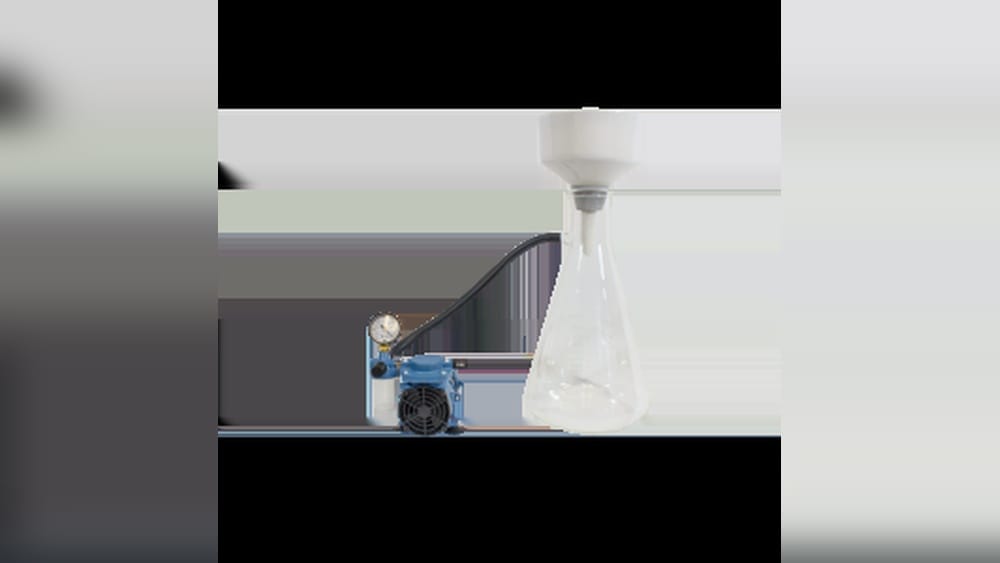
Mounting a Buchner funnel might look simple, but doing it correctly is essential for accurate and safe laboratory filtration. Many beginners overlook small but important details that can affect their results or even damage equipment. Whether you’re working in a school lab, a university, or an industrial setting, understanding how to properly set up this apparatus can make all the difference.
This guide will walk you through every step, from choosing the right materials to troubleshooting common problems. Along the way, you’ll find practical advice, expert tips, and clear explanations designed for non-native English readers and anyone new to laboratory techniques.
What Is A Buchner Funnel And Why Use It?
A Buchner funnel is a common laboratory tool used for filtration, especially when you need to separate a solid from a liquid quickly. Unlike gravity filtration, this method uses suction to speed up the process. The funnel usually sits on top of a flask, and a vacuum pulls the liquid through a filter paper, leaving the solid behind.
This setup is widely used in chemistry, biology, and even industry. For example, it’s often used to collect crystals after a reaction, clean up suspensions, or purify products. The reason for its popularity is simple: it’s fast, efficient, and can handle larger volumes than traditional funnels.
Some advanced laboratory work even relies on Buchner funnels for sensitive processes, such as isolating small amounts of a compound from reaction mixtures. In industrial settings, multiple Buchner funnels may be used in parallel to process large batches. The funnel’s design with a flat perforated base ensures uniform filtration and less clogging compared to simple gravity funnels, especially when handling sticky or fine solids.
Key Components Needed For Mounting A Buchner Funnel
Before you can mount a Buchner funnel, you need to gather all the necessary parts. Missing a single item can slow down your work or cause leaks. Here’s what you will need:
- Buchner funnel (usually made of porcelain or plastic)
- Filter paper (must fit the funnel’s flat base)
- Vacuum flask (also called a filter flask or side-arm flask)
- Rubber stopper or adapter (to connect the funnel and flask tightly)
- Vacuum source (water aspirator or vacuum pump)
- Vacuum tubing (to link the flask and the vacuum source)
- Clamp and ring stand (for stability)
- Collection vessel (for filtrate, optional)
- Personal protective equipment (lab coat, gloves, goggles)
Some setups may include a trap flask to protect the vacuum pump from liquid backflow. This is especially important if you are filtering hazardous materials.
Having a backup set of filter paper and tubing is smart, since paper can tear or tubing can crack during use. If your experiment involves strong acids or bases, consider using chemical-resistant tubing and adapters. For experiments with volatile solvents, glass adapters may be preferable over rubber, which can degrade or absorb chemicals.
Example Of A Typical Setup
Imagine you want to filter a mixture of sand and water. You would place the sand-water mixture into the Buchner funnel (with filter paper), apply suction, and collect the clean water in the flask. The sand stays on the paper.
In another example, a biology student might filter a plant extract to separate fibrous material from a liquid sample. The Buchner funnel’s suction helps speed up the process, making it easier to handle larger volumes or thicker suspensions.
Choosing The Right Buchner Funnel And Accessories
Not all Buchner funnels are the same. Choosing the right size and material is important for your experiment’s success.
Funnel Material And Size
- Porcelain is strong and can handle hot liquids, but can break if dropped.
- Plastic is lighter and less likely to break, but may not resist strong chemicals or heat as well.
Funnel size depends on how much solid you need to filter. Common diameters range from 5 cm (small) to 15 cm (large). If you’re working with tiny volumes, a small funnel is best to avoid wasting filter paper and solvent.
For bigger batches, a larger funnel saves time.
A non-obvious insight: Matching funnel size to flask volume matters. If the funnel is too large for the flask, the setup is unstable, and splashes may occur. Ideally, the funnel base should fit snugly into the flask opening, with the stopper providing additional support.
Filter Paper Selection
The filter paper must cover the flat base of the funnel but not fold up the sides. If it’s too large, it wrinkles and can leak. If it’s too small, solids will slip around the edges. Choose the right grade for your mixture: finer grades trap small particles but filter more slowly.
Some filter papers are specially marked for Buchner use. Double-check the manufacturer’s recommendations for pore size and chemical compatibility. If your experiment requires capturing very fine particles, look for papers with a pore size below 2 microns.
Vacuum Flask And Tubing
A vacuum flask must be thick-walled to handle reduced pressure. Don’t use regular glassware, as it can implode. Tubing should fit tightly and resist chemicals. Most labs use thick rubber tubing.
For high-vacuum applications, reinforced tubing is preferred. If your vacuum source is strong, thin tubing may collapse, reducing efficiency. Always check for kinks or cracks in tubing before starting.
Safety Accessories
Never skip personal protective equipment. Even simple filtration can splash chemicals or glass chips.
A less obvious tip: If your filtration involves heated liquids, wear heat-resistant gloves and ensure your funnel material can withstand temperature changes. Some porcelain funnels may crack if exposed to sudden heat.
Step-by-step Guide To Mounting A Buchner Funnel
Now, let’s walk through the process. Each step is important, so don’t rush.
1. Inspect And Clean All Equipment
Make sure the Buchner funnel, flask, and tubing are clean and dry. Even small residues can affect your results. Rinse with distilled water if needed.
Inspect all glassware for cracks or chips. Even a small flaw can lead to breakage under vacuum. If you notice cloudy spots or stains, clean with a brush and mild detergent. Drying is important; water droplets can dilute your filtrate or cause filter paper to stick unevenly.
2. Select And Prepare Filter Paper
Pick filter paper that fits the funnel’s flat base. Wet the paper with a small amount of the solvent you’ll use in your filtration. This helps it stick and prevents solids from slipping underneath.
To wet the paper, use a pipette or dropper. Apply solvent evenly—too much can cause the paper to lift at the edges, too little can leave dry spots. Press the paper gently onto the base so it forms a tight seal.
If you see air bubbles under the paper, smooth them out for better filtration.
3. Assemble The Funnel And Flask
Insert the Buchner funnel into the flask using a rubber stopper or adapter. The fit should be tight to prevent leaks. If you have an adapter, choose one that matches both the funnel stem and flask neck.
Push the stopper in firmly but avoid twisting, which can cause cracks. If your funnel is heavy or the flask is tall, use an adapter with a wide base for extra support.
4. Secure With Clamp And Stand
Place the flask on a stable surface or secure it to a ring stand with a clamp. This is especially important for large funnels or heavy mixtures.
Adjust the clamp so it holds the neck of the flask, not the body. This prevents stress on the glass. If your lab bench is uneven, use a rubber mat under the flask for extra grip.
5. Connect The Vacuum Source
Attach vacuum tubing to the side arm of the flask. Connect the other end to your vacuum source. If you’re using a trap flask, place it between the vacuum source and the filter flask.
For stronger vacuums, make sure the tubing is as short as possible. Long tubing can reduce suction efficiency. If your vacuum pump has multiple ports, check that only one is open.
6. Test For Leaks
Before adding your mixture, test the setup. Turn on the vacuum and check for airflow. If you hear hissing or see bubbles (when you add a little water), there may be a leak. Adjust connections or replace tubing if needed.
A practical trick: hold your finger over the funnel’s top. If suction pulls strongly, the system is tight. If not, check all seals and try again.
7. Add Your Mixture
Pour your suspension or reaction mixture into the funnel. Do this slowly to avoid overfilling or splashing. If you have a large amount, add it in portions.
Stir thick mixtures before pouring to avoid clogging the paper. For sticky solids, use a spatula to guide them onto the center of the paper.
8. Start Filtration
Turn on the vacuum. You should see the liquid rapidly move through the filter paper into the flask. The solid will stay on the paper.
If filtration stalls, check for air leaks or blockages. Sometimes, a slow start is normal if the mixture is dense.
9. Rinse And Recover Solids
For better purity, rinse the solid with a small amount of clean solvent. This removes trapped liquid and impurities.
Use cold solvent for sensitive crystals or warm solvent for sticky residues. Pour gently along the edge of the funnel, not directly on the solid, to avoid disturbing the filter cake.
10. Turn Off The Vacuum And Disassemble
Release the vacuum before removing the funnel. This prevents sudden backflow or damage. Carefully remove the funnel and recover your solid.
If your solid sticks to the filter paper, use a spatula to scrape gently. Avoid tearing the paper, as this can mix the filtrate with your product.
Credit: www.ebay.com
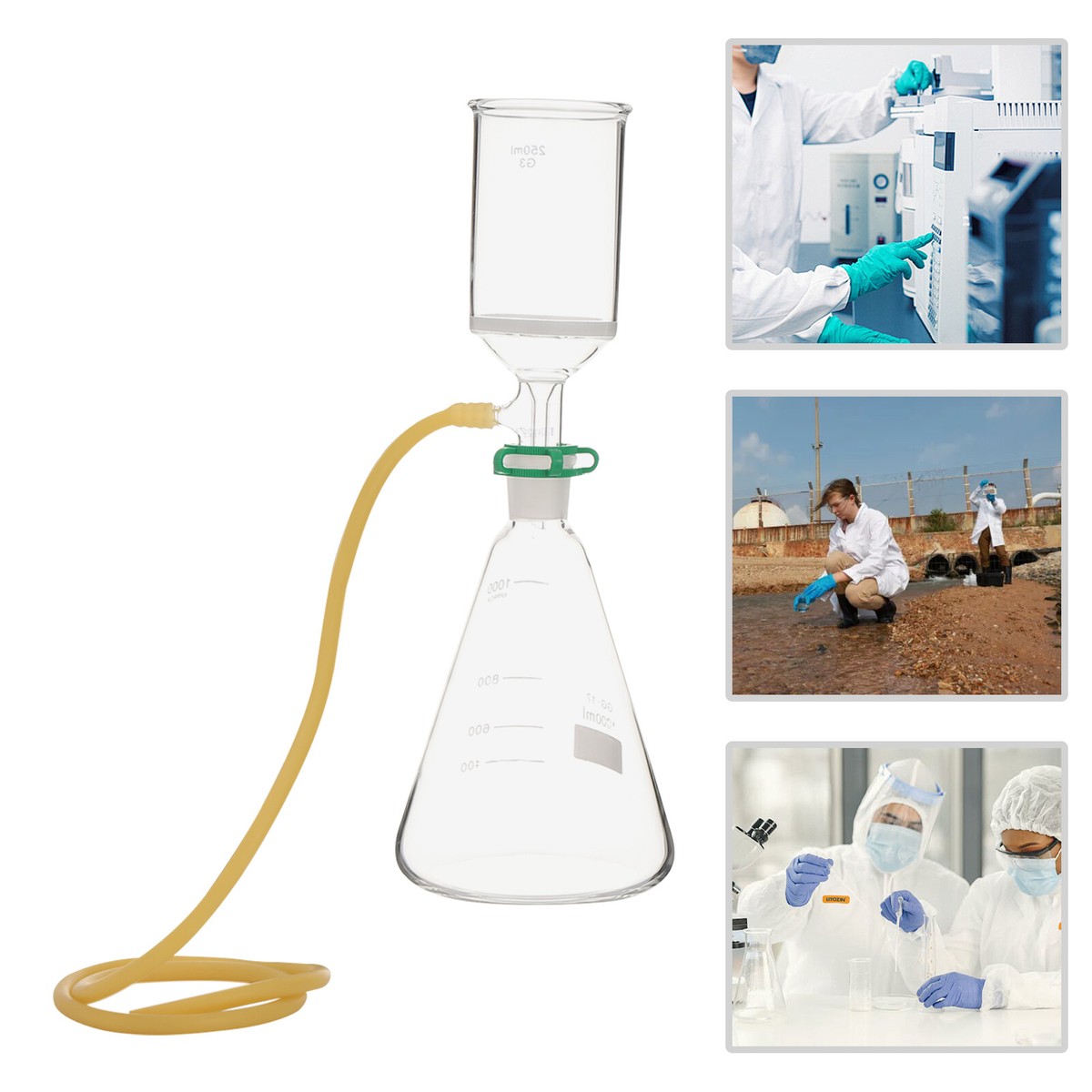
Mounting A Buchner Funnel: Visual Comparison Of Setup Types
Here is a comparison of simple and advanced setups for mounting a Buchner funnel:
| Setup Type | Components | When to Use |
|---|---|---|
| Basic | Buchner funnel, filter paper, vacuum flask, vacuum tubing, vacuum source | Simple, non-hazardous filtrations, small volumes |
| With Trap Flask | Buchner funnel, filter paper, vacuum flask, trap flask, tubing, vacuum source | When filtering hazardous or large volumes, protects vacuum pump |
| With Clamp and Stand | All above plus clamp and ring stand | For large/heavy funnels, extra stability needed |
Some labs add a second trap flask for extra protection, especially when filtering unknown or highly reactive mixtures.
Common Mistakes And How To Avoid Them
Even experienced lab workers make mistakes when mounting a Buchner funnel. Here are some frequent errors and how to prevent them:
- Improper filter paper size – Always check the fit before starting. Too large or too small causes leaks or loss of solid.
- Loose stopper or adapter – If the funnel wobbles or leaks air, the vacuum will fail. Make sure connections are snug.
- Using thin-walled glassware – Only use vacuum-rated flasks. Thin glass can collapse under suction, causing injuries.
- Overfilling the funnel – Adding too much at once can flood the filter paper, causing overflow or incomplete filtration.
- Not wetting the filter paper – Dry paper can let solids slip underneath, contaminating the filtrate.
- Forgetting to release vacuum – Always turn off and vent the vacuum before removing the funnel to avoid accidents.
Another mistake: Not checking chemical compatibility. Some solvents can damage rubber stoppers or plastic funnels. Always confirm materials are safe for your experiment.
Practical Tips For Better Results
- Always check for cracks in glassware before use.
- Use thick rubber tubing for a good seal.
- For sticky solids, use a spatula to gently spread them on the filter paper before applying vacuum.
- If filtration is slow, try a coarser filter paper, but be careful not to lose fine particles.
- For very fine solids, consider using a thin layer of celite (diatomaceous earth) on the paper as a pre-filter.
A helpful insight: If your filtrate is cloudy, stop and check for leaks or replace the filter paper. It’s better to fix issues early than to repeat the whole filtration.
Safety Precautions When Using A Buchner Funnel
Safety is critical, even for simple filtrations. Here are some essential precautions:
- Wear safety goggles to protect your eyes from splashes.
- Always use gloves, especially when handling corrosive or toxic chemicals.
- Never use cracked or chipped glassware, as it can fail under vacuum.
- Keep the vacuum pump or aspirator above the level of the flask to prevent backflow.
- Do not filter volatile solvents with water aspirators, as this can cause dangerous vapors.
For noisy vacuum pumps, wear ear protection if working for long periods. Always have a spill kit and first aid supplies nearby, just in case.
Maintenance And Cleaning Of Buchner Funnel Apparatus
Proper maintenance keeps your filtration setup reliable and safe.
- Clean all parts after each use. Rinse with distilled water, then dry thoroughly.
- Check the vacuum tubing regularly for cracks or chemical damage.
- If using a porcelain funnel, handle with care to avoid chips.
- Store the Buchner funnel and flask separately to avoid damage.
- Replace filter paper after each use; never reuse it.
Once a month, inspect adapters and stoppers for wear. Replace any part that shows signs of swelling, cracking, or discoloration. If using a vacuum pump, check oil levels and filters as recommended by the manufacturer.
Real-world Example: Filtration Of A Precipitate
Let’s look at a practical example. Suppose you are filtering a white solid (precipitate) formed after mixing two solutions.
- Prepare the Buchner funnel with the right filter paper and assemble the apparatus as described.
- Wet the filter paper with a small amount of distilled water.
- Pour the mixture into the funnel while the vacuum is on.
- The clear liquid passes through, and the white solid collects on the paper.
- Rinse the solid with more water to remove impurities.
- Turn off the vacuum and carefully remove the solid for drying or further analysis.
This method is used in thousands of labs worldwide for everything from drug synthesis to environmental testing.
For example, in environmental chemistry, filtering a soil extract helps isolate contaminants for further testing. In pharmaceutical labs, Buchner funnels are used to collect active ingredients after crystallization.
Troubleshooting: Problems And Solutions
Sometimes things go wrong. Here’s how to handle the most common issues:
- Vacuum not strong enough: Check all connections, make sure tubing is tight, and the flask is not cracked.
- Solid passes through filter paper: Use finer grade paper or a pre-coat of celite.
- Filter paper tears: Don’t pour mixtures too quickly or use sharp objects to spread solids.
- Slow filtration: The mixture may be too thick; dilute with more solvent or try gentle stirring.
- Backflow into vacuum line: Always use a trap flask, especially with high vacuum sources.
If the vacuum pump overheats or makes strange noises, turn it off and check for blockages or leaks in the tubing. Regular maintenance prevents most problems.
Comparison Of Filtration Methods
How does Buchner filtration compare to other common methods? Here’s a quick look:
| Method | Speed | Solid Recovery | Typical Use |
|---|---|---|---|
| Buchner Funnel | Fast | High | Crystallization, precipitation |
| Gravity Filtration | Slow | Moderate | Simple solutions, large particles |
| Centrifugation | Very Fast | High | Biological samples, suspensions |
Gravity filtration is best for clear solutions or when vacuum is not available. Centrifugation works well for biological samples but requires special equipment.

Credit: vademecumbrasil.com.br
Data: Common Sizes And Flow Rates For Buchner Funnels
To help you choose the right funnel, here’s a data overview:
| Funnel Diameter (cm) | Typical Volume (mL) | Suggested Filter Paper Size (cm) | Filtration Rate (mL/min) |
|---|---|---|---|
| 5 | 10–30 | 5.5 | 10–20 |
| 7 | 20–100 | 7.5 | 15–30 |
| 10 | 50–250 | 10.5 | 20–40 |
| 15 | 100–500 | 15.5 | 30–50 |
These numbers are general guidelines. Actual rates depend on the vacuum, filter paper grade, and nature of your mixture.
A useful tip: If your mixture contains fine clay or biological debris, expect slower rates and adjust your process time.
Advanced Techniques: Improving Filtration Efficiency
Sometimes basic Buchner filtration isn’t enough. Here are a few advanced tricks:
- Pre-coating: Add a thin layer of celite or filter aid before filtering. This protects the paper and helps with fine particles.
- Warming the mixture: Some solutions filter better when warm, but make sure your funnel can handle the temperature.
- Two-stage filtration: If the mixture is very dirty, filter first with coarse paper, then again with fine paper.
For high-throughput labs, using multiple Buchner funnels at once can speed up processing. If your experiment requires very pure solids, repeat the filtration with fresh filter paper and solvent.
Environmental And Waste Disposal Considerations
Filtering chemicals and biological materials creates waste. Always dispose of used filter paper and filtrate according to your lab’s safety rules. Never pour unknown or hazardous liquids down the drain.
Some solvents can damage rubber stoppers or tubing. Check compatibility before use, and always have a spill kit nearby.
A tip often missed: Keep a log of all chemicals used and disposed. This helps with regulatory compliance and ensures safe laboratory practices.
Frequently Asked Questions
How Do I Know If My Buchner Funnel Is Mounted Correctly?
If your setup is correct, you’ll see a rapid flow of liquid into the flask, no leaks around connections, and solids staying on the filter paper. Test with a small amount of water before starting your main filtration.
What Type Of Vacuum Source Should I Use?
A water aspirator is simple and cheap, but not suitable for volatile chemicals. A mechanical vacuum pump gives stronger suction but needs a trap flask. Choose based on your experiment and safety needs.
Can I Reuse Filter Paper?
No, filter paper is single-use. Reusing can cause contamination or poor filtration. Always use a fresh piece for each experiment.
What Should I Do If The Filtration Is Very Slow?
Check for blockages in the funnel or tubing, make sure the vacuum is strong, and try a coarser filter paper. If the mixture is thick, dilute it with more solvent.
Where Can I Learn More About Laboratory Filtration Methods?
You can find more information on laboratory filtration in detailed chemistry textbooks and trusted online resources like Wikipedia.
Mounting a Buchner funnel is a basic but essential laboratory skill. With the right setup, careful attention to detail, and a bit of practice, you’ll be able to filter mixtures quickly and safely—improving both the quality of your results and your confidence in the lab.
Remember, the small steps make a big difference. Happy filtering!
Credit: www.sterlitech.com