
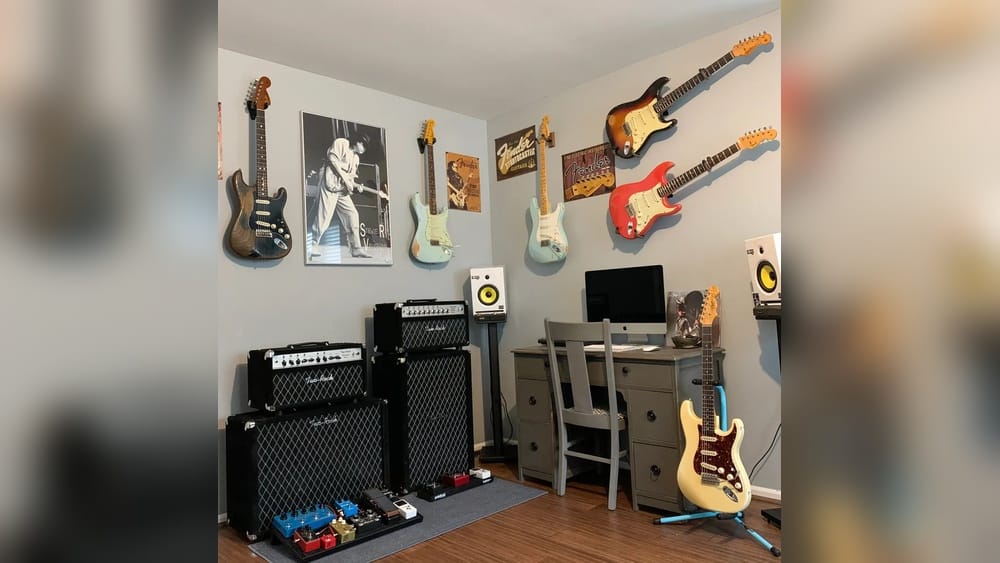
Mounting your guitar on the wall does more than just save space. It can turn your instrument into a piece of art, keep it safe from accidental bumps, and make it easy to reach for practice. Whether you play acoustic, electric, or bass guitar, the right wall mount can help protect your instrument and even show off your style. But if you’re new to this, it’s easy to feel unsure: Which wall hanger is best? Will mounting damage the guitar? What tools do you need? Let’s walk through every step, from planning to hanging, so you can confidently display your guitar while keeping it secure.
Why Mount Your Guitar On The Wall?
A wall-mounted guitar looks impressive. But there are more reasons to do it:
- Space saving: Free up floor space, especially in small rooms or studios.
- Convenience: Your guitar is always within reach, encouraging regular practice.
- Protection: Keeps the instrument out of harm’s way, away from pets, kids, and vacuum cleaners.
- Humidity control: In some homes, wall mounting helps keep the guitar at a stable temperature and humidity (but only if you choose the right spot).
- Display: Guitars often have beautiful finishes and unique designs. Wall mounting lets you enjoy them visually.
Many professional musicians mount their favorite guitars in studios. Even in homes, a wall-mounted guitar can become a talking point and inspire more playing.
Understanding Guitar Wall Mount Types
Before you start, it’s important to know your options. Not all wall hangers are equal. Choosing the wrong one can risk the safety of your guitar.
| Type of Mount | Main Features | Best For |
|---|---|---|
| Yoke-Style Hanger | Padded arms, holds guitar by the headstock, often swivels | Most acoustic/electric guitars |
| Locking Hanger | Auto-closing arms for extra security | High-value or heavy guitars |
| Horizontal Mount | Supports body and neck, guitar sits sideways | Display or multiple guitars |
| Wall Hook (Non-padded) | Basic, no padding, can cause damage | Not recommended for quality guitars |
Yoke-style Hangers
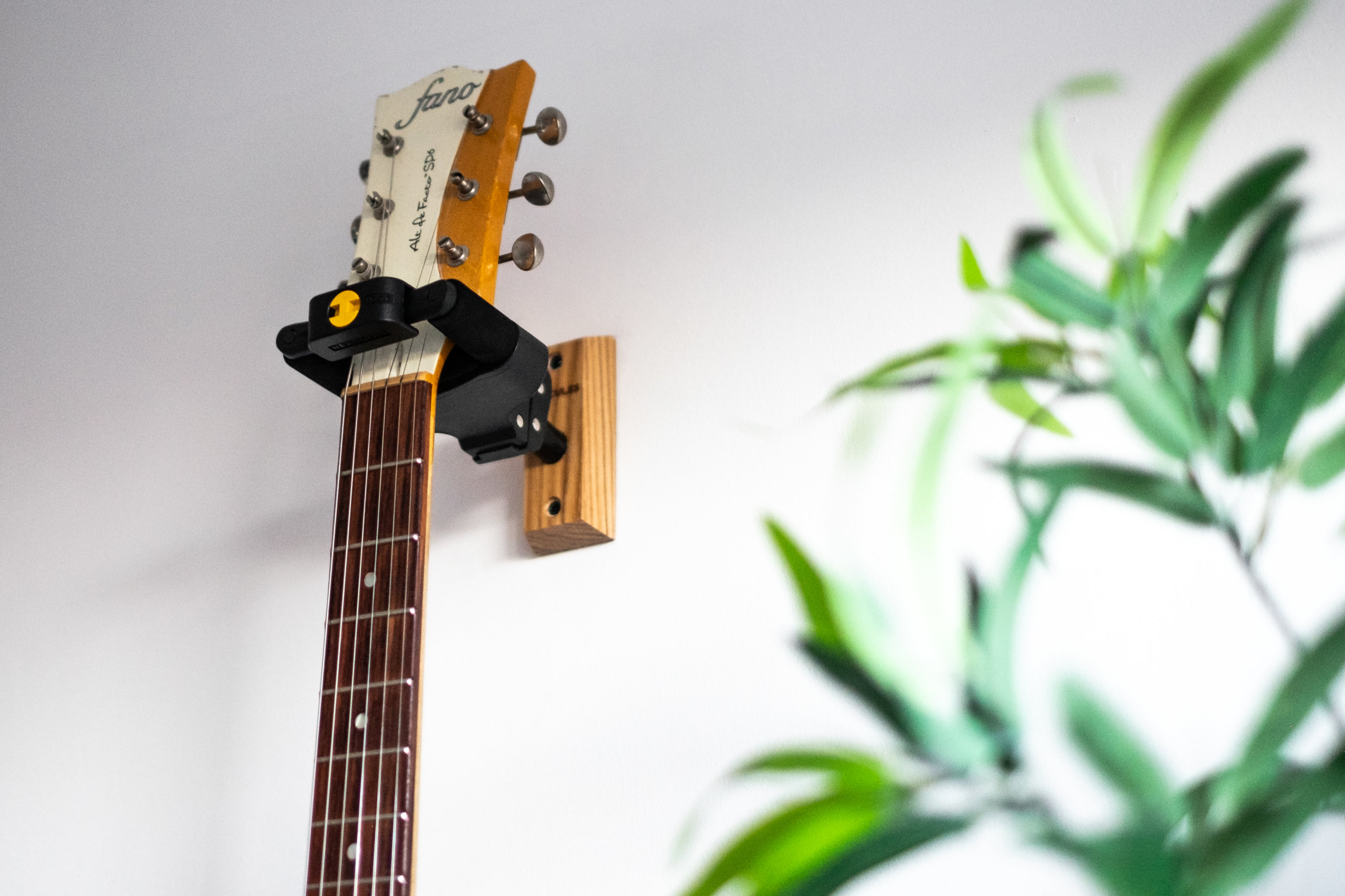
The yoke-style hanger is the most popular option. It gently supports the guitar’s headstock and usually has a padded surface to prevent scratches. Some versions swivel to fit different headstock shapes.
Locking Hangers
A locking hanger adds a mechanism that closes around the neck when the guitar is placed in the hanger. This is excellent for homes with kids or pets, or if you live in an earthquake-prone area.
Horizontal Or Sideways Mounts
A horizontal mount lets you display your guitar like artwork. It supports both the neck and the body. These are less common but are eye-catching and work well for showing off collectible guitars.
Wall Hooks
Basic wall hooks are cheap but often lack padding. They might damage the finish over time and are best avoided for valuable instruments.
Beginner tip: Avoid wall mounts that pinch the tuners or are not padded. Cheap mounts can ruin the guitar’s finish or even cause structural problems.
What To Consider Before Mounting
Mounting a guitar is more than just screwing a hook into the wall. Here’s what you need to think about before starting:
- Wall type: Is your wall drywall, plaster, brick, or concrete? The fixing method will change.
- Studs vs. drywall: For heavy guitars, always mount into a stud (the wooden support behind the wall) for maximum safety.
- Room conditions: Guitars dislike extreme changes in humidity and temperature. Avoid mounting near heaters, air conditioning units, or windows that get direct sunlight.
- Height: Pick a height that’s comfortable for you to reach and safe from accidental bumps.
- Instrument size and weight: Some mounts have weight limits. Check your guitar’s weight before buying a hanger.
Insider insight: Many beginners forget to consider humidity. Mounting a guitar above a radiator or near a sunny window can warp the neck or fade the finish.
Tools And Materials You’ll Need
Before starting, gather these tools and supplies:
- Guitar wall hanger (choose the right type for your guitar)
- Screws and wall anchors (usually included with the hanger)
- Drill with the correct drill bits
- Stud finder (for drywall installations)
- Screwdriver
- Tape measure
- Pencil
- Level (to make sure the hanger is straight)
- Vacuum or brush (for cleaning up dust)
- Optional: Wall plugs or masonry screws (for brick/concrete walls)
Pro tip: Use a good-quality hanger from a known music brand. Cheap hardware store hooks often lack proper padding or strength.
Credit: guitar.com
Step-by-step Guide: How To Mount A Guitar On The Wall
Let’s break down the process so it’s easy to follow, even if you’ve never used a drill before.
1. Choose The Right Location
Look for a spot that’s:
- Away from direct sunlight and heat sources
- High enough so children or pets can’t easily reach it
- Clear of high-traffic areas to avoid accidental knocks
Use a tape measure to estimate the best height. For most adults, the yoke should be about 55–65 inches from the floor.
2. Find The Wall Stud (for Drywall)
A stud is a vertical wood beam inside your wall. It’s the safest anchor point for heavy items. Use a stud finder to scan the wall. When you find a stud, mark the location with a pencil.
If you can’t find a stud where you want to mount the guitar, use heavy-duty wall anchors designed for drywall.
3. Mark And Level The Mounting Points
Hold the hanger against the wall at the desired height. Use a pencil to mark where the screws will go. Check with a level to make sure the hanger is perfectly straight.
If you’re mounting a horizontal hanger, measure carefully so both ends are level.
4. Drill The Holes
Select a drill bit that matches the size of the screws or wall anchors. Drill straight into the marked spots. For drywall, insert wall anchors if you’re not using a stud.
For brick or concrete, use a masonry bit and special wall plugs.
5. Attach The Hanger
Align the hanger with the holes and screw it in tightly. If the hanger has a backplate, make sure it’s flush against the wall. Tighten the screws but don’t overtighten—this can damage the wall or the hanger.
Non-obvious tip: Place a small piece of cardboard or felt behind the hanger before screwing it in. This can protect your wall’s paint and help absorb vibrations.
6. Test The Hanger
Before hanging your guitar, gently pull on the hanger to make sure it’s solid. It should not wiggle or feel loose.
7. Hang Your Guitar
Place the guitar in the hanger. Adjust as needed so it sits securely and straight. For locking hangers, check that the lock engages.
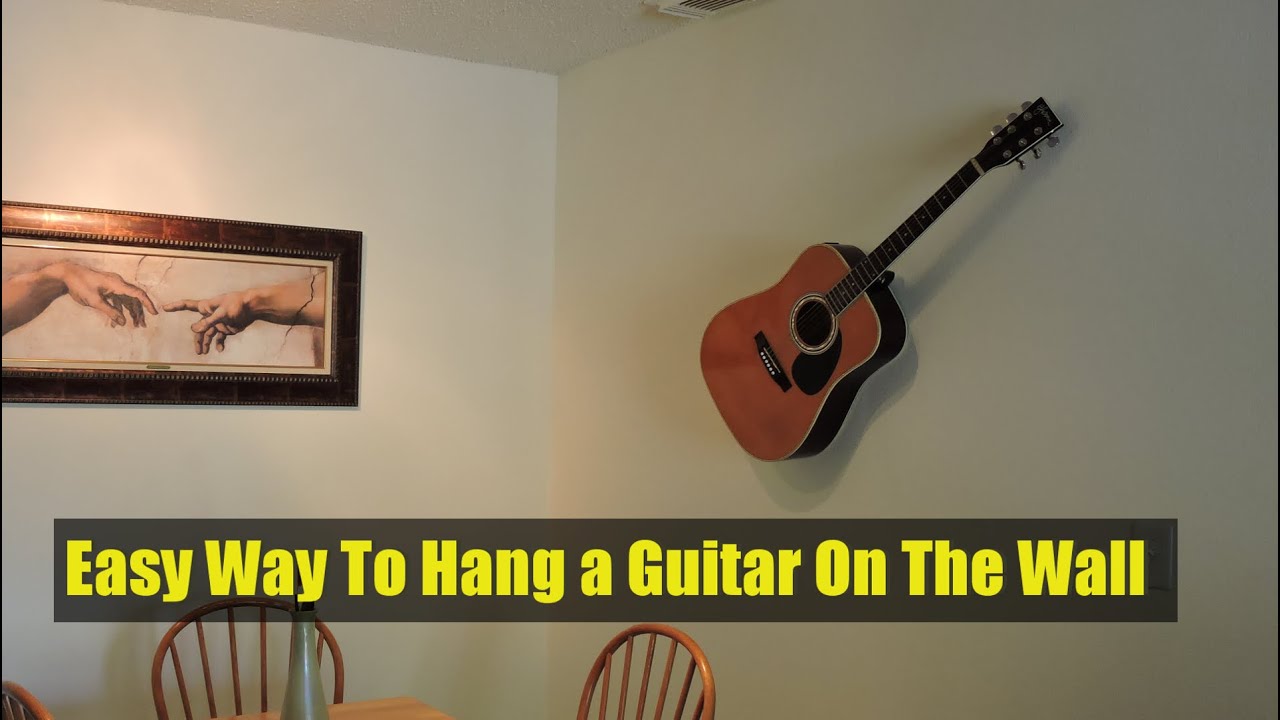
Step back and admire your work. Your guitar is now safely displayed and ready to play anytime.
Special Considerations For Different Wall Types
Not all walls are built the same. Here’s how to handle common wall types:
Drywall
Most home walls are drywall. The safest option is always to find a stud. If that’s not possible, use toggle bolts or heavy-duty wall anchors rated for at least 15 lbs (7 kg).
Plaster Walls
Older homes may have plaster. Plaster can crack, so drill slowly. Use anchors designed for plaster. If possible, always find a stud.
Brick Or Concrete
Use a masonry drill bit. Insert plastic wall plugs before screwing in the hanger. This provides a solid hold.
Paneling
For thin panel walls, only mount into a stud. Paneling alone won’t support a guitar’s weight.
Common mistake: Using regular screws in drywall without anchors. This almost always fails, especially with heavier electric guitars.
Credit: www.youtube.com
Safety And Damage Prevention
Mounting a guitar is safe if you follow proper steps. However, there are risks if you skip important details.
- Never use unpadded hooks: Metal-on-wood contact can damage the finish.
- Avoid over-tightening: This can strip the screw holes or crack the wall.
- Check regularly: Once a month, wiggle the hanger and check for loose screws.
- Don’t overload: Some wall hangers are only rated for 10 lbs. Most guitars are lighter, but always check the specs.
Unexpected insight: Some guitar finishes, like nitrocellulose lacquer, can react with certain rubber or foam padding. This leads to “hanger burns”—sticky marks where the guitar touches the hanger. Choose hangers with safe padding (often labeled as “nitro-safe”) if you have a vintage or high-end instrument.
Mounting Multiple Guitars
If you have more than one guitar, you may want a multi-guitar rack or several single hangers. Here’s how to do it right.
Vertical Arrangement
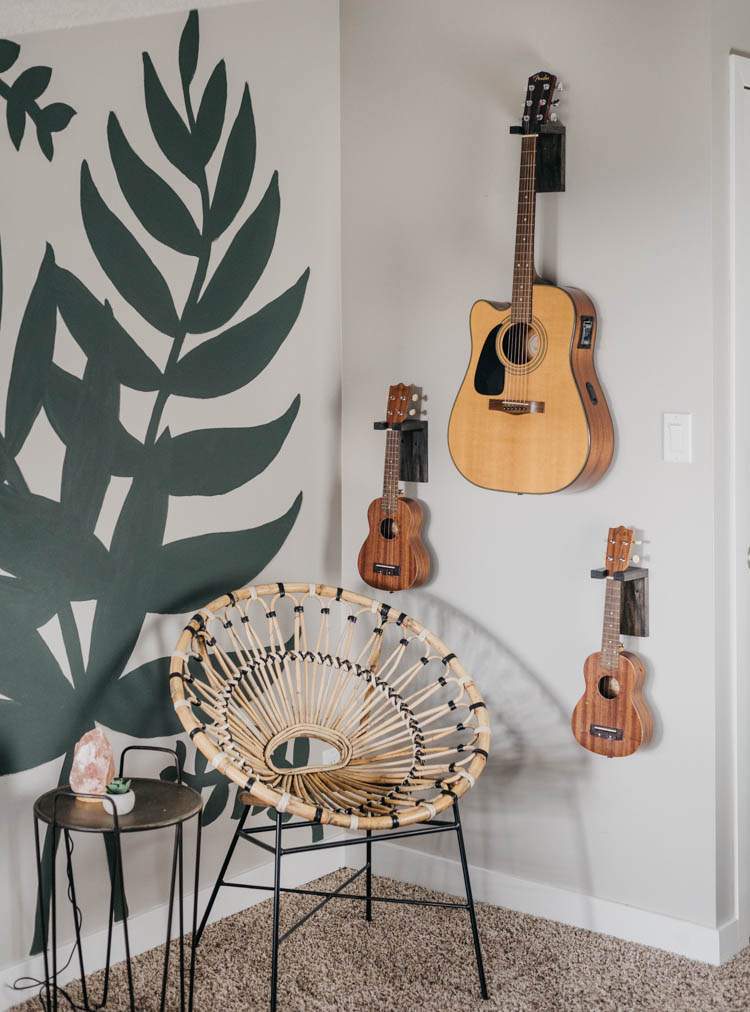
Hang guitars one above the other, leaving at least 9–12 inches between hangers. This prevents collisions and makes each guitar easy to grab.
Horizontal Arrangement
Space the hangers at least 18–24 inches apart, depending on the guitar’s body width.
Multi-guitar Wall Racks
These racks let you display several guitars side by side. Make sure the rack is mounted into at least two studs for strength.
Here’s a quick comparison of mount types for multiple guitars:
| Mount Type | Capacity | Difficulty | Best For |
|---|---|---|---|
| Single Hanger | 1 guitar | Easy | Solo instruments |
| Multi-Guitar Rack | 3–6 guitars | Moderate | Studios/collectors |
| Horizontal Display | 1–3 guitars | Moderate | Decor/display |
Beginner mistake: Not leaving enough space between hangers. Crowded guitars are more likely to get scratched or knocked.
Choosing The Right Hanger For Your Guitar
Every guitar is unique. Here’s what you should keep in mind when picking a hanger:
- Headstock shape: Some guitars (like Fender Stratocasters) have straight headstocks, while others (like Gibson Les Pauls) are angled. Choose a yoke that fits your guitar’s shape.
- Neck width: A hanger that’s too narrow or too wide can let the guitar slip or pinch the neck.
- Finish compatibility: As mentioned, nitrocellulose finishes can be damaged by certain foams. Look for “nitro-safe” hangers if you’re unsure.
- Weight rating: Most hangers hold 10–15 lbs. Check your guitar’s weight if it’s a bass or a heavy electric.
Practical example: A PRS Custom 24 has a thick, angled headstock—choose a hanger with a wide, padded yoke and “nitro-safe” foam.
Common Mistakes To Avoid
Mounting a guitar isn’t difficult, but some errors can lead to disaster:
- Mounting too close to a door or traffic path: Someone may bump the guitar.
- Not checking the strength of the wall: Drywall alone won’t hold a heavy guitar.
- Using hooks without padding: This causes scratches and long-term damage.
- Ignoring humidity: Guitars mounted near windows or radiators are at risk of warping.
- Not checking the hanger regularly: Screws can loosen over time, especially in busy homes.
Extra Tips For Display And Care
Mounting is just the first step. To keep your guitar safe and looking great:
- Dust regularly: Guitars attract dust on the wall. Use a soft cloth, not a feather duster (which can catch on strings).
- Use a hygrometer: Monitor room humidity. Ideal is 45–55% for most guitars.
- Consider a case humidifier: If your home is dry, use a small humidifier in the room.
- Rotate your guitars: If you have several, switch their positions every few months to check for wear or marks.
- Add wall art or lighting: A spotlight or LED strip can highlight your guitar and create a cool vibe.
Non-obvious insight: Wall-mounted guitars can sometimes go out of tune a bit faster due to temperature changes. Tune up every time you grab the guitar.
When Not To Mount A Guitar
Wall mounting isn’t always the right choice. Here are situations where it’s better to use a stand or keep the guitar in its case:
- If your home has extreme temperature or humidity swings (old buildings, no climate control)
- If you have a valuable vintage guitar and want zero risk
- If you move often (renters may not want to drill holes)
- If small children or pets can reach the wall
Alternative: Use a floor stand or a case for these situations. There are even “no-drill” guitar stands that lean against the wall.
Real-world Examples And Data
Many famous musicians display their guitars at home and in studios. For example, John Mayer’s studio features a wall of Stratocasters, each mounted on yoke hangers with nitro-safe foam.
According to a 2022 survey by Reverb.com, 57% of guitarists prefer wall mounting over floor stands for daily-use guitars, mainly for convenience and display value.
A study by the Guitar Foundation of America found that improper mounting (such as using unpadded hooks or poor anchors) is the cause of 15% of repair shop visits for headstock cracks or finish damage.
Stat: Most quality wall hangers cost between $12–$35. Spending more for a trusted brand is a good investment to protect a guitar worth hundreds or thousands.
How Wall Mounts Compare To Other Storage Options
Here’s a quick comparison to help you decide if wall mounting is right for you:
| Storage Option | Protection | Ease of Access | Display Value |
|---|---|---|---|
| Wall Mount | Medium | High | Excellent |
| Floor Stand | Medium | High | Good |
| Hard Case | High | Low | Poor |
| Soft Gig Bag | Low | Medium | Poor |
Conclusion: Wall mounting strikes a balance between protection and daily use. Hard cases are better for long-term storage or transport, but wall mounts encourage you to play more often.
Maintenance After Mounting
Once your guitar is on the wall, a little routine care goes a long way:
- Check the hanger’s screws every few months—especially after moving furniture or during seasonal changes.
- Wipe down the guitar’s neck and headstock each time you take it down. Sweat or dust can build up faster when a guitar is displayed.
- Inspect for hanger marks: If you see any, adjust or replace the hanger.
- Monitor humidity: Even if you mounted in a “safe” spot, changes in the room can affect your guitar.
Pro tip: Many professional studios do a quick “wiggle test” on wall hangers each week to catch any loosening before disaster strikes.
Ethical And Environmental Considerations
Mounting guitars on the wall doesn’t have a big environmental impact, but some details matter:
- Use sustainable materials: Many hangers are made from recycled plastics or responsibly sourced wood. Look for these options if possible.
- Avoid PVC foam: Some cheap hangers use PVC, which can emit chemicals and damage guitar finishes.
- Reuse or recycle: If you upgrade your hanger, donate your old one or recycle the materials.
Credit: www.lemonthistle.com
Trusted Brands And Where To Buy
Buying a quality hanger matters. Here are a few trusted brands:
- Hercules
- String Swing
- Fender
- Gator
You can find these on music retailer sites, local shops, or major platforms. For more details on different guitar wall mounts, see this Wikipedia article on guitar hangers.
Frequently Asked Questions
How Safe Is It To Mount A Guitar On Drywall?
If you use a stud or heavy-duty wall anchors, it’s very safe. Standard screws in drywall alone are not secure for long-term mounting, especially for heavy guitars.
Will Wall Mounting Damage My Guitar’s Neck?
A good-quality, padded hanger will not damage your guitar’s neck. Avoid hangers without padding and check for “nitro-safe” foam if your guitar has a nitrocellulose finish.
Can I Mount A Guitar Without Drilling Holes?
Some no-drill stands lean against the wall, but they are less secure. For permanent mounting, drilling is necessary to ensure safety.
What Is The Ideal Humidity For Wall-mounted Guitars?
Keep the room at 45–55% humidity. Extreme dry or wet conditions can damage the guitar, whether it’s mounted or stored in a case.
How Do I Mount More Than One Guitar On The Same Wall?
Use multiple single hangers spaced at least 9–12 inches apart vertically (or 18–24 inches horizontally). For three or more guitars, consider a multi-guitar rack mounted into at least two wall studs.
—
Mounting your guitar on the wall is both practical and inspiring. It keeps your instrument safe, accessible, and beautifully displayed. With careful planning and the right hardware, you’ll enjoy your guitar more and keep it in top condition for years to come.