
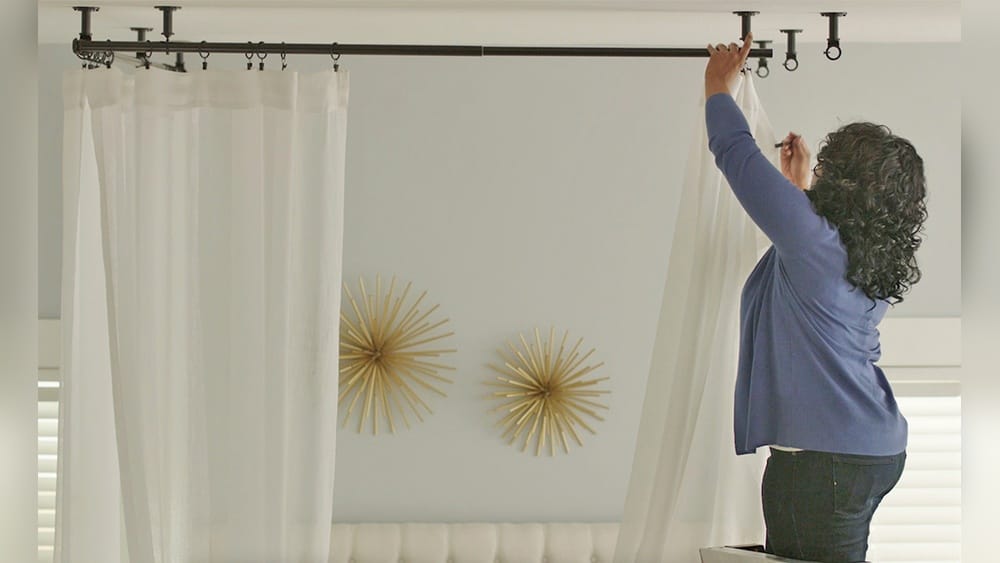
Mounting curtains from the ceiling can completely change a room. It can make your windows look taller, your space feel bigger, and add a touch of elegance. But it’s more than just drilling a few holes. There are key steps, smart tips, and common mistakes to avoid if you want your ceiling-mounted curtains to look professional and last for years.
Many people think mounting curtains high is only for luxury homes, but it’s possible for any room. Whether you want privacy, light control, or just a stylish update, ceiling-mounted curtains can help. This guide covers everything you need to know: choosing the right hardware, measuring correctly, step-by-step installation, and solving tricky problems. With a bit of planning and the right advice, you’ll be able to mount curtains from the ceiling with confidence, even if you’re a complete beginner.
Why Mount Curtains From The Ceiling?
Mounting curtains from the ceiling is different from the traditional wall-mount. This method is often used in hotels, designer homes, and small apartments. Here’s why more people are choosing ceiling mounts:
- Makes windows look taller: Curtains that hang from the ceiling draw the eye upward, making your room feel larger.
- Adds elegance: Ceiling-mounted curtains look modern and stylish.
- Improves privacy: You can cover the entire wall, not just the window.
- Better light control: Ceiling mounts can block light more effectively, especially if your windows reach close to the ceiling.
- Flexible room dividers: You can use ceiling-mounted curtains to divide spaces, like separating a living area from a bedroom.
Some beginners miss the fact that ceiling mounting is not just about aesthetics. It can also help with insulation and noise reduction, especially if you use heavy fabrics. Another less obvious benefit: it works well for oddly shaped windows, where wall mounts aren’t possible.
Choosing The Right Curtain Hardware
You can’t just use any curtain rod for ceiling mounting. The right hardware makes installation easier and your curtains safer. Here’s what to look for:
Types Of Ceiling Curtain Rods
There are several kinds of rods and tracks. The best choice depends on your curtain style and room layout.
| Type | Best For | Features | Approx. Cost (USD) |
|---|---|---|---|
| Single Track | Lightweight curtains | Slim, easy to install | $15–$40 |
| Double Track | Layered curtains | Two tracks for sheers + blackout | $30–$75 |
| Ceiling Rod | Decorative curtains | Visible rod, different finishes | $25–$80 |
| Flexible Track | Curved windows, room dividers | Bends to fit corners | $20–$60 |
- Track systems: Most common for ceiling mounts. They use gliders that slide easily.
- Rod systems: Good for decorative ends or rings.
- Flexible tracks: Useful for bay windows or making room dividers.
Material And Strength
Curtain tracks are usually made from aluminum, plastic, or steel. Aluminum is lightweight but strong. Steel is best for heavy curtains. Plastic tracks are cheap but may bend or break over time.
Always check the weight rating. For example, a standard aluminum track usually supports up to 15–25 lbs. If your curtains are heavier (like velvet or thick blackout), use steel tracks or add extra brackets.
Mounting Brackets
Ceiling mounts use brackets that attach directly to your ceiling. Look for brackets with wide bases for better support. Some tracks come with adjustable brackets, which help if your ceiling isn’t perfectly flat.
One mistake beginners make: using wall brackets for ceiling mounting. Wall brackets won’t hold as much weight vertically and can fail over time.
Curtain Compatibility
Not all curtains work with ceiling tracks. Check the curtain header type:
- Grommet curtains: Need a rod, not a track.
- Pinch pleat or tape curtains: Work best with tracks.
- Eyelet curtains: Prefer rods.
If you want layered curtains (sheer + blackout), get a double track. For curved installations, flexible tracks are ideal.
Measuring For Ceiling-mounted Curtains
Precise measuring is essential. A small mistake can ruin the look or make installation impossible. Here’s how to measure:
Step 1: Measure The Width
Measure the width you want to cover, not just the window. Most people mount curtains wider than the window to create a fuller look. Add 6–12 inches on each side of the window for best results.
If you’re mounting curtains as a room divider, measure the entire space you want to separate.
Step 2: Measure The Drop (height)
Measure from the ceiling to where you want the curtain to end. For windows, most people let the curtain drop to the floor. For room dividers, measure from ceiling to floor.
- Standard ceiling height: 8 feet (96 inches)
- Curtains usually end ½ inch above the floor to avoid dragging.
- For layered curtains, measure both sets (sheer + blackout).
Don’t forget to check for obstacles: radiators, window sills, or furniture. Adjust your measurement if needed.
Step 3: Account For Curtain Header
If your curtain has a header (like pleats or rings), measure from the top of the header, not the top of the fabric. This ensures the curtain hangs correctly.
Step 4: Mark Bracket Locations
Plan bracket placement. For standard tracks, brackets should be every 24–36 inches. For heavy curtains, place brackets closer together.
If your ceiling is uneven, use a laser level or spirit level for straight lines.
Common Measuring Mistakes
- Only measuring the window, not the full coverage area.
- Forgetting to allow for curtain fullness (curtains should be 1.5–2 times the width of the area).
- Not checking for obstacles under the window.
Preparing For Installation
Before you start drilling, gather your tools and prepare your space. Proper preparation saves time and avoids frustration.
Tools And Materials Needed
- Curtain track or rod
- Brackets and screws
- Wall plugs/anchors (for concrete or plaster ceilings)
- Drill and appropriate bits
- Measuring tape
- Level
- Pencil
- Screwdriver
- Step ladder
- Curtains
For heavy curtains or long tracks, you may need an extra pair of hands.
Safety Tips
- Always check for wires or pipes in the ceiling before drilling.
- Use a sturdy ladder, not a chair.
- Wear safety glasses when drilling.
Some ceilings (like concrete or plaster) require special anchors. For drywall, use toggle bolts or heavy-duty anchors.
Protecting Your Space
Cover furniture and floors with a drop cloth. Curtain installation can create dust and debris. Move fragile objects away from the work area.

Credit: chrislovesjulia.com
Step-by-step Guide To Ceiling Curtain Mounting
Now, let’s walk through the installation. Each step is important, so don’t rush.
1. Marking Bracket Placement
Use your measurements to mark bracket locations on the ceiling. Start at one end and mark every bracket position, using a level to keep the line straight.
For tracks longer than 8 feet, use at least three brackets. For heavy curtains, add extra brackets.
2. Drilling Pilot Holes
Drill pilot holes at each mark. For concrete ceilings, use a masonry bit and insert wall plugs. For drywall, use anchors rated for your curtain weight.
Beginners often skip pilot holes, but they help prevent cracks and make screwing easier.
3. Installing Brackets
Screw the brackets into the ceiling using the anchors or plugs. Double-check that each bracket is tight and secure.
If your ceiling is uneven, adjust the brackets slightly. Use a level to check alignment.
4. Attaching The Track Or Rod
Fit the track or rod onto the brackets. Most tracks snap in place; rods may require screws. Make sure it’s stable and doesn’t wobble.
Test by gently pulling to check strength.
5. Hanging The Curtains
Attach your curtains to the track or rod. For tracks, use gliders or hooks. For rods, thread the curtain or use rings.
Hang the curtains and check they slide smoothly. Adjust if needed.
6. Final Adjustments
Stand back and check the curtains for straightness and fullness. If needed, shift the track slightly or rearrange the curtain folds.
Trim the curtain ends if they drag on the floor.
Advanced Tips For A Professional Finish
Mounting curtains from the ceiling isn’t just about basic installation. Small touches can make a big difference.
Using Multiple Layers
Layered curtains (sheer + blackout) create depth and allow flexible light control. Use double tracks for this setup.
- Sheer curtains for daytime privacy and light.
- Blackout curtains for night or full privacy.
This is common in hotels and upscale homes.
Concealing Tracks
If you want a clean look, hide the track with a valance or a slim molding. Some tracks are designed to be hidden behind the curtain header. This gives a minimalist, elegant style.
Sound And Temperature Control
Heavy, ceiling-mounted curtains help insulate a room and reduce noise. For best results, use thick fabrics and mount curtains all the way to the floor.
Curved Installations
Flexible tracks allow you to mount curtains around corners or bay windows. Measure carefully and bend the track to match your ceiling shape.
Automation
Motorized tracks are available for ceiling mounts. They’re popular in smart homes and offices. You can control curtains with a remote or smartphone.
Motorized tracks cost more, but are great for hard-to-reach windows.
Common Mistakes And How To Avoid Them
Even experienced DIYers make mistakes. Here’s what to watch for:
1. Poor Measuring
Measuring only the window, not the wall coverage, is a frequent error. Always measure the full area you want to cover.
2. Wrong Hardware
Using wall brackets or weak tracks leads to sagging or falling curtains. Always use ceiling-specific hardware.
3. Skipping Anchors
Not using anchors in drywall can cause brackets to pull out. Use the right anchors for your ceiling type.
4. Uneven Mounting
Tracks that aren’t level look sloppy. Use a spirit or laser level for straight lines.
5. Choosing The Wrong Curtain Style
Some curtains don’t work with tracks. Check compatibility before buying.
6. Not Allowing For Fullness
Curtains that are too narrow look skimpy. Buy curtains 1. 5–2 times the width of your coverage area.
7. Ignoring Obstacles
Furniture, radiators, or air vents can block curtain movement. Plan ahead and adjust placement.
8. Overloading Tracks
Heavy curtains need strong tracks and extra brackets. Check weight limits before installing.
9. Forgetting Maintenance
Curtain tracks need occasional cleaning and lubrication. Dust and debris can block gliders.
Comparing Ceiling Vs Wall Curtain Mounts
To help decide if ceiling mounting is right for you, here’s a side-by-side comparison:
| Feature | Ceiling Mount | Wall Mount |
|---|---|---|
| Appearance | Elegant, makes room look taller | Standard, less dramatic |
| Flexibility | Can cover whole wall, divide rooms | Limited to window area |
| Installation Difficulty | Requires more tools, planning | Usually easier, fewer steps |
| Privacy & Light Control | Better coverage | May leave gaps above window |
| Cost | Higher (tracks, anchors, more fabric) | Lower (standard rods, less fabric) |
| Best For | Modern, small spaces, room dividers | Traditional window treatments |

Credit: www.curtarra.com
Curtain Styles For Ceiling Mounts
Not every curtain style works for ceiling mounting. Some are easier to hang, others look better.
Popular Styles
- Pinch pleat: Elegant, hangs well from tracks.
- Ripple fold: Smooth waves, ideal for modern rooms.
- Rod pocket: Simple, but hard to slide open/close.
- Tab top: Decorative, but needs a rod.
- Grommet: Needs a rod, not a track.
Best Fabrics
Heavy fabrics like velvet, linen, or blackout are popular. Sheers work well for layering.
If you want insulation or sound reduction, use thick fabrics. For airy, light rooms, use sheers.
Real-life Examples
Here are a few examples to inspire your ceiling-mounted curtain project.
Example 1: Studio Apartment Divider
A renter in New York used a flexible ceiling track to divide a studio into two spaces. Curtains created privacy for the bedroom area. Total cost was about $120, including hardware and curtains.
Example 2: Tall Windows In A Modern Home
A homeowner in Seattle mounted curtains from the ceiling to cover 10-foot windows. They used double tracks with sheers and blackout panels. The result: the room looked taller and more dramatic.
Example 3: Home Office Soundproofing
In a home office, ceiling-mounted curtains were used to reduce noise. Heavy velvet curtains provided better sound control than wall-mounted options.
Example 4: Curved Bay Window
A family in Chicago used a flexible track to mount curtains around a curved bay window. The ceiling mount allowed for smooth coverage and easy opening.

Credit: www.curtarra.com
Maintenance And Troubleshooting
Ceiling-mounted curtains need occasional care. Here’s how to keep them looking and working their best.
Cleaning Tracks
Dust and debris can block gliders. Clean tracks every few months with a damp cloth. For stubborn dirt, use a little mild soap.
Lubricating Gliders
If curtains stick or don’t slide smoothly, use a silicone spray or dry lubricant. Avoid oil-based sprays—they attract dust.
Checking Brackets
Every six months, check that brackets are tight and stable. Tighten any loose screws.
Curtain Cleaning
Follow the curtain manufacturer’s care instructions. Most curtains can be vacuumed with an upholstery attachment. Heavy curtains may need professional cleaning.
Solving Common Problems
- Curtain won’t slide: Clean track and lubricate gliders.
- Sagging track: Add extra brackets or check for bent track.
- Loose brackets: Use stronger anchors or screws.
Budget Planning For Ceiling Curtain Mounting
Mounting curtains from the ceiling can cost more than traditional methods. Here’s a sample budget for a standard installation:
| Item | Approx. Cost (USD) |
|---|---|
| Ceiling curtain track (8 feet) | $40 |
| Brackets and anchors | $15 |
| Curtains (full length, pair) | $60–$150 |
| Tools (drill, level, ladder) | $0–$80 (if not already owned) |
| Optional: Double track | $30–$60 |
| Optional: Valance/molding | $20–$50 |
Total cost usually ranges from $115–$250 for a single window, depending on materials and curtain choice. Room dividers or larger windows cost more.
Environmental And Health Benefits
Ceiling-mounted curtains are not just stylish. They can help with energy savings and indoor comfort.
- Insulation: Heavy curtains reduce heat loss in winter, saving energy.
- Noise reduction: Thick, ceiling-mounted curtains block outside noise better.
- Allergy control: Curtains trap dust, which can be cleaned easily.
Some studies show that blackout curtains can improve sleep by blocking light more effectively.
Diy Vs Professional Installation
Should you install ceiling-mounted curtains yourself, or hire a pro? Here’s what to consider:
Diy Pros
- Saves money
- Flexible timing
- Good for small projects
Diy Cons
- Requires tools and skills
- Risk of mistakes or damage
Professional Pros
- Fast, reliable installation
- Expert advice on hardware and placement
Professional Cons
- Higher cost (labor + materials)
- Less flexibility
If your ceiling is concrete, or you have a large project, hiring a pro may be best. For small windows or simple tracks, DIY is usually fine.
Where To Find Ceiling Curtain Hardware
Curtain tracks and hardware are available at most home improvement stores. Popular options include:
- Home Depot
- Lowe’s
- IKEA
- Amazon
- Specialty curtain shops
Always check reviews and weight ratings before buying. For more technical guidance, you can visit Better Homes & Gardens.
Frequently Asked Questions
How Do I Mount Curtains From The Ceiling Without Drilling?
You can use adhesive hooks or tension rods for lightweight curtains, but these are not recommended for heavy fabrics or long tracks. Drilling and using proper anchors give the safest, most durable result.
What Type Of Anchors Should I Use For Drywall Ceilings?
Use toggle bolts or heavy-duty drywall anchors. Standard plastic plugs are not strong enough for ceiling weight. For concrete ceilings, use masonry anchors.
Can I Mount Curtains From The Ceiling In A Rental Apartment?
Yes, but check your lease for rules about drilling. Some renters use tension tracks or adhesive options, but these may not hold heavy curtains. Always repair holes when moving out.
How Far From The Wall Should I Mount The Curtain Track?
Mount tracks 1–2 inches from the wall for standard curtains. For layered curtains or thick fabrics, leave 3–4 inches to allow for fullness and easy movement.
Are Ceiling-mounted Curtains Good For Soundproofing?
Yes, especially if you use heavy, thick fabrics and mount curtains from ceiling to floor. This helps reduce noise from outside or between rooms.
Mounting curtains from the ceiling can transform your space and solve practical problems, from privacy to insulation. With careful measuring, the right hardware, and attention to detail, you’ll enjoy a stylish, comfortable room that feels bigger and brighter. Even if you’re new to DIY, following these steps will help you get professional results.
Whether you want a modern look, better sleep, or flexible room dividers, ceiling-mounted curtains are a smart choice for any home.