
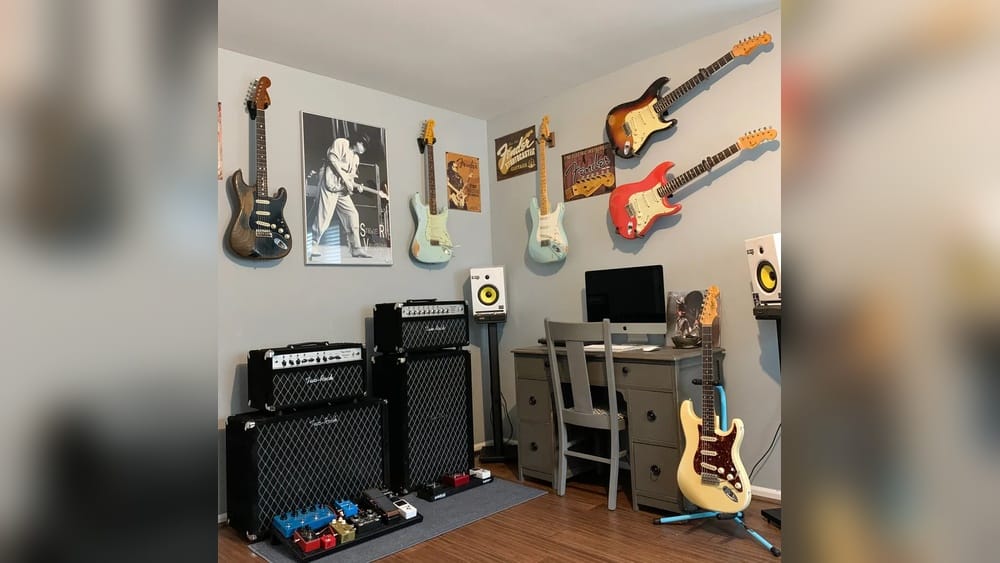
Mounting your guitar on the wall is more than just a way to save space. It can transform your room, protect your instrument, and keep your favorite guitar within arm’s reach. Many guitarists, both beginners and seasoned players, wonder how to mount a guitar on the wall safely—without risking damage to the guitar or their home.
The good news is, with the right tools and careful planning, you can display your guitar like a piece of art and enjoy many practical benefits.
This guide covers everything you need to know, from choosing the right wall hanger to avoiding common mistakes that could harm your instrument. You’ll also find tips that even experienced players sometimes overlook. Whether you want to display a cherished vintage acoustic or keep your electric guitar ready for daily practice, you’ll learn how to do it the right way.
Why Mount Your Guitar On The Wall?
Mounting a guitar isn’t only for looks. There are important reasons musicians choose to hang their guitars instead of hiding them in cases or stands.
- Space Saving: Wall mounting frees up floor space, especially in small rooms or studios.
- Instrument Safety: Guitars on stands often get bumped or knocked over. A wall mount keeps your guitar out of harm’s way.
- Motivation to Play: When your guitar is visible and easy to reach, you’ll likely play more often.
- Humidity Control: Hanging your guitar makes it easier to spot issues like cracks or warping caused by changes in humidity.
- Aesthetic Appeal: Guitars are beautiful objects. Displaying them turns your wall into a personal gallery.
Many well-known musicians, such as John Mayer and Ed Sheeran, keep their guitars mounted for quick access and inspiration. But before you grab a drill, there are crucial factors to consider.
What To Consider Before Mounting
Mounting a guitar isn’t a one-size-fits-all process. Every guitar and wall is different. Here’s what you need to think about first:
Guitar Type And Weight
Heavier guitars, like some electrics, need stronger wall mounts. Acoustic guitars are generally lighter but have wider necks and delicate finishes.
Wall Material
Not all walls are equal:
- Drywall is common but needs anchors for support.
- Brick or concrete is very strong but harder to drill.
- Plaster can crack easily and needs special care.
Room Conditions
Guitars are sensitive to:
- Humidity: Wood expands and contracts with moisture changes.
- Sunlight: Direct sun can fade the finish and dry out the wood.
- Temperature: Extreme heat or cold can warp the neck.
Choose a spot away from heaters, windows, or air conditioners.
Security And Accessibility
Think about:
- Height: You want your guitar easy to grab, but out of reach of children or pets.
- Traffic: Mount your guitar where it won’t get bumped by people passing by.
Multiple Guitars
If you have more than one guitar, plan for the right spacing. Each guitar needs enough room to avoid scratches or damage.
Tools And Materials You’ll Need
Gather your materials before you start. Here’s what you’ll usually need:
- Wall guitar hanger (the most important item)
- Screws (often included with hangers)
- Wall anchors (for drywall or plaster)
- Drill and drill bits
- Screwdriver
- Stud finder (for drywall installations)
- Measuring tape
- Level
- Pencil
- Vacuum or brush (to clean dust after drilling)
Pro tip: Don’t use nails or simple hooks. Specialized guitar hangers are designed to support the neck without damaging the finish.
Types Of Guitar Wall Mounts
The market offers several kinds of wall hangers. Choose the one that suits your guitar and your wall.
| Type | Best For | Pros | Cons |
|---|---|---|---|
| Yoke-Style Hanger | Most electric and acoustic guitars | Secure grip, fits various neck sizes | May not fit very wide necks |
| Locking Hanger | High-value or heavy guitars | Extra safety, prevents accidental falls | More expensive |
| Horizontal/Slatwall Mount | Displaying multiple guitars | Customizable layout | Complex installation, higher cost |
| Basic Hook-Style | Budget installations | Inexpensive, simple | Less support, not for heavy guitars |
Non-obvious insight: Some yoke-style hangers swivel to hold different headstock angles. This prevents uneven pressure on the neck, which can damage certain guitars over time.
Step-by-step Guide: How To Mount A Guitar On The Wall
Ready to get started? Here’s a practical, detailed process that works for most homes.
Step 1: Choose The Mounting Spot
Look for a wall with:
- No direct sunlight
- Stable temperature
- Easy access, but not in a crowded walkway
- Enough space for your guitar’s length and width
Mark the approximate height. A good standard is to have the guitar’s body sit at eye level.
Step 2: Locate The Stud (for Drywall)
Use a stud finder to locate a wooden stud behind the drywall. Mounting directly into a stud gives the strongest support. Mark the spot with a pencil.
If there’s no stud where you want to hang the guitar, you’ll need to use wall anchors.
Step 3: Mark The Hanger Holes
Hold the wall hanger against the wall at your marked height. Use a level to make sure it’s straight. Mark the screw holes with a pencil.
Step 4: Drill Pilot Holes
Using the correct drill bit size (check your hanger’s instructions), drill pilot holes at your marks. For drywall, use a bit slightly smaller than your anchors. For wood studs, match the bit to your screw size.
Pro tip: Insert a small screw first to check depth and position before using anchors.
Step 5: Insert Wall Anchors (if Needed)
For drywall or plaster, gently tap wall anchors into the holes. Make sure they’re flush with the wall.
Step 6: Attach The Guitar Hanger
Screw the hanger into the wall or anchors. Tighten until secure, but don’t overtighten (you might strip the hole).
Step 7: Test The Mount
Gently pull on the hanger to check for movement. It should feel completely solid.
Step 8: Hang Your Guitar
Place the guitar’s neck into the hanger. Make sure it sits evenly and isn’t leaning at an extreme angle.
Non-obvious insight: Allow your guitar to hang for a few minutes, then check if it shifts or tilts. If it does, recheck your installation.
Special Tips For Different Guitar Types
Not all guitars are made the same. Here’s what to watch out for:
Acoustic Guitars
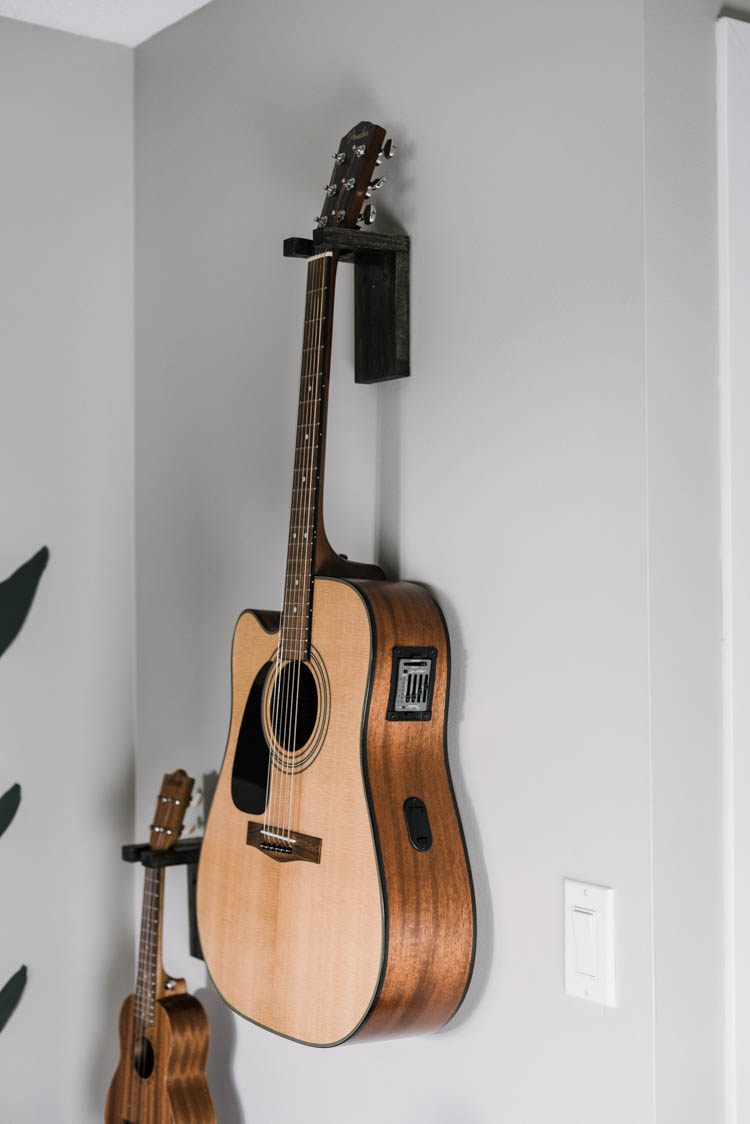
- Their bodies are wider, so make sure the wall space can handle the width.
- Avoid hangers with hard plastic that can mark the finish; look for padded hooks.
Electric Guitars
- Heavier electrics, like Les Pauls, need sturdy hangers and wall anchors.
- Watch for uneven weight distribution if the headstock is heavier on one side.
Guitars With Nitrocellulose Finish
- Some stands or hangers use rubber or foam that can react with nitrocellulose lacquer and cause damage.
- Choose hangers with special “nitro-safe” padding (usually listed in the product description).
Vintage Or High-value Guitars
- Consider using a locking hanger for extra security.
- Mount guitars away from direct air vents or high-traffic areas.
Mistakes To Avoid
Even experienced players sometimes make these mistakes:
- Mounting into drywall without anchors: This almost always leads to the hanger ripping out eventually.
- Placing near windows or heaters: Sunlight and heat can ruin your guitar.
- Using non-guitar hooks: Coat hooks or generic hardware can bend, scratch, or break your guitar.
- Ignoring the finish type: Some hangers can damage nitro finishes.
- Poor measurement: Not using a level or misjudging the height can result in a crooked display.
- Not checking security regularly: Over time, screws can loosen. Check your mount every few months.
Comparing Popular Guitar Wall Hangers
The market is full of choices. Here’s a quick comparison of three popular models:
| Brand/Model | Type | Suitable For | Special Features | Price Range |
|---|---|---|---|---|
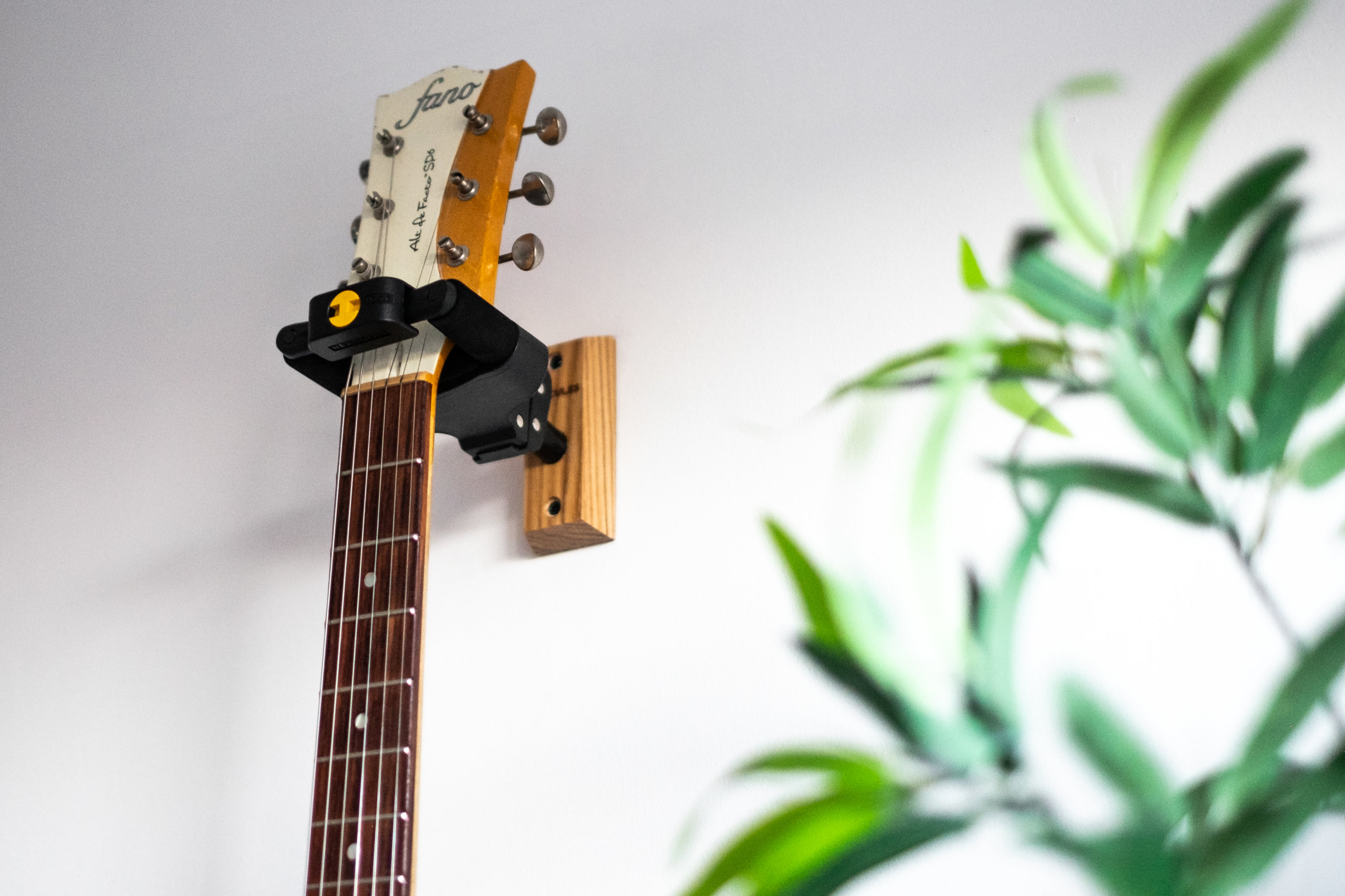
| Hercules GSP38WB | Locking Yoke | Electric/Acoustic/Bass | Auto Grip System, nitro-safe | $20–$25 |
| String Swing CC01K | Basic Yoke | Electric/Acoustic | Padded arms, wood base | $10–$15 |
| FretRest by Proline | Hook Style | Electric/Acoustic | Adjustable yoke | $10–$20 |
It’s worth noting that Hercules hangers are often recommended for valuable or heavy instruments due to their automatic locking system. If you’re unsure about finish safety, String Swing is a trusted choice for most common guitars.
Credit: www.guitargrip.com
Mounting On Different Wall Types
Every wall material requires a different approach. Here’s how to handle the most common types:
Drywall
- Use a stud finder to locate wood studs for maximum strength.
- If no stud is available, use heavy-duty wall anchors rated for at least 20 lbs.
- Avoid toggle bolts unless you’re comfortable with larger holes.
Brick Or Concrete
- Use a hammer drill with a masonry bit.
- Insert masonry anchors before screwing in the hanger.
- Always wear safety goggles when drilling into masonry.
Plaster
- Test for lath behind the plaster (old homes).
- Use anchors designed for hollow walls.
- Drill slowly to avoid cracking.
How High Should You Mount Your Guitar?
There’s no universal answer, but some general guidelines can help.
- Eye level: Most people find this visually pleasing and practical.
- Body height: The guitar’s lower bout (the widest part) should sit at about chest level.
- Multiple guitars: Leave at least 18 inches between hangers to avoid collisions.
Pro tip: If you’re hanging a guitar above furniture, leave at least 6–8 inches of clearance.
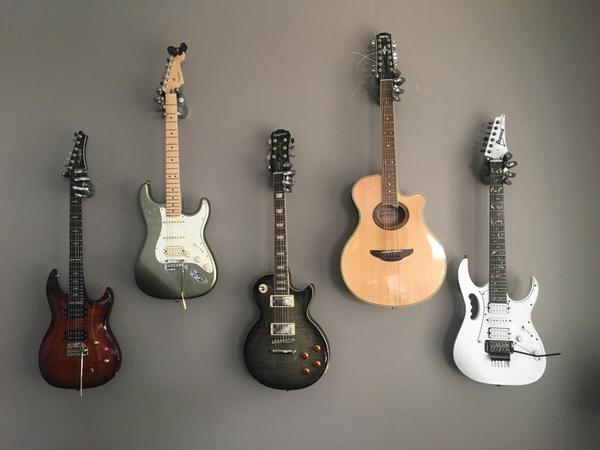
Displaying Multiple Guitars
If you’re lucky enough to own several guitars, planning is essential.
- Horizontal mounting systems (like slatwall) let you adjust hangers as your collection grows.
- Use a measuring tape and level to keep your display straight.
- Stagger hanger heights for a more dynamic look.
Non-obvious insight: For more than three guitars, wall rails or slatwall are safer and often more cost-effective. They spread the weight over a wider area, reducing stress on individual wall points.
Protecting Your Guitar After Mounting
Mounting is only the first step. Keeping your guitar in top shape requires ongoing care.
- Check humidity: Ideal levels are 45–55%. Use a hygrometer near your guitars.
- Clean the hanger: Dust can build up on foam or padding, which can transfer to your guitar.
- Inspect hardware: Every few months, check that screws and anchors are secure.
- Rotate guitars: If you own several, rotate their positions to check all for signs of sun or air damage.
When Not To Mount Your Guitar
Wall mounting isn’t for everyone or every situation. Here are times to avoid it:
- If your home has extreme humidity swings: This can stress guitar wood and finish.
- In rental properties: You may not be allowed to drill into walls.
- For extremely valuable vintage guitars: Consider a display case or professional installation for extra security.
- If you live in an earthquake zone: Even a sturdy wall mount may not protect your guitar from sudden shaking.
Additional Accessories To Consider
Enhance your wall display with these extras:
- Wall bumpers: Small pads behind the guitar’s body prevent wall scratches.
- LED lighting: Gentle backlighting adds drama but avoid direct heat.
- Pick holders: Many hangers have built-in slots for picks or capos.
- Humidity sensors: Small digital units can alert you to unsafe conditions.
Credit: guitar.com
Real-world Examples And Inspiration
Many famous studios and guitar shops mount guitars on walls for a reason. It’s both practical and beautiful. For instance, Abbey Road Studios in London uses wall rails to keep instruments organized and safe.
Home players often combine wall mounts with framed music prints or shelves for a personalized music corner. Social media is full of creative ideas—searching #guitardisplay on Instagram can spark inspiration for your setup.
Environmental Concerns And Guitar Finish
One detail many players overlook is the effect of environmental factors on the guitar’s finish. Guitars with nitrocellulose lacquer are especially sensitive to:
- UV light: Causes yellowing or fading.
- Rapid humidity changes: Can cause finish checking (small cracks).
- Rubber or foam: Certain materials can react with nitro finishes, causing permanent marks.
Always check your hanger’s compatibility if you own a high-end or vintage instrument.
How To Remove A Guitar Wall Mount
Sometimes you need to move or remove a mount. Here’s how to do it safely:
- Take the guitar down and remove the hanger screws.
- If you used wall anchors, gently pry them out with a flat-head screwdriver.
- Fill holes with spackle or wall filler.
- Sand smooth and touch up with paint if needed.
Pro tip: Keep spare screws and anchors. If you move, you’ll be ready to mount your guitar again without buying new hardware.
Cost Breakdown: What To Expect
Mounting your guitar isn’t expensive, but costs can add up if you need tools or have multiple guitars.
| Item | Typical Cost | Notes |
|---|---|---|
| Wall Hanger | $10–$30 | Price varies by features (locking, padding) |
| Wall Anchors/Screws | $2–$5 | Often included with hanger |
| Stud Finder | $10–$20 | Reusable for other projects |
| Drill (if needed) | $30–$80 | Many people already own one |
| Level | $5–$10 | Ensures straight mounting |
Pro tip: If you already have basic tools, mounting a single guitar usually costs less than $20.
Professional Installation Vs. Diy
Most guitarists can mount their own guitar with basic tools. However, consider professional help if:
- You have expensive or antique guitars.
- Your walls are made of masonry or unfamiliar materials.
- You need to install multiple mounts in a short time.
Professional installers can advise on the best placement, use the right hardware, and ensure the mount is secure.
Caring For Your Guitar On The Wall
Hanging your guitar doesn’t mean you can ignore regular maintenance.
- Wipe down the neck and body every week to prevent dust buildup.
- Loosen strings slightly if you won’t play for months, but don’t remove all tension (it can warp the neck).
- Check for twisting or leaning—reposition the guitar if you notice any change.
- Avoid hanging heavy bags or accessories from the headstock; this can strain the neck.
Credit: www.lemonthistle.com
Sustainable And Safe Materials
If you care about the environment or allergies, look for:
- Hangers made of recycled wood or metal
- Low-VOC paints or finishes for hanger bases
- Hypoallergenic padding (avoid latex if you have sensitivities)
Some brands now offer eco-friendly options that are both durable and safe for your guitar.
When To Seek Expert Help
If you ever feel unsure—about your wall’s strength, your guitar’s value, or the right materials—don’t hesitate to ask for advice at your local guitar shop or from a professional installer. Guitar forums and websites like Sweetwater also offer helpful community tips.
Mounting your guitar can be a rewarding project, letting you enjoy your instrument in a new way. Done right, it’s safe, stylish, and practical.
Frequently Asked Questions
Can Hanging A Guitar On The Wall Damage It?
If you use a proper wall hanger and follow installation guidelines, wall mounting is safe for most guitars. Avoid direct sunlight, rapid humidity changes, and incompatible padding (especially with nitro finishes). Regularly check the hanger’s security.
What’s The Best Wall Hanger For A Valuable Or Vintage Guitar?
A locking yoke hanger with nitro-safe padding is usually best. These offer extra security and protect delicate finishes. Brands like Hercules and String Swing are trusted by many professionals.
Is It Better To Mount Into A Stud Or Use Wall Anchors?
Mounting into a wood stud is always stronger. If a stud isn’t available, use heavy-duty wall anchors rated for at least 20 lbs. Never use nails or simple screws in drywall alone.
How Do I Know If My Hanger Is Safe For My Guitar’s Finish?
Check the product description for “nitro-safe” or “finish-safe” padding. If you’re unsure, contact the manufacturer or test with a small piece of similar finish.
Can I Mount Multiple Guitars Close Together?
Yes, but leave at least 18 inches between hangers to prevent contact. For more than three guitars, a horizontal rail system is safer and helps spread the weight across your wall.
Mounting your guitar on the wall is a smart way to combine art, music, and practicality. With the right hanger and some care, you’ll protect your instrument and enjoy it every day.