
Mount Olympus: Is It a Real Mountain or Just a Myth?
If you’ve heard stories about ancient Greek gods, you’ve probably heard of Mount Olympus. It’s often described as the home of gods like Zeus, Hera, and Apollo. But does Mount Olympus actually exist, or is it just a myth from old stories?
This question has fascinated people for centuries. Many imagine Olympus as a mystical place in the clouds, hidden from human eyes. Others wonder if it’s a real mountain you can actually visit, climb, and explore. In fact, the line between legend and reality is more interesting than most people think.
This article will give you a complete, clear answer. You’ll learn about the real Mount Olympus in Greece, its geography and history, its role in mythology, and what you’ll find if you visit today. You’ll also discover surprising facts that many beginners and even some experts miss.
The Real Mount Olympus: Location And Physical Features
Let’s start with the basics: Mount Olympus is a real, physical mountain in northern Greece. It’s not hidden or lost. You can see it on a map, visit it, and even hike to its highest peak.
Where Is Mount Olympus?
Mount Olympus stands on the border between the regions of Thessaly and Macedonia in Greece. The nearest large city is Thessaloniki, about 80 kilometers (50 miles) to the north. The mountain sits close to the Aegean Sea, rising dramatically from the coastal plain.
The Highest Peak
Mount Olympus isn’t just any mountain. Its highest point, Mytikas, reaches 2,917 meters (9,570 feet). This makes it the tallest mountain in Greece and one of the tallest in all the Balkans.
To put this in perspective, here’s how Mount Olympus compares to some well-known peaks:
| Mountain | Country | Height (meters) | Height (feet) |
|---|---|---|---|
| Mount Olympus (Mytikas) | Greece | 2,917 | 9,570 |
| Mount Etna | Italy | 3,329 | 10,922 |
| Mount Fuji | Japan | 3,776 | 12,389 |
| Ben Nevis | UK | 1,345 | 4,413 |
While Olympus isn’t as high as the Alps or Himalayas, its steep rise from the sea and isolated position make it look especially majestic.
The Shape And Climate
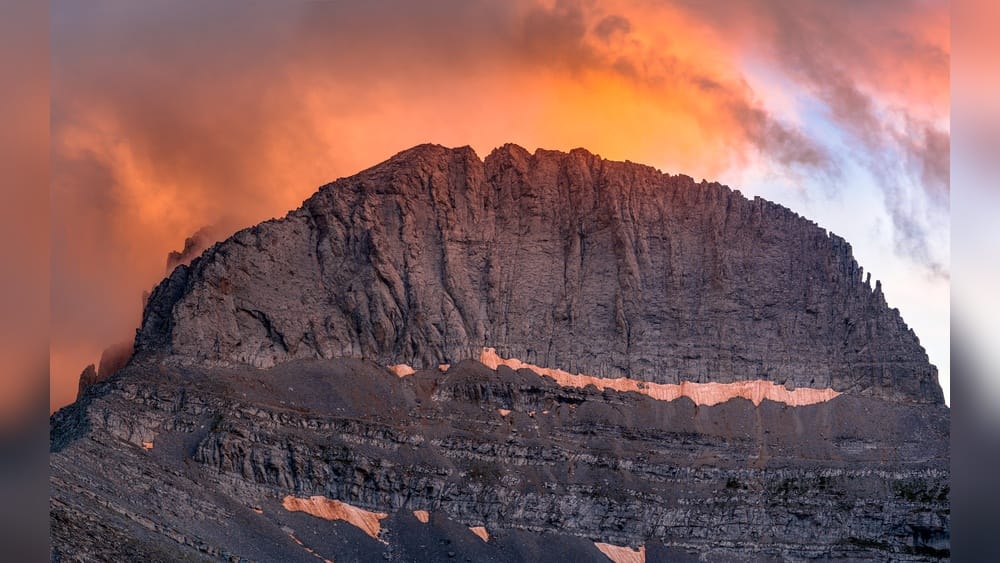
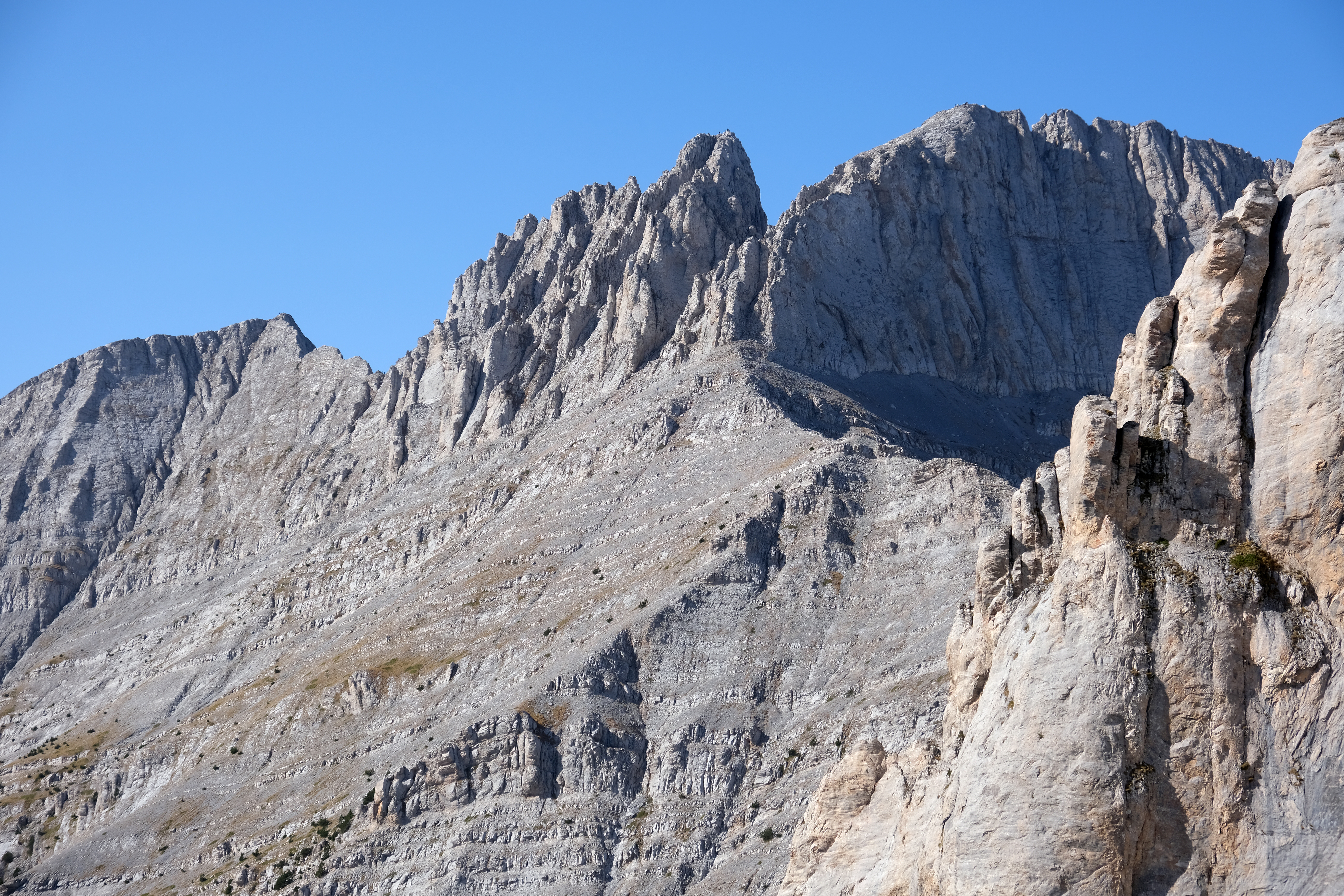
Mount Olympus is not a single peak. Instead, it’s a group of steep, rocky summits. There are 52 peaks over 2,000 meters (6,562 feet), with deep gorges and valleys between them. The mountain is often covered in snow from October to May, and its upper slopes are bare rock.
Lower down, you’ll find dense forests of pine, beech, and fir. The weather can change quickly—clear one minute, foggy or stormy the next. This adds to the mountain’s mysterious reputation.
Why Does Mount Olympus Feel “special”?
Two things make Olympus stand out:
- Isolation: The mountain rises suddenly from flat land. You can see it from far away, making it look even taller and more dramatic.
- Clouds: Olympus often attracts thick clouds. Even on sunny days, the peaks may be hidden. This “veil of clouds” may be why ancient Greeks thought it was the home of gods.
Mount Olympus In Ancient Greek Mythology
Mount Olympus isn’t just a mountain—it’s the most famous home of the gods in Greek mythology. But why did the Greeks pick this mountain? And how did the myths shape our view of Olympus today?
The Home Of The Gods
The ancient Greeks believed the twelve main gods, the Olympians, lived on top of Mount Olympus. These gods included:
- Zeus (king of the gods)
- Hera (queen of the gods)
- Poseidon (god of the sea)
- Athena (goddess of wisdom)
- Apollo (god of the sun, music, and prophecy)
- Artemis (goddess of the hunt)
- Ares (god of war)
- Aphrodite (goddess of love)
- Hephaestus (god of fire and craft)
- Hermes (messenger god)
- Demeter (goddess of the harvest)
- Hestia (goddess of the hearth)
Olympus was seen as a perfect, peaceful place, always above the storms. The gods were said to feast and debate in golden palaces, looking down on the world of mortals.
Why Did Olympus Become The “home Of The Gods”?
There are a few reasons:
- Its high, cloud-wrapped peaks made it seem unreachable.
- It was the tallest mountain known to the early Greeks.
- Its isolated location set it apart from everyday life.
Over time, “Olympus” became a symbol. It meant not just the mountain, but any place of greatness or divinity.
Myths Set On Olympus
Many Greek myths begin or end on Olympus. For example, the Iliad by Homer describes the gods watching and arguing about the Trojan War from their mountain home. The gods often left Olympus to interact with humans, but always returned to their sacred peak.
Did The Greeks Really Think The Gods Lived There?
Most ancient Greeks believed Olympus was a real place, but their idea of it was partly symbolic. Some thought the gods lived on the physical mountain, but others saw Olympus as a place you could only reach in spirit or after death.
What’s important: the myths gave the mountain a special meaning that still lasts today.

Credit: www.britannica.com
History And Archaeology Of Mount Olympus
While Mount Olympus is famous for myths, it also has a rich real-world history. People have lived around the mountain for thousands of years.
Ancient Settlements
At the foot of Olympus, you’ll find Dion, an ancient city named after Zeus (Dios). Dion was a center of worship and festivals. Archaeologists have uncovered temples, theaters, and baths there, dating back to the 5th century BCE.
Nearby, the ancient city of Leivithra was said to be the home of Orpheus, the legendary musician.
Sacred Sites
Mount Olympus itself was considered sacred. People rarely climbed the highest peaks in ancient times, out of respect or fear. Instead, they built shrines and temples on the lower slopes.
The most important sanctuary was at Dion. Here, Greeks held games and sacrifices to honor Zeus Olympios. Pilgrims came from all over Greece.
Climbing Olympus: When Did It Begin?
For centuries, the upper peaks of Olympus were off-limits. Local people believed they were dangerous, haunted, or the home of gods.
The first recorded climb to Mytikas, the highest peak, happened in 1913. A group led by Swiss photographer Frederick Boissonnas and Greek guide Christos Kakalos made the ascent. Kakalos later became the first official guide of Olympus.
Today, thousands of people climb Olympus every year, but the sense of awe remains.
Archaeological Discoveries
Archaeologists keep finding new things around Olympus. In Dion, they have uncovered:
- Temples to Zeus, Demeter, and Isis
- Greek and Roman theaters
- City walls and gates
- Ancient mosaics and statues
These findings show that Olympus was not just a mythical place, but a center of real-life culture and religion.
The Natural Environment Of Mount Olympus
Mount Olympus is famous not only for its myths but also for its unique nature. The mountain is a treasure for scientists and nature lovers.
National Park Status
In 1938, Greece made Mount Olympus its first national park. The park covers about 500 square kilometers (193 square miles).
Why protect it? Olympus is home to:
- Over 1,700 species of plants
- 32 species of mammals
- 108 species of birds
Some plants and animals are found only on Olympus, nowhere else in the world.
Rare Plants And Animals
The mountain’s slopes are covered with forests of pine, fir, oak, and beech. Higher up, the trees give way to alpine meadows full of wildflowers.
A few special species:
- Olympus violet: A tiny purple flower that grows only here.
- Chamois: A mountain goat-antelope found on the rocky peaks.
- Golden eagle: One of Europe’s largest birds, often seen soaring above the mountain.
Climate Zones
As you climb Olympus, the climate changes quickly. There are four main zones:
| Altitude Range (meters) | Zone Name | Main Features |
|---|---|---|
| 0–500 | Sub-Mediterranean | Warm, with oak forests |
| 500–1,500 | Mountain Forest | Pine, fir, beech; many animals |
| 1,500–2,500 | Subalpine | Grass, shrubs, wildflowers |
| 2,500–2,917 | Alpine | Bare rocks, moss, lichens |
This variety makes Olympus a “living laboratory” for scientists.
Unesco Biosphere Reserve
In 1981, Mount Olympus became a UNESCO Biosphere Reserve. This means it’s recognized as a place where nature is protected, but people can also visit and learn.
Hiking And Visiting Mount Olympus Today
You don’t need to be a mythological hero to visit Olympus. Every year, thousands of hikers and tourists come to explore its trails, forests, and peaks.
How To Get There
Most visitors start from the town of Litochoro, at the eastern foot of the mountain. Litochoro is easy to reach by train or car from Thessaloniki or Athens.
From Litochoro, you can enter the national park and choose from many hiking routes.
Popular Hiking Routes
Olympus has trails for all levels, from easy walks to challenging climbs. The most famous routes include:
- Prionia to Spilios Agapitos Refuge: A well-marked path through forests and streams, leading to a mountain hut at 2,100 meters (6,890 feet).
- Mytikas Summit: The final climb to the highest point. This section is steep and rocky—best for experienced hikers.
- Enipeas Gorge: A scenic walk along a river, with waterfalls and wooden bridges.
- Plateau of the Muses: A wide, grassy plateau with stunning views and two mountain huts.
Most hikers take two days to reach the summit, staying overnight in a refuge.
Safety Tips
Olympus is beautiful but can be dangerous. Here are key safety tips:
- Weather changes quickly: Bring warm, waterproof clothes.
- The summit climb involves scrambling over rocks.
- Always tell someone your plans and carry a map or GPS.
- In summer, crowds can be large. Book refuges early.
Practical Insights Beginners Miss
- Altitude sickness: Even though Olympus is not as high as the Alps, some people feel dizzy or tired above 2,500 meters. Go slowly and drink plenty of water.
- Wildlife encounters: There are bears and wild boars in the lower forests. They rarely bother people, but it’s wise to make noise as you walk.
Local Culture
Visiting Olympus isn’t just about nature. The villages around the mountain, like Litochoro and Dion, offer traditional Greek food, music, and festivals. Many celebrate the mountain’s myths with plays, concerts, and art.
Comparing Mount Olympus To Other “sacred” Mountains
Mount Olympus is not the only mountain in the world linked to myths and gods. Many cultures have their own “sacred mountain. ” How does Olympus compare?
| Mountain | Country | Sacred To | Special Features |
|---|---|---|---|
| Mount Olympus | Greece | Ancient Greeks | Home of the Olympian gods |
| Mount Fuji | Japan | Shinto, Buddhists | Symbol of beauty, pilgrimage site |
| Mount Kailash | Tibet/China | Hindus, Buddhists, Jains | Believed to be the center of the world |
| Mount Sinai | Egypt | Jews, Christians, Muslims | Where Moses received the Ten Commandments |
One thing is clear: mountains have always inspired people to imagine gods, spirits, or mysteries at their summits. What makes Olympus unique is its strong link to the stories of the Greek gods—stories that still influence art, language, and culture today.
Credit: en.wikipedia.org
Modern Science And Exploration On Mount Olympus
Olympus is not just for tourists and myth lovers. Scientists also study the mountain for its geology, climate, and ecology.
Geology
Mount Olympus was formed by tectonic movement—the collision of the African and Eurasian plates. The mountain rises about 1–2 millimeters per year, though this is hard to notice.
The rocks of Olympus are mostly limestone, with some schist and sandstone. Over millions of years, water and ice have carved deep gorges and caves.
Climate Studies
Because Olympus rises quickly from sea level, it creates its own weather. Meteorologists study its cloud patterns and storms. The mountain is often hit by thunderstorms—perhaps inspiring the myths of Zeus, the god of lightning.
Ecology Research
Olympus is a “hotspot” for unique plants and insects. Scientists are still discovering new species here, especially in the remote gorges.
One insight many beginners miss: some plants on Olympus survived the last Ice Age. These “relic” species are not found anywhere else.
The Impact Of Mount Olympus On Culture And Language
Even today, the name “Olympus” means greatness, power, or divinity. The mountain appears in art, literature, and even sports.
The Olympic Games
The ancient Olympic Games were held at Olympia, not on Mount Olympus. But the name was inspired by the gods’ home. Today, the word “Olympic” is used worldwide for the biggest sports competitions.
Art And Literature
Painters, poets, and filmmakers often use Olympus as a symbol of the unreachable, the divine, or the heroic. The mountain appears in everything from ancient pottery to modern movies.
Language
Words like “Olympian,” “Olympic,” or “Mount Olympus” are used to describe something impressive or heavenly. For example: “an Olympian effort” means a great achievement.
Tourism And Local Economy
Olympus brings jobs and income to the region through:
- Hiking and climbing tourism
- Hotels and mountain lodges
- Cultural events and museums
But there are also challenges—protecting the mountain from pollution, forest fires, and over-tourism.
Separating Myth From Reality
So, is Mount Olympus a real mountain? The answer is yes—you can see it, climb it, and study its rocks and plants. But it’s also true that Olympus is more than just a mountain. It’s a symbol, shaped by centuries of myth and imagination.
Common Misunderstandings
- Olympus is not hidden or lost. It’s well mapped and easy to visit.
- The gods were not believed to live on the actual summit. For many Greeks, Olympus was both a real place and a mythical idea.
- Olympus is not the only “Mount Olympus.” There are other mountains with this name in Turkey, Cyprus, and even the United States. But the Greek Olympus is the most famous.
Why Does The Myth Still Matter?
Mount Olympus shows how humans use nature to tell stories about power, hope, and mystery. The mountain’s real beauty and its legendary role both matter. In a way, Olympus is both a real mountain and a living myth.
Frequently Asked Questions
Is Mount Olympus A Real Place You Can Visit?
Yes, Mount Olympus is a real mountain in northern Greece. It is a national park and UNESCO Biosphere Reserve. You can hike, climb, and explore its trails, forests, and peaks. The nearest town is Litochoro, which has many services for visitors.
Did The Ancient Greeks Actually Climb To The Top Of Mount Olympus?
No, most ancient Greeks did not climb to the summit. The upper peaks were seen as sacred or dangerous. People worshipped at shrines on the lower slopes or at the city of Dion. The first recorded climb to the highest peak was in 1913.
Is There Any Evidence The Greek Gods Lived On Mount Olympus?
There is no scientific evidence that the gods of Greek mythology lived on Olympus. The mountain’s role as their home is symbolic. However, the mountain’s dramatic appearance may have inspired the myths. Archaeological finds show that people did worship the gods near Olympus.
What Is The Best Time Of Year To Visit Mount Olympus?
The best months for hiking are June to September. Snow covers the upper trails from October to May. July and August are the busiest. If you want fewer crowds and cooler weather, try late May or early October.
Are There Other Mountains Called Olympus?
Yes, there are several other Mount Olympus peaks in the world, including in Turkey (Uludağ), Cyprus, and even Washington State in the USA. However, the Greek Mount Olympus is the most famous because of its connection to mythology.

Credit: www.nationalgeographic.com
Final Thoughts
Mount Olympus is a real mountain, not just a story from Greek myths. You can see it, walk on it, and feel its power. But its legend as the home of the gods gives it a special place in history and culture.
The mountain’s beauty, nature, and stories come together to make Olympus unique. If you visit, you’ll find both a challenging climb and a chance to touch a piece of ancient legend.
For more on the history and nature of Olympus, visit the Mount Olympus Wikipedia page for detailed resources and maps.