
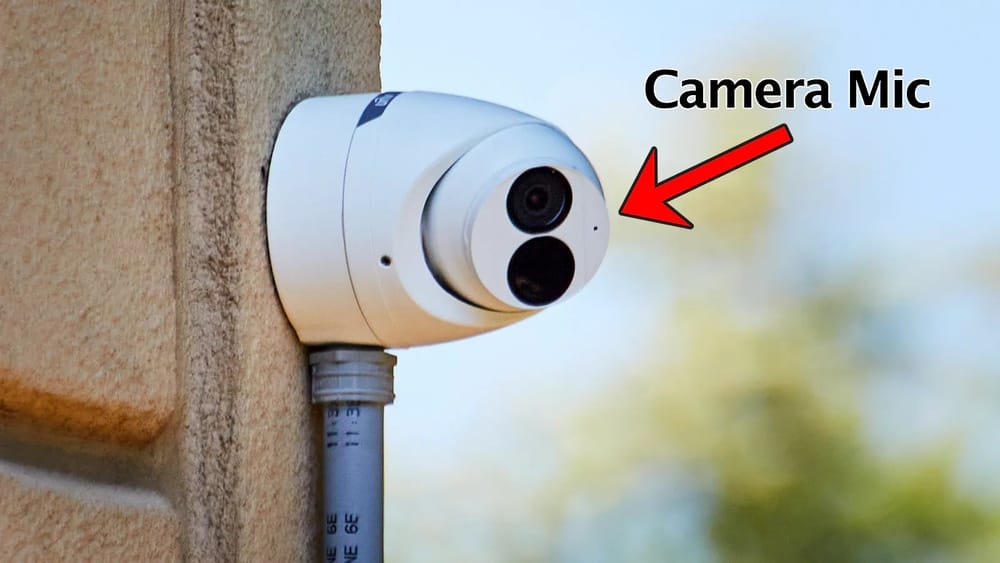
If you have ever installed a security camera in your home or business, you probably noticed that many cameras can record audio as well as video. This can seem useful—after all, hearing what’s happening might help you understand a situation better.
But is recording audio on a security camera legal? The answer isn’t simple. Audio surveillance is treated very differently from video surveillance in the United States and many other countries. Understanding the laws around this topic is important if you want to protect yourself from legal trouble and respect people’s privacy.
Let’s explore how audio recording laws work, what makes them so complex, and what you need to know before you set up a camera with a microphone. We’ll also look at real-life examples, business and home use, and what you can do to avoid common mistakes.
How Audio Recording Differs From Video Recording
Many people think video and audio surveillance have similar legal rules. In reality, audio recording laws are often much stricter. The key reason: audio can capture private conversations, which are protected under privacy laws in ways video usually is not.
Video recording in public or semi-public places is generally allowed if there is no reasonable expectation of privacy. For example, recording in a store, on a street, or in your front yard is usually legal. But the law is more cautious about listening in on what people say.
Audio recording often requires consent from one or all parties involved. The rules depend on where you live or do business. Accidentally recording audio without proper consent can lead to fines, lawsuits, or even criminal charges.
Why The Law Treats Audio More Strictly
- Privacy expectation: People expect that their conversations are private, even in some public spaces.
- Federal and state laws: There are specific laws—like the federal Wiretap Act and state wiretapping laws—that protect conversations.
- Potential for abuse: Audio can capture more sensitive information than video alone.
Federal Laws On Audio Recording In The United States
The United States has a mix of federal and state laws governing audio surveillance. The main federal law is the Wiretap Act (part of the Electronic Communications Privacy Act, or ECPA).
The Wiretap Act
The Wiretap Act makes it illegal to intentionally record or intercept any oral, wire, or electronic communication unless at least one party consents. This is often called “one-party consent”. In practice, this means you can record a conversation if you are one of the people in it, or if at least one participant agrees to the recording.
There are exceptions for law enforcement with proper warrants, but for individuals and businesses, the one-party consent rule is the standard at the federal level.
What Does One-party Consent Really Mean?
If you are talking to someone and you record the conversation, you are usually within the law (under federal rules). But if you secretly record a conversation between other people, and you are not part of it, that is likely illegal.
For security cameras, this means you can record audio in areas where you are present or where people know they are being recorded. However, this is only the federal rule. Many states have stricter laws.
State Laws: One-party Vs. Two-party Consent
Each state in the US can create its own wiretapping or eavesdropping laws. These laws are often stricter than the federal Wiretap Act. The biggest difference is between one-party consent states and two-party (or all-party) consent states.
One-party Consent States
In these states, only one person involved in the conversation needs to know about or agree to the recording. Most US states use this standard. If you are part of the conversation, you can record it—even if the other person doesn’t know.
Two-party (all-party) Consent States
In these states, all people involved in a conversation must agree to the recording. If you record audio without everyone’s consent, you could face legal action. About 13 states use this rule, including California, Florida, Illinois, Maryland, Massachusetts, Montana, New Hampshire, Pennsylvania, and Washington.
Us State Consent Laws Comparison
Here is a summary of how states differ on consent for audio recording:
| State | Consent Required | Notes |
|---|---|---|
| California | All parties | Strict enforcement, even for phone calls |
| New York | One party | Recording allowed if you are part of the conversation |
| Florida | All parties | Includes in-person and electronic communications |
| Texas | One party | Simple consent from one participant is enough |
| Illinois | All parties | Recent changes made law stricter |
If you are installing a security camera with audio, you must follow the rules of your state. If people from other states are involved (for example, in phone calls), the strictest law usually applies.
Real-world Examples And Legal Cases
Understanding the law is easier with real-life situations. Here are some examples that show how audio recording on security cameras can lead to legal issues:
- Homeowners in California installed cameras with audio in their driveway. A neighbor complained because the microphone could record private conversations on the sidewalk. The homeowners had to remove the audio feature to comply with state law.
- Small business in Massachusetts recorded both video and audio in a store. Employees were not told about the audio. One employee found out and sued the owner. The court sided with the employee because Massachusetts is an all-party consent state.
- Landlord in New York put cameras with audio in apartment hallways. Tenants complained, but New York is a one-party consent state. Because the landlord posted signs, there was no expectation of privacy, and the recording was allowed.
These cases show that local laws, consent, and the expectation of privacy all matter.
When Is Recording Audio On Security Cameras Legal?
To stay within the law, you need to understand when it is okay to record audio. Here are the most common legal scenarios:
You Are Part Of The Conversation
In most states, if you are part of the conversation, you can record audio. For example, if your camera is in your office and you are present, you can usually record.
Clear Notice And Consent
If you tell people they are being recorded—by putting up signs or giving written notice—and they choose to enter the area, this can be seen as consent in some states. However, this may not be enough in all-party consent states.
No Reasonable Expectation Of Privacy
If the location is truly public (like a store entrance or parking lot), and people know cameras are there, recording may be legal. But never record in places like bathrooms, locker rooms, bedrooms, or any area where people expect privacy.
This is illegal everywhere.
Business Use Vs. Home Use
For businesses, posting clear signs about audio and video recording is usually required. For private homes, you have more freedom, but you must still respect privacy laws for guests, workers, or neighbors.
When Is It Illegal To Record Audio On Security Cameras?
There are clear cases where recording audio is illegal, even if you own the camera. Here are common illegal scenarios:
- Recording in private places: Bathrooms, changing rooms, hotel rooms, and similar spaces are always off-limits.
- Secretly recording guests or workers: Even in your home, you cannot record people in private areas without their knowledge.
- No consent in all-party consent states: If you record conversations between people and you don’t have everyone’s permission, you could be breaking the law.
- Recording phone calls without consent: Many security cameras can pick up phone calls. If you record these without proper consent, it’s illegal.
Legal Penalties And Risks
Breaking audio recording laws can lead to serious consequences:
- Criminal charges: In some states, illegal audio recording is a felony.
- Civil lawsuits: People who are recorded without consent can sue for damages.
- Fines: Penalties can be thousands of dollars per violation.
- Evidence thrown out: Illegally recorded audio is usually not allowed in court.
Here’s a comparison of potential penalties in different states:
| State | Criminal Penalty | Civil Penalty |
|---|---|---|
| California | Up to 3 years in jail | $5,000 per violation |
| Texas | Up to 2 years in jail | $10,000 per violation |
| Florida | Up to 5 years in prison | $5,000 per violation |
| Massachusetts | Up to 5 years in prison | $10,000 per violation |

Credit: ajax.systems
Audio Recording Laws Outside The United States
Other countries have their own rules about audio recording. In some places, laws are even stricter than in the US.
- Canada: Federal law allows one-party consent, but provinces may have extra privacy rules.
- United Kingdom: Business audio recording is only allowed if necessary and people are informed. Homeowners are expected to respect neighbors’ privacy.
- European Union: The General Data Protection Regulation (GDPR) requires clear notice and a valid reason for audio recording. Consent is usually needed.
If you are outside the US, always check local laws before using audio on your security camera.
Practical Steps For Legal Audio Recording
If you want to use audio recording on your security camera and stay legal, follow these steps:
- Check your state and local laws: Laws change often, so look up the latest information for your location.
- Decide if you really need audio: Video alone is enough for many situations. Only use audio if it adds real value.
- Post clear signs: Let everyone know audio and video recording is happening. Place signs at all entrances.
- Get written consent: For businesses, have employees and regular visitors sign consent forms.
- Disable audio in private areas: Never record in bathrooms, bedrooms, or places where people expect privacy.
- Use secure storage: Protect audio files from hacking and leaks.
- Review your footage: Delete unnecessary recordings to avoid storing private conversations longer than needed.
Example: Effective Signage For Audio Recording
A good sign should include:
- The fact that both video and audio are being recorded
- Who is responsible (business name or homeowner)
- Contact information for questions
Sample text: “This property is under video and audio surveillance for security purposes. For more information, contact [phone number].”
Special Considerations For Businesses
Businesses face extra risks and responsibilities. Here’s what companies should keep in mind:
Employee Privacy
Workers have privacy rights. Many lawsuits come from employees who find out they were recorded without notice. Always tell employees about any audio recording. Some states require written consent.
Customer Notification
Customers should see clear signs at all entrances. If your business has private spaces (like restrooms), never record audio there.
Using Recordings As Evidence
Courts often throw out audio recordings that break consent laws. Even if the footage shows illegal activity, it may not be admissible if obtained illegally.
Data Protection
Businesses must protect audio recordings from leaks and hacks. This means using strong passwords, secure storage, and deleting old files regularly.
Common Mistakes And How To Avoid Them
Even well-meaning people can break the law without realizing it. Here are frequent mistakes and tips to avoid them:
- Assuming video and audio laws are the same: Always check audio-specific rules.
- Relying only on camera manufacturer advice: Manufacturers may not know your local laws.
- Not updating signs when adding audio: Signs should mention both video and audio.
- Recording in semi-private areas: Hallways, break rooms, and offices may have higher privacy expectations.
- Forgetting about remote access: If you or others can listen remotely, this is still considered recording.
Technology Trends And The Law
Security cameras are becoming smarter. Many now use AI features, cloud storage, and remote access. These advances raise new questions:
- Cloud storage: Where your recordings are stored can affect which laws apply. Some countries have strict rules for data stored overseas.
- Smart assistants: Devices like Amazon Echo or Google Home can record audio. These are not security cameras, but similar laws apply.
- AI audio analysis: Some systems can automatically flag certain sounds (like glass breaking or shouting). Even if you do not listen to the audio, recording it may still require consent.
As technology changes, laws are trying to keep up. Always stay informed about updates that may affect your setup.
What If You Accidentally Record Audio?
It is possible to record audio by mistake—many cameras have microphones turned on by default. If you find that you have accidentally recorded audio without proper consent:
- Stop recording immediately.
- Delete any illegal recordings.
- Inform affected people if necessary.
- Consult a lawyer if you are unsure about your risk.
Quick action can sometimes reduce legal trouble, especially if you fix the problem as soon as you notice.

Credit: brinkshome.com
The Importance Of Good Policy
Whether you are a homeowner or a business, having a clear policy helps you stay legal and build trust. Your policy should cover:
- Where cameras are located
- What areas are recorded
- Who has access to audio and video files
- How long files are kept
- How people can ask questions or request access to their data
Having a policy also helps if you ever face complaints or legal questions.
Comparing Audio Recording Rules: Video Vs. Audio
For quick reference, here is how the rules generally compare for video and audio recording:
| Feature | Video Recording | Audio Recording |
|---|---|---|
| Consent needed? | Not always in public places | Often required, varies by state |
| Private areas | Never allowed | Never allowed |
| Expectation of privacy | Lower in public spaces | Higher, even in semi-public areas |
| Penalties for illegal use | Usually civil | Often criminal and civil |
This comparison highlights why it is important to pay special attention to audio recording.
Two Non-obvious Insights Most Beginners Miss
- Audio Recording Can Affect Insurance and Liability: If you use audio illegally, your insurance company may refuse to cover claims related to the recordings. This includes theft, harassment, or injury claims. Always check with your insurer before turning on audio features.
- Cross-State or International Conversations Complicate Consent: If your security camera picks up a conversation with someone from another state or country (for example, on the phone), the strictest consent law usually applies. This is especially tricky for businesses with remote workers or international calls.
What To Do Before Installing A Camera With Audio
If you are thinking about buying or installing a camera with a microphone, follow these tips:
- Research both video and audio laws in your state and city
- Ask the seller if the camera’s audio can be turned off
- Plan where to place cameras to avoid private or semi-private spaces
- Prepare consent forms or signs in advance
- Set up secure, password-protected storage for all recordings
- Review your policy with a legal professional
By planning ahead, you can enjoy the benefits of security cameras without risking fines or lawsuits.
When In Doubt, Seek Professional Advice
Laws around audio recording can be confusing, especially if you move or do business in more than one state. If you are not sure what is legal, talk to a lawyer who specializes in privacy or employment law. Many law firms offer free consultations for basic questions.
You can also look up resources from organizations like the American Civil Liberties Union (ACLU) or government websites.
For more detailed information and updates on privacy laws, you can visit the Wikipedia page on legality of recording by civilians.
Frequently Asked Questions
What Should My Security Camera Sign Say To Meet Legal Requirements?
Your sign should clearly state that both audio and video are being recorded. It should be easy to see at all entrances. Including your name or business and contact info is helpful. This makes sure visitors and workers are aware and can ask questions if needed.
Can I Record Audio In My Own Home Without Telling Anyone?
You can record audio in your home, but you must respect privacy expectations. Recording in common areas is usually fine, but never in bathrooms or bedrooms. If you have guests, workers, or tenants, tell them about the recording to avoid legal problems, especially in all-party consent states.
Credit: www.ids-securityltd.co.uk
What If My Security Camera Records My Neighbor’s Conversation By Accident?
If your camera picks up conversations outside your property—like neighbors talking on the sidewalk—you might be at risk, especially in strict states. Adjust your camera’s microphone sensitivity or direction. Delete any accidental recordings and let neighbors know if you are worried.
Is It Legal To Use Audio Recordings From My Camera As Evidence In Court?
Only if the recording was made legally. If you broke consent laws, the audio will usually be excluded in court. Sometimes, using illegal recordings can even lead to charges against you. Always check with a lawyer before submitting such evidence.
Do Security Cameras Always Come With Audio Recording Enabled?
Not always. Some cameras have microphones off by default, while others record audio automatically. Always check your camera’s settings and manual. If unsure, contact the manufacturer or seller before installing the device.
Installing a security camera can make you feel safer, but audio recording brings extra legal risks. By learning the rules and taking smart steps, you can protect your property and respect people’s rights at the same time. Always stay informed, and when in doubt, put privacy and consent first.