
Should Curtain Panels Touch The Floor? A Complete Guide
Curtains do more than cover windows. They shape a room’s mood, style, and even comfort level. If you’ve ever hung new panels, you might have faced a common design puzzle: Should curtain panels touch the floor? The answer is not as simple as yes or no. Homeowners, renters, and even professional designers often debate this detail because it impacts both look and function.
Choosing the right curtain length can be tricky. Trends change, and what works in one room might look out of place in another. Plus, there are practical concerns—dust, pets, heat, and even cleaning. This guide will help you understand every angle.
We’ll look at the pros and cons, discuss different styles, explain how to measure, and cover common mistakes. Whether you want a cozy bedroom, a formal living room, or a practical kitchen, you’ll find clear advice here.
Why Curtain Length Matters
Curtain length isn’t just about blocking light. It changes how a room feels. Panels that just skim the floor can make a space look tidy and modern. Curtains that puddle create drama and luxury. Shorter curtains, on the other hand, might seem casual or even unfinished.
Curtain length affects:
- Room style: Modern, classic, rustic, or formal.
- Visual height: Long curtains can make low ceilings seem higher.
- Function: Heat retention, privacy, and cleaning.
- Safety: Especially important in homes with children or pets.
Many people underestimate how much these details matter. For example, curtains that are too short can make even expensive furniture look awkward. On the other hand, very long curtains can be a tripping hazard in busy areas. The “right” choice depends on your goals.
Curtain Panels: Types Of Floor Touch
Let’s clarify what “touching the floor” means. There are several popular ways curtains meet (or don’t meet) the floor. Here’s a quick overview:
| Style | Description | Common Use |
|---|---|---|
| Hovering | Hangs 0.5–1 inch above the floor | Modern, high-traffic rooms |
| Touching/Breaking | Just brushes or barely bends at the floor | Classic, versatile, most rooms |
| Puddling | Extends 1–6 inches onto the floor | Formal, dramatic, rarely opened curtains |
| Floating | Hangs 2+ inches above floor | Casual, kitchens, or radiators below windows |
Each style sends a different message. The choice isn’t only about looks. For example, hovering curtains are easier to vacuum around. Puddling adds softness but collects dust. The next sections will break down which works best for different needs.

Credit: www.livingcozy.com
Pros And Cons: Curtain Panels Touching The Floor
Before you decide, it’s smart to weigh the benefits and drawbacks.
Benefits
- Polished Look: Curtains that touch the floor often look more finished and intentional.
- Visual Height: Floor-length panels draw the eye upward, making ceilings feel taller.
- Light Blocking: Longer curtains cover gaps, blocking more light and creating better privacy.
- Insulation: Curtains that meet the floor can help trap heat in winter and block drafts.
- Noise Reduction: Heavier, floor-length panels can slightly reduce echoes in a room.
Drawbacks
- Cleaning Hassle: Curtains that touch or puddle on the floor collect dust and pet hair.
- Potential Damage: Frequent opening and closing may wear the fabric along the bottom.
- Moisture Issues: In damp rooms, fabric touching the floor can absorb moisture and mildew.
- Tripping Hazard: Puddled curtains are easy to step on, especially for kids or seniors.
- Furniture Conflicts: Floor-length curtains can bump against or get caught behind furniture.
Most people focus only on style. But practical concerns—like dust or daily use—should guide your decision. For example, if your home has allergies, you might want to avoid puddling.
Popular Curtain Length Styles Explained
Understanding each style will help you choose the best fit for your room.
Hovering (just Above The Floor)
Hovering means the curtain ends about half an inch above the floor—close, but not touching. This style looks crisp and is easy to clean underneath. It works well in rooms with high traffic or pets, since the fabric stays clean and neat. Hovering is also a smart choice for modern interiors.
Just Touching Or Breaking
Curtains that just touch the floor make a subtle bend or “break” at the bottom. This look is classic and timeless. It’s a safe choice for most rooms, including bedrooms and living rooms. It balances elegance with practicality—you get the look of fullness without dragging fabric.
Puddling
With puddling, the curtains extend past the floor, pooling fabric at the bottom. Designers use this for drama or luxury, especially with velvet or silk. Puddling is common in formal rooms or where curtains are rarely moved. However, it’s less practical in busy homes and requires more cleaning.
Floating (several Inches Above)
Floating curtains hang a few inches above the floor. This is most common in kitchens, bathrooms, or anywhere you need to keep fabric away from spills or heaters. Floating curtains look casual, and they’re easy to move for cleaning.
How To Measure Curtain Panels For The Perfect Length
Getting the right measurement is essential. Even a half-inch can make a difference between polished and awkward.
What you need:
- Steel tape measure
- Step stool
- Notepad
Steps:
- Install the Rod First: Mount your curtain rod, ideally 4–6 inches above the window frame for height.
- Measure from the Rod: Start at the top of the rod (not the window frame) and measure down to where you want the curtain to end—hovering, touching, or puddling.
- Account for Curtain Style: Decide if you want the curtain to hover, just touch, or puddle.
- Double-Check: Measure twice, especially if floors are uneven.
- Consider Curtain Header: Some panels hang from rings or have grommets. Adjust the length to account for this.
Example: If your rod is 90 inches from the floor and you want a “hovering” look, order 89-inch panels.
Non-obvious tip: If your home has uneven floors (older homes often do), measure at both ends of the window. Order for the higher side, then hem if needed.
What Influences The Best Curtain Length?
Your ideal curtain length depends on several factors:
Room Purpose
- Living Rooms: Floor-touching or breaking is most popular for a formal yet practical look.
- Bedrooms: Touching or slight puddle adds coziness and insulation.
- Kitchens/Bathrooms: Floating is safer and easier to clean.
Window Height And Ceiling
Higher ceilings often look best with floor-length curtains. For low ceilings, hang the rod close to the ceiling to create an illusion of height.
Floor Material
Hardwood, tile, or carpet? Curtains that touch the floor on carpet may not hang as straight as on wood or tile.
Pets And Kids
If you have pets who shed or children who pull on fabric, consider hovering or floating curtains to reduce cleaning and wear.
Climate
In cold climates, floor-length curtains can block drafts. In humid areas, avoid puddling to prevent mildew.
Common Mistakes When Hanging Curtain Panels
Even designers make errors. Here are pitfalls to avoid:
- Panels Too Short: Curtains that end several inches above the floor look unfinished.
- Ignoring Header Style: Not all curtains hang from the same point—rings, grommets, or rod pockets change the length.
- Unleveled Rods: If the rod isn’t level, one side will drag or float.
- Wrong Rod Placement: Hanging the rod too low makes the ceiling look shorter.
- Over-Puddling: Too much fabric on the floor collects dirt and can look messy, not luxurious.
Pro tip: Always buy panels slightly longer than needed. It’s easier to hem than to add length.
Curtain Length And Interior Design Styles
Different design styles favor different curtain lengths. Matching your curtain to your décor helps the whole room feel “right. ”
Modern And Minimalist
Hovering or just-touching curtains look clean and crisp. Avoid puddling, which can feel too ornate.
Traditional And Classic
Breaking or slight puddling is common. Heavier fabrics like velvet or damask work well here.
Bohemian Or Eclectic
Long, loose panels with a bit of puddling can add softness and creativity.
Farmhouse Or Rustic
Simple, natural fabrics that hover or break softly at the floor add warmth without fuss.
Formal Or Luxe
Dramatic puddling with rich fabrics makes a statement. This works best in rooms where curtains stay closed most of the time.

Credit: www.reddit.com
Practical Concerns: Cleaning, Safety, And Maintenance
Curtain length isn’t just about looks—it affects daily life.
Cleaning
- Touching or Puddling: More dust, especially with pets or near open windows.
- Hovering or Floating: Easier to vacuum and mop around.
Non-obvious insight: Even in homes without pets, HVAC systems can blow dust onto curtain bottoms.
Safety
- Puddling curtains can trip children, seniors, or people with mobility issues.
- Floating or hovering styles are safest in busy homes.
Maintenance
- Longer curtains often need more frequent washing or steaming.
- Shorter panels may get less wear but offer less insulation.
Energy Efficiency And Light Control
Curtain length can affect your home’s comfort.
Insulation
Curtains that reach the floor block drafts. Studies show that thick, floor-length curtains can reduce heat loss by up to 10% in winter. This matters most in older homes or rooms with big windows.
Light Blocking
Gaps at the bottom of shorter curtains allow light to leak in. For bedrooms or media rooms, floor-length panels help create a darker, more restful space.
Sound
Longer curtains also absorb more sound, making rooms quieter.
Curtain Length For Different Window Types
Windows come in all shapes and sizes. Here’s how to handle common types:
| Window Type | Best Curtain Length | Why |
|---|---|---|
| Standard | Touching or breaking | Balanced look and function |
| Bay | Hovering or floating | Prevents drag on angled floors |
| French doors | Puddling (formal) or hovering (practical) | Matches door height, adds elegance |
| Floor-to-ceiling | Touching or puddling | Maximizes drama and light control |
| Small/kitchen | Floating | Keeps fabric clean from splashes |
Curtain Fabric And Weight: Impact On Length
Not all fabrics behave the same way.
- Heavy fabrics (velvet, brocade) hang straighter and look best touching or puddling.
- Light fabrics (linen, cotton) may move with drafts, so a hovering length prevents wrinkling or twisting at the bottom.
Pro tip: Always hang curtains for a day before hemming. Some fabrics “relax” and settle, changing the length slightly.
How To Achieve The Look You Want
If you’re aiming for a certain style, here are some practical ways to get it right.
For A Modern Look
- Choose panels that hover or just touch the floor.
- Pick simple, solid colors or subtle patterns.
For A Cozy Space
- Try curtains that break softly or puddle slightly.
- Use heavier fabrics and warm colors.
For Drama
- Go for full puddling (3–6 inches extra length).
- Use rich materials like velvet or silk.
For Busy Homes
- Stick to hovering or floating styles.
- Use machine-washable fabrics.
Diy Curtain Hemming Tips
If you can’t find the perfect length, hemming is an easy fix.
- Use iron-on hem tape for a no-sew option.
- Pin curtains in place for a day to test the look before cutting.
- Wash the panels before hemming—some fabrics shrink.
Pro insight: For rental homes, use hemming tape instead of sewing. It’s reversible when you move.
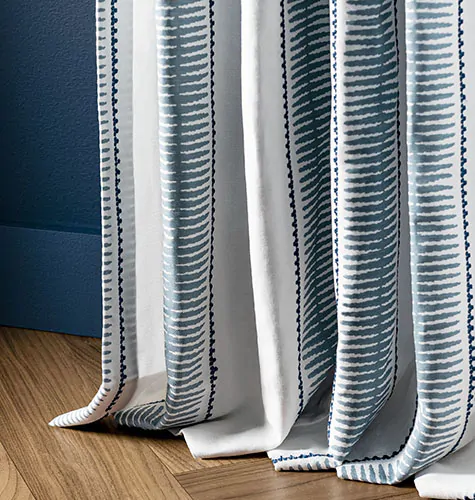
Credit: www.theshadestore.com
When Curtains Should Not Touch The Floor
Sometimes, it’s better if panels don’t meet the floor.
- Kitchens/Bathrooms: Water and splashes can stain fabric.
- Radiators or Baseboard Heaters: Curtains over heaters can block heat or even be a fire risk.
- Pet homes: Cats and dogs may chew or claw at long fabric.
Curtain Alternatives For Special Situations
If floor-length isn’t right, consider:
- Roman shades or blinds for kitchens and bathrooms.
- Café curtains for privacy without full-length fabric.
- Sheer panels layered behind shorter, heavier drapes for style and function.
How Interior Designers Decide Curtain Length
Designers don’t guess—they consider several factors:
- Room function: Is it formal, relaxed, or practical?
- Client lifestyle: Kids, pets, allergies?
- Floor and window shape: Any slopes or odd angles?
- Budget: Custom curtains can be hemmed to any length, but ready-made options may require compromise.
Designers also use tricks, like mounting rods higher to fake taller windows, or layering sheers with blackout panels.
Cost And Availability: Custom Vs. Ready-made Panels
Ready-made panels come in standard lengths (usually 84, 96, or 108 inches). Custom panels can be any length, but they cost more.
- Ready-made: Affordable, fast, but may need hemming.
- Custom: Perfect fit, but costs 2–5 times more.
If you want puddling or a precise “just touching” look, custom is safest. For hovering or floating, ready-made often works.
Sustainability: Environmental Impact Of Curtain Choices
Longer curtains use more fabric, which means higher cost and environmental footprint. If you want to be eco-friendly:
- Choose sustainable fabrics (organic cotton, linen).
- Buy only as much as you need.
- Reuse or repurpose old curtains as cleaning cloths or for crafts.
Some companies offer recycling for old curtains, reducing landfill waste.
Real-world Examples And Case Studies
Example 1: Small Apartment, Hovering Curtains
Anna lives in a city apartment with 8-foot ceilings. She hung her rods 4 inches above the window and chose 84-inch panels that hover just above the floor. Her space looks taller and stays clean, even with a dog.
Example 2: Formal Dining Room, Puddling
Mark’s formal dining room has tall French doors. He chose heavy velvet drapes that puddle 4 inches on the floor. The look is dramatic and matches his antique furniture, but he rarely opens the curtains and vacuums often.
Example 3: Busy Family Room, Floating
The Lee family’s playroom gets a lot of action. They use floating curtains that stop 3 inches above the floor. There are no tripping hazards, and spills are easy to clean.
Expert Opinions And Research
Most professional designers agree: curtains that at least touch the floor look best in living and bedroom spaces. A 2022 survey by the American Society of Interior Designers found that 68% of designers recommend floor-length panels for main rooms. However, they also advise against puddling in homes with young children or pets.
For more technical research on insulation and energy savings with curtains, you can read studies from the U.S. Department of Energy.
Frequently Asked Questions
How Much Should Curtain Panels Touch The Floor?
Ideally, curtain panels should either just skim the floor (hovering) or bend slightly (breaking). A good rule is to hang them so they are no more than half an inch above the floor for a modern look, or just touching for a classic style.
If you want puddling, add 1–6 inches, depending on how dramatic you want the look.
What If My Floors Are Uneven?
If you have sloped or uneven floors, measure at each end of the window. Choose the length for the highest point, then hem the other side if needed. For a more forgiving look, opt for curtains that hover slightly so small height differences are less noticeable.
Are Shorter Curtains Ever Okay?
Yes, in practical spaces like kitchens, bathrooms, or kids’ rooms, shorter curtains that float above the floor are fine. They’re easier to clean and safer. However, in living rooms and bedrooms, short curtains often look unfinished.
Can I Use Curtain Rings Or Grommets With Floor-length Panels?
Yes, but remember that rings and grommets add extra length from the rod. Measure from the top of the hardware to the floor and adjust your panel length order accordingly. Always account for the hanging method before buying or hemming.
How Can I Fix Curtains That Are Too Short?
You can add a coordinating fabric band to the bottom, lower the curtain rod if possible, or use “clip rings” to gain an extra inch or two. For a temporary fix, let out the existing hem if there’s enough fabric.
Curtain length is one of those details that separates a “nice room” from a truly polished space. There’s no single answer, but understanding your options gives you the power to make the best choice for your style and lifestyle. Don’t be afraid to experiment, and remember: it’s easier to hem a curtain than to live with one that doesn’t feel right.