
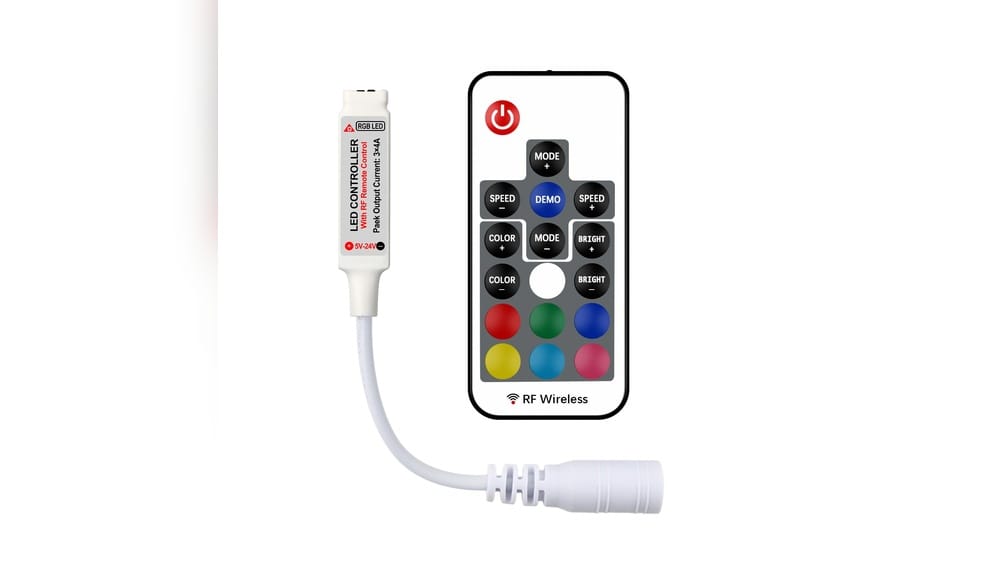
What Is An Rf Remote Control
Imagine changing the TV channel, opening your garage, or controlling lights without wires. This is the magic of an RF remote control. These small devices make life easier by sending signals through the air, so you don’t need to aim them exactly or even be in the same room. But how do they really work, and why are they different from other remotes? Let’s explore the world of RF remote controls, from simple basics to advanced uses, and see why they’re everywhere, even if you don’t always notice them.
Understanding Rf Remote Control
An RF remote control is a handheld device that uses radio frequency (RF) signals to communicate with another device. Unlike infrared (IR) remotes, which need a direct line of sight, RF remotes can send commands through walls, furniture, or other obstacles. This makes them ideal for many applications at home, at work, and in industry.
The main idea is simple: when you press a button, the remote sends a short radio signal. The device you want to control receives and understands this signal, then performs the action—whether that’s turning on a light, unlocking a door, or starting your car.
Rf Vs. Infrared: What’s The Difference?
Many people use remotes every day, but not all remotes are the same. Infrared (IR) remotes are very common (like those for TVs), but they have some limits. They work only if you point them directly at the device, and things like walls or even people can block the signal. RF remotes don’t have this problem—they can work even if you’re in another room.
Here’s a quick comparison:
| Feature | RF Remote | IR Remote |
|---|---|---|
| Signal Type | Radio waves | Infrared light |
| Range | Up to 100 meters (or more) | Typically up to 10 meters |
| Needs Line of Sight? | No | Yes |
| Goes Through Walls? | Yes | No |
| Common Uses | Garage doors, car keys, smart home | TVs, air conditioners |
How Does An Rf Remote Control Work?
The basic process of an RF remote control is simple but clever. When you press a button, the remote creates a unique radio signal, usually on a frequency like 315 MHz, 433 MHz, or 2.4 GHz. This signal travels through the air and is picked up by a receiver.
Here’s what happens step by step:
- Button Press: You press a button on the remote.
- Signal Creation: An electronic circuit in the remote encodes the button’s command into a radio signal.
- Transmission: The remote’s antenna sends this RF signal out.
- Reception: The target device (like your garage door opener or lamp) receives the signal with its own antenna.
- Decoding: The device reads the signal, checks if it’s valid, and then does what you asked.
Key Components Of An Rf Remote Control
An RF remote control has several main parts:
- Buttons/Keypad: Where you enter commands.
- Encoder Circuit: Turns your command into a code.
- RF Oscillator: Generates the radio frequency.
- Antenna: Sends the signal out.
- Power Source: Usually a small battery.
On the other side, the device you want to control has:
- Receiver Circuit: Picks up the radio signal.
- Decoder: Reads the code and checks if it’s right.
- Actuator/Output: Takes action (like turning on a light).
Frequency Choices And Why They Matter
RF remotes work at different frequencies, and each has its own strengths. Lower frequencies (like 315 or 433 MHz) can travel farther and through walls but carry less data. Higher frequencies (like 2. 4 GHz) allow for more data and faster response but may not go as far or through thick walls.
Some common frequencies:
- 315 MHz: Used in many car remotes and garage door openers.
- 433 MHz: Popular for home automation and security.
- 2.4 GHz: Used for wireless keyboards, game controllers, and smart home hubs.
It’s important that remotes and receivers use the same frequency, or they can’t talk to each other.
Types Of Rf Remote Controls
Not all RF remotes are the same. They come in many shapes, sizes, and levels of complexity, depending on what they control.
1. Simple Rf Remotes
These have just a few buttons and control basic devices, like garage doors or wireless outlets. They use a simple code, often with “on/off” or “open/close” commands.
2. Multi-channel Rf Remotes
Some remotes can control multiple devices, each on its own “channel. ” For example, a multi-channel light remote can control six different lamps in your house.
3. Learning Rf Remotes
These remotes can “learn” codes from other remotes, making them universal. They’re useful if you want one remote for everything, but they are less common than IR universal remotes because RF learning requires special hardware.
4. Advanced Rf Remotes
Smart home systems, car keys with rolling codes, and RF game controllers use advanced coding and security. These remotes may use encrypted signals to prevent hackers from copying them.
Common Uses Of Rf Remote Controls
RF remotes are everywhere, even if you don’t realize it. Here are some of the most common uses:
- Garage Door Openers: Probably the most familiar RF remote for many people. Just press a button and the door opens or closes.
- Car Key Fobs: Modern cars use RF remotes to lock/unlock doors, open trunks, or even start the engine from a distance.
- Home Automation: Control lights, fans, or curtains with wireless RF switches and remotes.
- Security Systems: Arm or disarm alarms, open gates, or alert security with a button press.
- Presentation Clickers: Many professional presenters use RF remotes to control slideshows from anywhere in a room.
- Wireless Audio/Video Devices: Change music or video input without being near the device.
- Toys and Drones: Many remote-controlled cars, planes, and drones use RF remotes for long-range control.
- Industrial Equipment: Factories use RF remotes to safely control cranes, robots, or heavy machines from a distance.
- Medical Devices: Some hospital beds and mobility aids use RF remotes for convenience and safety.
- Smart Home Hubs: Devices like Zigbee or Z-Wave remotes use RF to control many smart devices at once.
Advantages Of Rf Remote Controls
RF remotes have many benefits, which is why they are so common in modern technology.
1. No Line Of Sight Needed
This is the biggest advantage. You don’t have to point the remote directly at the device. The signal passes through walls, doors, and even floors.
2. Longer Range
RF signals can travel much farther than IR. Many RF remotes work up to 100 meters (about 330 feet), while IR remotes are limited to about 10 meters.
3. Works Through Obstacles
Walls, furniture, and other items usually don’t block RF signals, making them perfect for home automation or security.
4. Multiple Device Control
With the right coding, one RF remote can control many devices in different places.
5. Higher Security
Many RF remotes use rolling codes or encryption. This means the code changes every time you use it, making it almost impossible for hackers to copy.
Disadvantages And Limitations
No technology is perfect, and RF remote controls have some drawbacks.
1. Interference
RF signals can be affected by other wireless devices, Wi-Fi, or even microwave ovens using the same frequency. This can sometimes cause commands to be missed.
2. Battery Use
Because RF circuits use more power than IR, batteries may run out faster, especially in high-use remotes.
3. Security Risks
If a remote does not use encryption or rolling codes, it’s possible (though not easy) for hackers to “listen” to the signal and copy it.
4. Complexity
RF systems can be more complex to set up, especially if you want to pair multiple remotes or control many devices.
5. Regulation
Governments regulate which frequencies you can use, to prevent interference with emergency services or other important signals.

Credit: www.usledsupply.com
How Rf Remote Controls Improve Everyday Life
You may not notice RF remotes, but they quietly make daily tasks easier and safer:
- Convenience: Open your garage or unlock your car without fumbling for keys.
- Accessibility: Elderly or disabled people can control devices without moving around.
- Safety: Workers can control dangerous machines from a distance.
- Efficiency: Presenters or teachers can control slides without being near the computer.
A good example: a parent carrying groceries can open the house door with an RF remote, even if their hands are full.
Key Technologies Behind Rf Remote Control
Several technologies make RF remotes work smoothly, securely, and reliably.
Modulation Methods
To send data, RF remotes use modulation, which changes the radio wave to carry information. Common types are:
- Amplitude Shift Keying (ASK): Changes the strength of the wave.
- Frequency Shift Keying (FSK): Changes the frequency slightly.
- Phase Shift Keying (PSK): Changes the starting point of the wave.
Each method has pros and cons for speed, range, and resistance to noise.
Coding And Security
Modern RF remotes use codes to identify valid signals. Some basic remotes use fixed codes, but advanced ones use rolling codes (the code changes every time). This keeps devices safe from code grabbers.
For example, most car remotes now use rolling codes, reducing car theft risk.
Pairing And Addressing
A remote must “pair” with its device, so it doesn’t control your neighbor’s garage door. This can be done with a physical button, a code, or sometimes automatically when first used.
Rf Remote Control In Smart Homes
The smart home revolution uses RF remote controls everywhere. Devices like smart bulbs, outlets, door locks, and thermostats use RF-based protocols.
Popular Rf Smart Home Standards
- Zigbee: Used in smart bulbs and sensors. Works on 2.4 GHz.
- Z-Wave: Common in security, works at 868 MHz (Europe) or 908 MHz (US).
- RF433: Simple, affordable RF switches and sensors.
These standards allow many devices to talk to each other and be controlled from one remote or smartphone app.
Real-world Example
A smart home hub in your living room receives RF signals from remotes or sensors (like motion detectors) and can turn on lights, close blinds, or trigger alarms. You can have one remote to control everything, or use your phone as the remote.
Rf Remote Control Vs. Other Wireless Technologies
RF remote controls are not the only way to control devices wirelessly. There are several alternatives:
- Bluetooth: Used for short range, like headphones or speakers.
- Wi-Fi: Used for internet-connected devices and smart home systems.
- Zigbee/Z-Wave: Special RF systems for smart homes.
- Infrared (IR): Still common for TVs and simple devices.
Here’s a comparison of popular wireless control methods:
| Technology | Range | Line of Sight | Data Speed | Power Use | Common Uses |
|---|---|---|---|---|---|
| RF Remote | Up to 100 m | No | Low | Low | Garage doors, car keys |
| Bluetooth | 10-100 m | No | High | Medium | Headphones, game controllers |
| Wi-Fi | 50-100 m | No | Very High | High | Smart homes, computers |
| IR Remote | Up to 10 m | Yes | Low | Low | TVs, air conditioners |
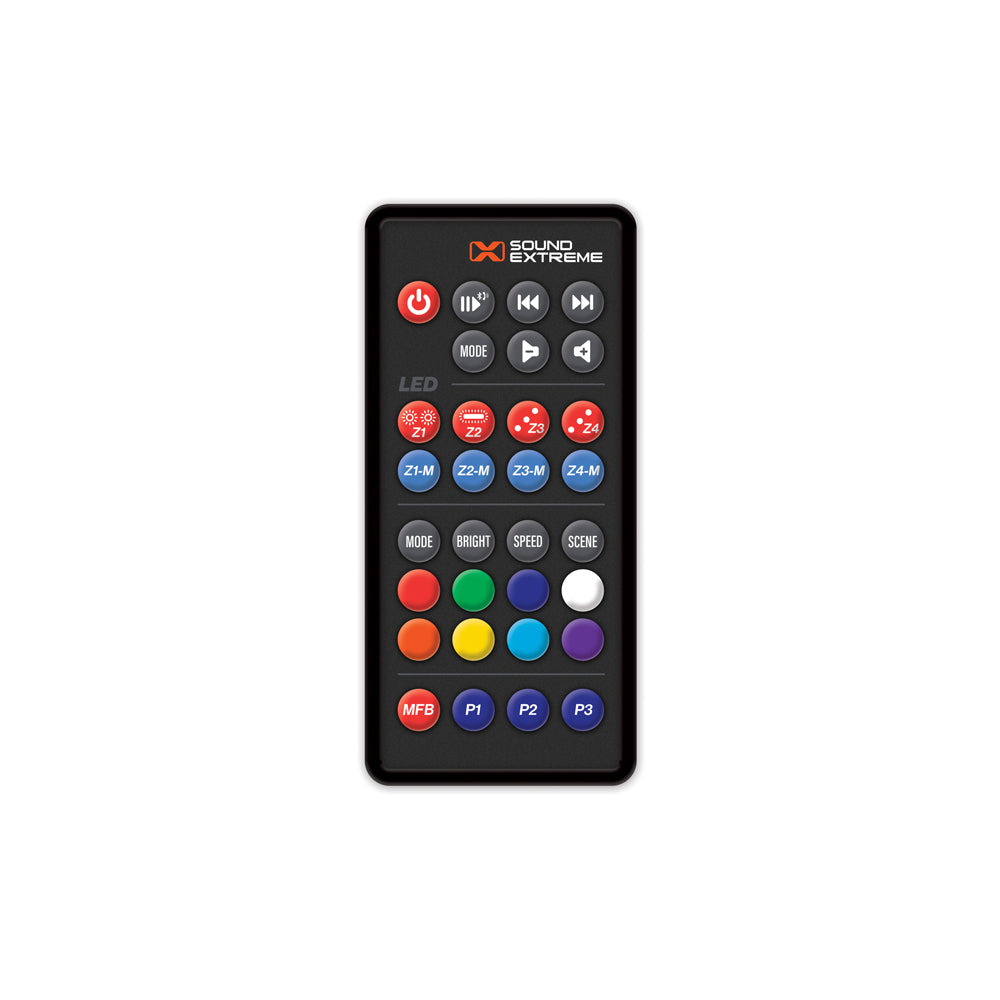
Credit: soundextreme.com
Setting Up And Using An Rf Remote Control
You don’t need to be a technician to use an RF remote, but setup can be different depending on the device.
Simple Pairing
For most remotes, pairing is as simple as pressing a “learn” or “pair” button on the receiver and the remote at the same time. Some remotes are already paired at the factory and work out of the box.
Changing Batteries
RF remotes usually use coin cell (CR2032) or AAA batteries. Most devices warn you with a light or message when the battery is low.
Avoiding Interference
If your remote doesn’t work well, try these tips:
- Move away from Wi-Fi routers, microwaves, or other strong wireless signals.
- Change the remote’s frequency if possible (some remotes support this).
- Replace old batteries.
Security Tips
For devices like car keys or garage doors, always choose remotes with rolling codes or encryption. This keeps your home and car safer.
Troubleshooting Common Rf Remote Problems
Like any technology, RF remotes can have issues. Here are common problems and solutions:
Remote Not Working
- Check the battery: Replace if needed.
- Out of range: Move closer to the device.
- Signal blocked: Unlikely with RF, but large metal objects can block signals.
- Receiver issue: Try resetting the device or re-pairing.
Interference
- Wi-Fi/Microwave conflict: Move devices apart, or change frequencies.
- Multiple remotes: Two remotes on the same frequency can cause confusion. Pair remotes one at a time.
Delay Or Missed Commands
- Weak battery: Replace with a fresh battery.
- Receiver busy: Wait a moment and try again.
- Obstacles: While RF goes through walls, very thick concrete or metal can still block signals.
Future Of Rf Remote Controls
RF remote controls are evolving quickly. Here’s what’s coming next:
Voice And Smartphone Integration
Many RF remotes now work with voice assistants (like Alexa or Google Assistant) or smartphone apps. This means you can control devices even if you lose the physical remote.
Energy Harvesting
Some new remotes use “energy harvesting”—they collect power from motion (like shaking) or light, so you never need to replace batteries.
Ultra-low Power Chips
Modern RF chips use less power, so remotes last longer. Some can run for years on a single battery.
Mesh Networks
New RF standards let devices talk to each other, not just to a central hub. This means better range and reliability, especially for smart homes.
Improved Security
More devices are using advanced encryption and authentication to keep hackers out.
Two Common Beginner Mistakes
- Assuming All Remotes Are Interchangeable: Not every RF remote works with every device, even if they look similar or use the same frequency. Always check compatibility, or you may waste time and money.
- Ignoring Security: Some people buy cheap RF remotes without encryption for garage doors or gates. This leaves your home or car open to hackers with basic equipment. Always choose remotes with rolling codes for anything important.
Interesting Facts About Rf Remote Controls
- The first RF remote controls appeared in the 1940s for military use. Home use became common in the 1980s.
- Many “wireless” doorbells use basic RF technology.
- Some RF remotes can be programmed to control up to 99 devices in a large home or building.
- The same RF technology in remotes is used for wireless weather stations, sensors, and even some medical implants.
Environmental Impact And Recycling
RF remote controls are small, but millions are produced every year. Most use plastic cases and small batteries. Recycling is important:
- Batteries: Never throw batteries in the trash. Take them to a recycling center.
- E-waste: Old remotes can often be recycled with other electronics.
- Reducing Waste: Some new remotes use recycled plastic or are designed to last longer.
Smart recycling keeps toxic chemicals out of landfills and helps the planet.
Comparing Rf Remotes: What To Look For
If you’re buying an RF remote control, consider these factors:
| Feature | Why It Matters | What to Look For |
|---|---|---|
| Frequency | Affects range and interference | Match with your device, avoid crowded bands |
| Number of Channels | Controls more devices | At least as many as you need |
| Security | Protects against hacking | Rolling code or encryption for important uses |
| Battery Life | Reduces hassle | Low power design, easy battery change |
| Build Quality | Lasts longer | Sturdy case, good buttons |
Real-world Example: Programming A Universal Rf Remote
Suppose you want to control three different garage doors with one RF remote. Here’s how you might do it:
- Check Compatibility: Make sure the universal remote supports the right frequency (315 or 433 MHz, for example).
- Pair Each Channel: Use the “learn” button on each garage door opener, then press the matching button on the remote.
- Test Each Door: Press each button to make sure the correct door opens.
- Label Buttons: Use a marker or sticker to remember which button controls which door.
This makes life simpler and keeps your keychain lighter.

Credit: www.amazon.com
Frequently Asked Questions
What Does Rf Stand For In Rf Remote Control?
RF stands for Radio Frequency. It means the remote uses radio waves, not visible light, to send commands wirelessly to another device.
Can Rf Remote Controls Work Through Walls And Floors?
Yes, most RF remote controls can send signals through walls, doors, and even floors. The range depends on the frequency and the building materials, but they usually work well in most homes.
Are Rf Remote Controls Safe For Health?
RF remotes use very low-power radio signals, much lower than cell phones or Wi-Fi. Current research shows they are safe for everyday use. For more details, see the Wikipedia RF entry.
How Do I Know If My Remote Is Rf Or Ir?
Look at how you use it. If you need to point it directly at the device, it’s likely IR. If it works from your pocket, through a wall, or from far away, it’s probably RF. You can also check the manual or model number.
Can I Use My Smartphone As An Rf Remote Control?
Some smart home devices let you use your phone as an RF remote through a hub (like Zigbee or Z-Wave). Most phones do not have built-in RF transmitters, so they use Wi-Fi or Bluetooth instead, and the hub converts these signals to RF.
RF remote controls are simple, powerful tools that make modern life more convenient and connected. Whether you’re opening your garage, controlling smart lights, or running a presentation, RF remotes do the job—quietly and reliably—every day.