
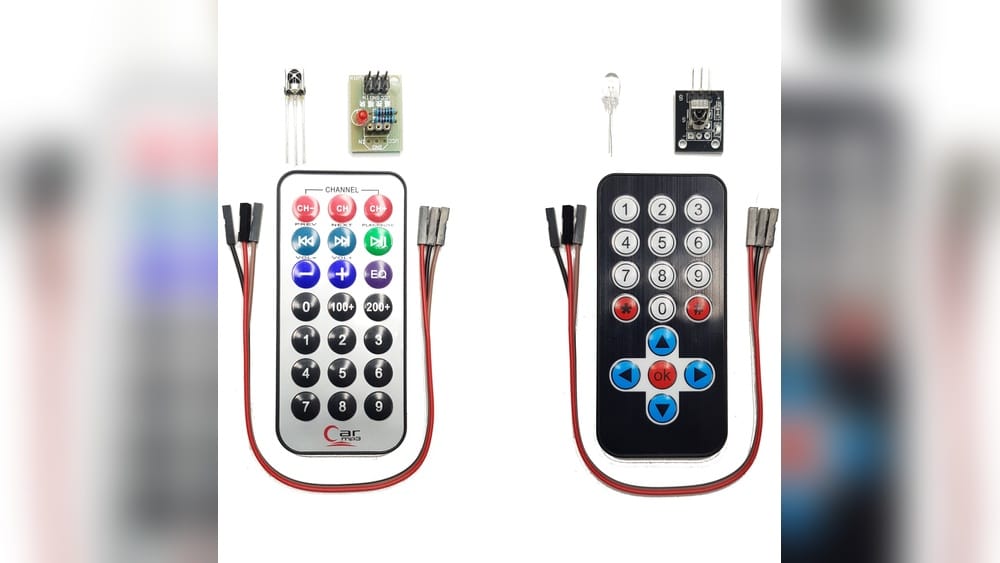
What Is Ir Remote Control?
In today’s world, nearly every household has at least one remote control. Whether you are turning on your TV, adjusting your air conditioner, or switching channels on a set-top box, chances are you’re using an IR remote control. These small devices have become so common that most people don’t even think about how they work. But the technology behind them is both simple and fascinating. Understanding how IR remote controls operate can help you troubleshoot problems, choose the right remote for your needs, or even design your own DIY project.
This article will explain in detail what IR remote control is, how it works, its main parts, real-world uses, technical details, advantages and disadvantages, maintenance, and much more. If you want a full picture of this everyday technology, you are in the right place.
What Is Ir Remote Control?
An IR remote control is a handheld device that uses infrared light to send signals to another device, usually to control its functions wirelessly from a distance. “IR” stands for “infrared,” a type of light that is invisible to human eyes but can be detected by electronic sensors.
When you press a button on the remote, it sends a unique code as a burst of infrared light. The device you want to control (like your TV) has a built-in sensor that reads this code, recognizes the command, and performs the requested action—such as changing the channel or increasing the volume.
How Does Ir Remote Control Work?
The working principle of IR remote control is based on sending and receiving light signals. Here’s a clear breakdown of the process:
- Button Press: When you press a button, a tiny electronic circuit inside the remote is activated.
- Encoding: Each button is linked to a specific code. The circuit converts the button press into a digital code.
- Infrared LED: The code is sent to an infrared light-emitting diode (LED) at the front of the remote.
- Signal Transmission: The IR LED flashes the code as a series of light pulses.
- Reception: The receiving device has a sensor that picks up these pulses.
- Decoding: The device’s microcontroller decodes the pulses into a command.
- Action: The device performs the action (for example, increasing the volume).
The entire process happens almost instantly. Most IR remotes only work if they are pointed directly at the device because infrared light travels in a straight line and can be blocked by objects.
Key Components Of Ir Remote Control
Understanding the parts of an IR remote can help you know how it works and why some remotes last longer or work better than others.
Main Parts
- Keypad: The buttons you press, each connected to a specific command.
- Microcontroller: The “brain” of the remote that creates digital codes from button presses.
- Infrared LED: Emits the coded light signal.
- Plastic Casing: Protects the internal components.
- Power Source: Usually small batteries, like AAA or coin cells.
- Oscillator: Provides timing signals for sending data.
Inside The Remote
Here’s a simple view of what’s inside:
| Component | Function |
|---|---|
| Keypad | Lets user select commands |
| Microcontroller | Encodes button signal to digital code |
| Infrared LED | Sends the code as light pulses |
| Battery | Powers the remote |
| Plastic case | Houses all parts |
The Receiver
On the device (like TV or AC), the receiver consists of:
- IR Sensor: Detects incoming infrared signals.
- Demodulator Circuit: Removes noise and extracts the code.
- Microcontroller: Interprets the code and triggers the action.
Types Of Ir Remote Controls
Not all IR remotes are the same. They can be grouped in several ways.
By Application
- TV Remotes: The most common type, used to control televisions.
- Audio/Video Remotes: For DVD players, amplifiers, and sound systems.
- Air Conditioner Remotes: Used for HVAC systems.
- Projector Remotes: For presentations and education.
- Set-Top Box Remotes: Used for cable or satellite boxes.
- Universal Remotes: Can be programmed to control multiple devices.
By Signal Protocol
IR remotes also differ by the signal protocol they use. Popular ones include:
- NEC Protocol
- Sony SIRC Protocol
- Philips RC-5 and RC-6
- Panasonic Protocol
Each protocol has its own way of encoding and transmitting data.
By Features
Some remotes offer advanced functions:
- Learning Remotes: Can copy codes from other remotes.
- Programmable Remotes: Allow users to set up macros or custom buttons.
- Backlit Remotes: Easier to use in the dark.
How Ir Signals Are Encoded
IR remote controls do not simply turn the LED on and off. They use specific methods to send data so the receiver can understand the difference between commands and ignore random light.
Modulation
Most IR remotes use modulation—they turn the IR LED on and off rapidly, usually at a frequency like 38 kHz. This helps the receiver filter out sunlight or room lights, which are not modulated.
Data Format
The data is sent as a series of pulses (on/off flashes), with each pulse or space representing a “1” or “0”. For example, pressing “power” on your TV remote sends a unique sequence that means “turn on or off”.
Here’s a simplified look at IR signal encoding:
| Part of Signal | What It Means |
|---|---|
| Start Bit | Marks the beginning of a command |
| Address Bits | Identifies the device type (TV, DVD, etc.) |
| Command Bits | Specific action (volume up, channel down) |
| Stop Bit | Marks the end of the command |
Example
Pressing the “volume up” button on a Sony TV remote might send a different code than “volume up” on a Panasonic TV remote, because the protocols and device addresses differ.
Common Uses Of Ir Remote Control
IR remote controls are everywhere. Here are the most popular uses:
- Television: Switching channels, adjusting volume, accessing menus.
- Air Conditioners: Setting temperature, timer, fan speed.
- DVD/Blu-ray Players: Play, pause, fast forward, menu navigation.
- Audio Equipment: Changing input source, equalizer settings.
- Projectors: Turning on/off, selecting source, focusing lens.
- Set-Top Boxes: Browsing channels, recording programs.
- Home Automation: Controlling lights, fans, or smart curtains.
- Toys and Models: Operating RC cars, robots, or drones (short-range).
In many homes, IR remotes are the main way people interact with their electronic devices.
Advantages Of Ir Remote Control
IR remotes became popular because they offer several benefits:
- Low Cost: Simple parts and easy manufacturing make them affordable.
- No Interference with WiFi/Bluetooth: IR signals are not affected by common wireless devices.
- Simple to Use: Point and press—no setup needed for most remotes.
- Low Power Consumption: Batteries can last months or even years.
- Reliable for Line-of-Sight Control: Very dependable when nothing blocks the path.
Disadvantages Of Ir Remote Control
Even with their popularity, IR remotes have some limits:
- Line-of-Sight Required: IR light can’t go through walls or most objects.
- Limited Range: Usually 5 to 10 meters, less in bright sunlight.
- One-to-One Control: Usually controls only one device at a time unless it’s a universal remote.
- No Feedback: You can’t see if the signal was received unless the device reacts.
- Possible Interference: Sunlight or fluorescent lights can sometimes confuse the receiver.
Ir Remote Control Vs. Rf And Bluetooth Remotes
You may have seen newer remotes using RF (Radio Frequency) or Bluetooth. How does IR compare?
| Feature | IR Remote | RF Remote | Bluetooth Remote |
|---|---|---|---|
| Signal Type | Infrared Light | Radio Waves | Radio Waves (Short Range) |
| Needs Line of Sight? | Yes | No | No |
| Range | 5-10 meters | Up to 100 meters | Up to 10 meters |
| Battery Life | Long | Medium | Short-Medium |
| Common Uses | TV, AC, Audio | Garage doors, car keys | Smart TVs, streaming sticks |
| Cost | Low | Medium | Medium |
IR remotes are still the most common for simple home devices, while RF and Bluetooth are used when you need to control devices in another room or when “pairing” is needed.
Universal Remote Controls
A universal remote control is a special IR remote that can control many devices from different brands. These are popular because people often have several devices—like TV, DVD, and set-top box—from different brands.
How Universal Remotes Work
Universal remotes have a larger memory and can store hundreds (or thousands) of codes for different devices. Setting one up usually means:
- Finding the code for your device in the manual.
- Entering the code using the remote’s keypad.
- Testing to see if the remote works with your device.
Some advanced universal remotes can “learn” commands directly from your original remote or download codes from the internet.
Pros And Cons
Pros:
- Reduces the number of remotes needed.
- Good for home theaters with many devices.
Cons:
- Setup can be confusing for beginners.
- Not always compatible with every device.
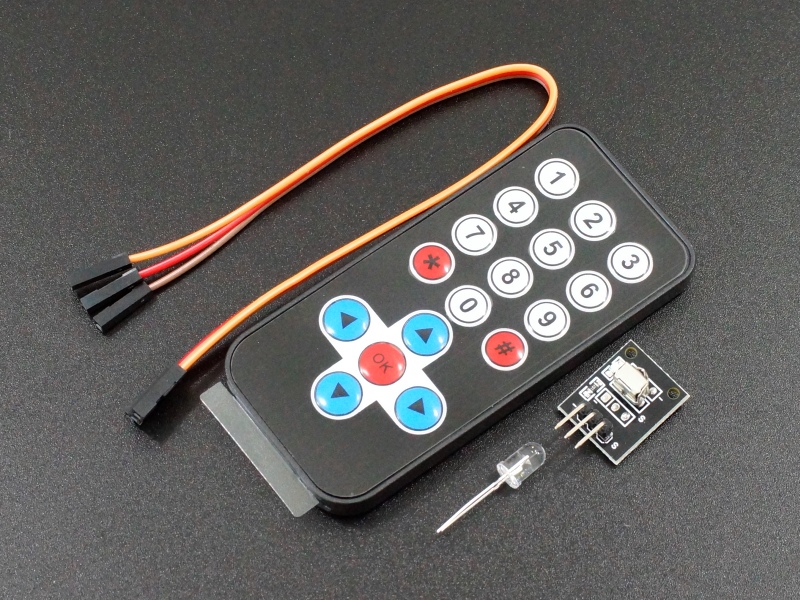
Credit: protosupplies.com
Technical Specifications And Standards
IR remotes are not all built the same. Several standards and specifications define how they work.
Carrier Frequency
Most IR remotes use a carrier frequency between 36 kHz and 40 kHz (most commonly 38 kHz). This frequency is chosen because it is less likely to be affected by room lighting.
Range
Typical range is 5 to 10 meters. Bright sunlight or strong indoor lights can reduce the range.
Power
Most use 3V (two AAA batteries) or a button cell.
Data Rate
Data is sent at rates between 100 bits per second to 5,000 bits per second, depending on the protocol.
Protocol Examples
- NEC Protocol: Used in many Asian devices.
- RC-5/RC-6: Used by Philips and some other European brands.
- Sony SIRC: Used in Sony devices.
International Standards
There is no single global standard for IR remotes, but some protocols are more widely used. The Consumer Electronics Control (CEC) standard, part of HDMI, allows some control between devices over cables, but most remotes still use IR.
Real-world Examples And Case Studies
Looking at how IR remote controls are used in the real world makes the technology easier to understand.
Tv Remote
A person points the remote at the TV, presses “Power,” and the TV turns on. If the remote is not pointed directly or something blocks the signal, the TV does not respond.
Air Conditioner Remote
Most AC remotes have a small LCD screen and send detailed information (mode, temperature, timer) in one burst. If you change settings, the remote sends a new code with all settings included.
Universal Remote Setup
A family with five devices uses a universal remote. After entering the correct codes, they can switch between controlling the TV, DVD player, and stereo with one device.
Diy Hobbyist Project
Many electronics students use IR remote controls in projects. For example, building a robot that follows remote commands (forward, back, left, right) is a common school project.
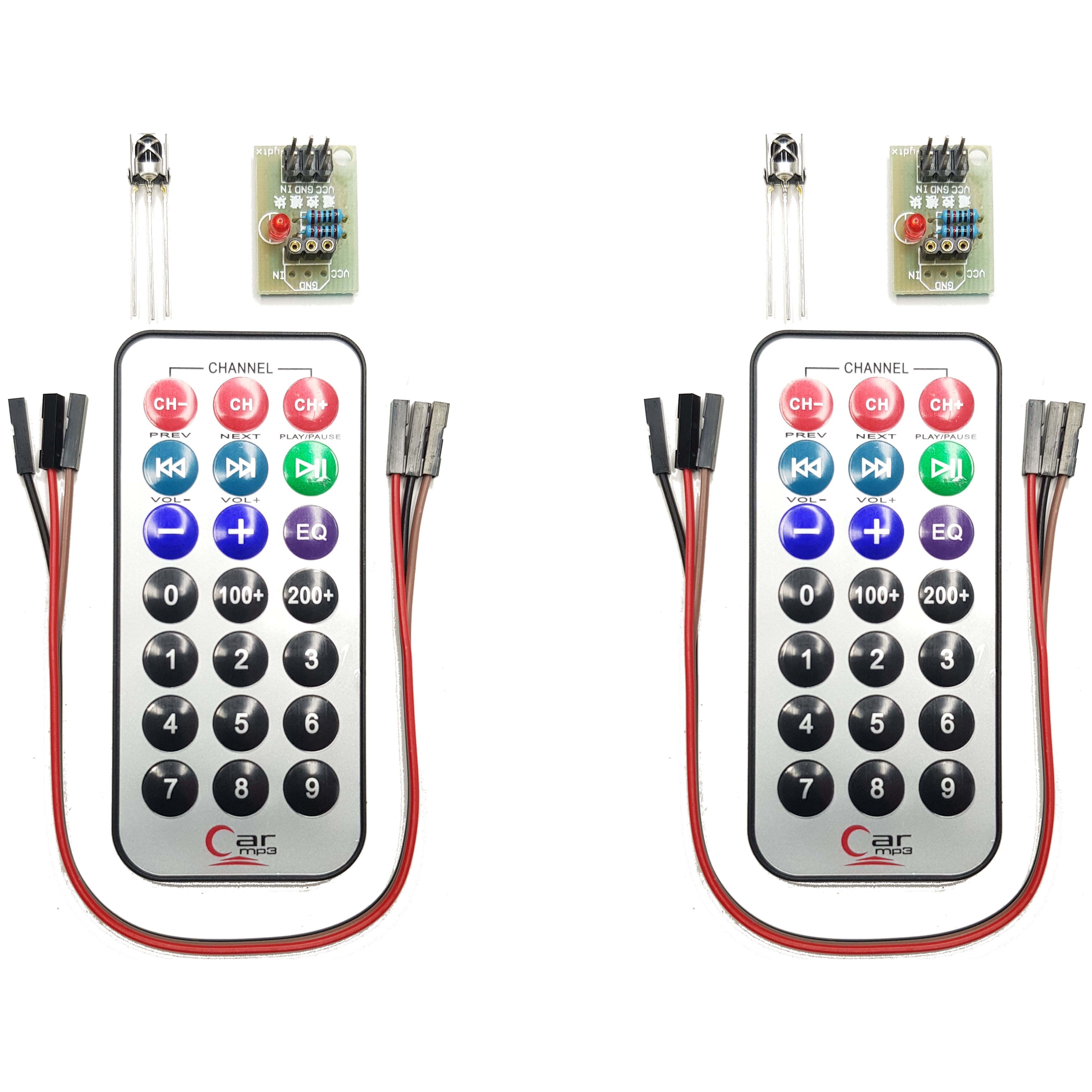
Credit: diyables.io
Tips For Troubleshooting Ir Remote Controls
If your remote stops working, here are steps to diagnose and fix the problem:
- Check the Batteries: Old or weak batteries are the most common issue.
- Clean the Remote: Dust or dirt can block button contacts.
- Test the IR LED: Use a smartphone camera—point the remote at the camera, press a button, and look for a flashing light in the camera view.
- Check Line of Sight: Make sure nothing blocks the path to the receiver.
- Try Another Remote: If possible, test the device with a different remote.
- Reset the Device: Sometimes, the device needs a reboot.
- Check for Sunlight: Move away from windows or bright lights.
Two common mistakes are assuming the remote is broken when only the batteries are dead, or pressing buttons too quickly so the device cannot keep up.
Future Trends In Ir Remote Control
The basic idea behind IR remote controls has not changed much in decades. However, some trends are shaping their future.
Integration With Smart Devices
Many TVs now offer both IR and Bluetooth or WiFi remote options. Some smart homes use phone apps as remotes, but IR is still included for backward compatibility.
Voice Control
Remotes with built-in microphones allow users to speak commands. These may use Bluetooth or WiFi for the voice function, but often keep IR for basic commands.
Miniaturization
Smaller, thinner remotes with touchpads or minimal buttons are becoming popular.
Sustainability
More remotes use rechargeable batteries or solar cells to reduce waste.
Ir Blasters In Phones
Some smartphones have IR blasters built in, allowing them to act as universal remotes with the right app.

Credit: www.amazon.com
Safety And Environmental Concerns
IR remote controls are generally safe. The infrared light used is not harmful to humans or pets. However, there are some points to keep in mind.
- Battery Disposal: Old batteries should be recycled properly.
- Plastic Waste: Large numbers of discarded remotes contribute to electronic waste.
- Electromagnetic Interference: IR is less likely to cause interference than RF remotes.
Recycling programs and universal remote designs can help reduce waste.
How To Choose The Right Ir Remote Control
Selecting the best IR remote depends on your needs. Here are some key factors:
- Device Compatibility: Make sure the remote supports your brand and model.
- Number of Devices: If you have many devices, consider a universal remote.
- Button Layout: Choose a layout that is comfortable and easy to understand.
- Build Quality: Stronger materials last longer and feel better in the hand.
- Backlight: Useful if you watch TV in the dark.
- Programming Features: Some advanced remotes allow custom functions.
- Price: IR remotes are usually affordable, but prices can vary for advanced features.
Avoid buying remotes that are “brandless” or have no documentation—these may not work well with your devices.
Diy Ir Remote Control Projects
Building your own IR remote or receiver is a great way to learn electronics. Some popular DIY projects include:
- Arduino IR Receiver: Use an Arduino board and IR sensor to read signals and control lights or motors.
- Raspberry Pi Universal Remote: With an IR LED, your Pi can mimic almost any remote.
- Learning Remote: Build a remote that can record and replay codes from other remotes.
Many online guides and tutorials are available for these projects. For in-depth guides, you can visit Wikipedia.
Ir Remote Control In Home Automation
Home automation is growing fast, and IR remotes play a role in connecting older devices. Smart hubs with IR blasters can control TVs, ACs, and fans using phone apps or voice assistants.
Example
A smart home hub with an IR blaster can turn on your TV, dim the lights, and start a movie—all from a single app.
Limitations
While IR works well for basic control, it cannot send information back from the device (no “status” updates). For two-way communication, other wireless technologies are needed.
Frequently Asked Questions
How Far Can An Ir Remote Control Work?
Most IR remotes work best within 5 to 10 meters. The range can be less if there is strong sunlight or if there are obstacles in the way.
Why Does My Ir Remote Not Work Sometimes?
Common reasons are dead batteries, blocked line of sight, or interference from sunlight or other strong light sources. Try changing the batteries, cleaning the remote, or moving closer to the device.
Can One Ir Remote Control Many Devices?
Yes, universal remote controls are made to control several devices from different brands. You need to program them with the correct codes or use the learning function.
Are Ir Remotes Better Than Bluetooth Remotes?
Both have pros and cons. IR remotes are simple and have long battery life but need line-of-sight. Bluetooth remotes work without line-of-sight and can carry more data but use more power and may need pairing.
Is Infrared Light From Remotes Harmful?
No. The infrared light used is low-energy and not dangerous for humans or pets. It is similar to the heat given off by a light bulb, just at a wavelength we cannot see.
IR remote controls may seem ordinary, but they are a key part of modern life, connecting us easily to our devices. As technology changes, IR remotes continue to adapt, keeping their role in our homes and workplaces. Whether you want to fix, replace, or just understand your remote, knowing how IR remote control works puts you in control of your tech.