
The security camera is everywhere today. You see them at banks, stores, airports, and even homes. They watch over us, providing safety and helping to solve crimes. But have you ever wondered: Who invented the security camera? The answer is not simple. The history of security cameras is full of clever ideas, new technology, and surprising stories. In this article, you will learn about the first inventors, how security cameras changed over time, and why they matter so much today. We will look closely at the key people, the big moments, and the facts that shaped this important invention.
The Early Days Of Surveillance
Before the invention of the security camera, people used other ways to watch and protect places. Guards, dogs, fences, and alarms were common. But these methods had limits. They could not record events or give proof after something happened. The need for a device to watch and record led to the birth of security cameras.
The First Steps: Closed-circuit Television (cctv)
The idea of closed-circuit television (CCTV) started in the 1940s. Unlike broadcast TV, CCTV sends images to a limited set of monitors. This system was perfect for security. It allowed people to watch places in real time without sharing the footage with the public.
The first known use of CCTV was in Germany in 1942. The engineer Walter Bruch designed a system to monitor rocket launches at Peenemünde. This setup used cameras and monitors, so scientists could watch dangerous tests from a safe distance.
Key Facts About Early Cctv:
- Invented by Walter Bruch in Germany, 1942
- Used for military purposes
- Cameras sent images to monitors in nearby rooms
- No recording capability—just live viewing
The technology was secret at first. But soon, other countries started to use similar systems.
Cctv Goes Public: The 1960s
In the 1960s, CCTV began to appear in public places. Banks, stores, and government buildings used cameras to prevent crime and protect property. The United Kingdom was one of the first countries to use CCTV for public security. In 1960, the city of London installed cameras in Trafalgar Square to monitor crowds during a visit from the Thai Royal Family.
Early Public Cctv Examples:
- London, UK, 1960: Cameras used for crowd control
- New York, USA, 1968: Banks started using CCTV for security
The cameras were large, expensive, and could only be watched live. But they marked the start of a new era in security.
Who Invented The Security Camera?
Many people contributed to the creation and improvement of security cameras. But the main inventor is Walter Bruch. He built the first working CCTV system in 1942. His system used a camera, cables, and monitors to watch rocket launches. This setup became the model for all future security cameras.
Walter Bruch: The Pioneer
Walter Bruch was a German engineer. He worked for Telefunken, a big electronics company. Bruch was interested in television technology. During World War II, he was asked to help with rocket tests at Peenemünde. The tests were dangerous, and scientists wanted to watch from a safe place.
Bruch created a camera system that sent live video to a nearby room. This allowed scientists to see the launch without risk. The system was called closed-circuit television because the signal was not broadcast. Bruch’s invention solved a real problem and showed how cameras could be used for safety.
Important Points:
- Bruch’s CCTV system was the first of its kind
- Used for rocket monitoring, not crime prevention
- No recording—only live viewing
- Built in 1942, Germany
Other Early Contributors
While Bruch is recognized as the main inventor, other engineers and inventors also played a role. In the United States, companies like Vericon began selling security cameras in the late 1940s. These cameras were used in banks and stores. They worked like Bruch’s system but added new features.
Comparison Of Early Security Camera Systems
Here is a simple comparison of the first security camera systems:
| Year | Location | Inventor/Company | Purpose | Recording Capability |
|---|---|---|---|---|
| 1942 | Germany | Walter Bruch | Rocket Monitoring | No |
| 1949 | USA | Vericon | Bank Security | No |
| 1960 | UK | Government | Crowd Control | No |
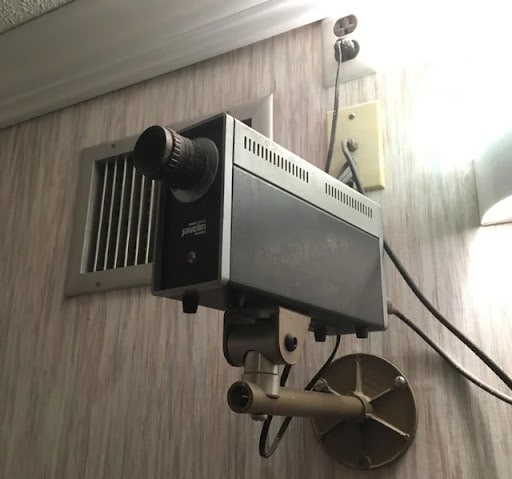
As you can see, early security cameras did not record video. They only showed live images. Recording technology came later.
Credit: www.deepsentinel.com
The Evolution Of Security Cameras
Security cameras changed a lot after their invention. New ideas, better materials, and smarter designs made them more useful. Let’s look at how security cameras evolved over time.
1970s: Video Recording
In the 1970s, video cassette recorders (VCRs) became popular. This allowed security cameras to record footage for the first time. Now, if a crime happened, there was proof. Banks, stores, and homes started using cameras with VCRs.
Main Changes:
- Cameras could record events, not just show them live
- Video tapes could be saved and reviewed later
- Crime solving became easier
1980s: Smaller And Cheaper Cameras
Technology improved quickly. Cameras became smaller, cheaper, and easier to use. The quality of video also got better. More people could afford security cameras for their homes and businesses.
Key Features:
- Compact designs
- Affordable prices
- Better image quality
1990s: Digital Cameras And Computer Storage
The 1990s brought digital cameras and computer storage. Instead of tapes, cameras saved video on hard drives or CDs. This made it easier to search, copy, and share footage. Digital cameras also had higher resolution.
Advantages:
- No need for tapes
- Easy to find and share video clips
- Better images
2000s: Network And Ip Cameras
In the early 2000s, network cameras (also called IP cameras) became popular. These cameras used the internet to send video. People could watch their cameras from anywhere in the world. IP cameras also allowed for better storage and smart features.
Features:
- Remote viewing
- Cloud storage
- Smart motion detection
2010s To Today: Smart Security Cameras
Modern cameras are smarter than ever. They have artificial intelligence (AI), night vision, face recognition, and even voice control. Some cameras send alerts to your phone if they see something strange. Others can talk to visitors or scare away intruders.
Today’s Technology:
- AI and machine learning
- HD and 4K resolution
- Wireless setups
- Integration with home automation
Security Camera Evolution Timeline
Here is a timeline showing how security cameras changed over the years:
| Decade | Main Advancement | Impact |
|---|---|---|
| 1940s | CCTV invented | Live monitoring |
| 1970s | Video recording | Evidence for crimes |
| 1990s | Digital storage | Easy access, better quality |
| 2000s | Network/IP cameras | Remote viewing |
| 2010s | Smart features | AI, alerts, automation |
How Security Cameras Changed Society
Security cameras are now a part of daily life. They affect how we live, work, and feel about safety.
Crime Prevention And Solving
One of the biggest benefits of security cameras is crime prevention. Studies show that cameras reduce crime in public places. Criminals are less likely to act when they know they are being watched.
For example, a study in Chicago found that installing cameras in high-crime areas reduced crime by 20%. Cameras also help police solve cases. Video footage is often used in courts as evidence.
Public Safety And Monitoring
Governments use cameras to keep people safe. They monitor traffic, control crowds, and watch for emergencies. Cameras help manage big events, protests, and disasters.
Privacy Concerns
Some people worry about privacy. Cameras can watch us in public, and sometimes even at home. Laws about camera use are different in each country. It’s important to balance safety and privacy.
Business And Home Security
Businesses use cameras to protect property and employees. Homeowners use them to watch over their families and belongings. Cameras are often linked to alarms for extra safety.
Impact On Daily Life
Security cameras are everywhere:
- Stores: Prevent theft and keep customers safe
- Banks: Protect money and employees
- Streets: Monitor traffic and public spaces
- Homes: Watch over family and property
Most people accept cameras as part of modern life. But it’s important to use them responsibly.

Credit: www.youtube.com
Types Of Security Cameras
There are many kinds of security cameras today. Each has its own features and best uses.
Analog Cameras
These are the oldest type. They send video to a monitor or recorder using cables. The image quality is lower than newer cameras.
Digital Cameras
Digital cameras send video as data. The quality is better, and it’s easier to search and store footage.
Ip Cameras
IP cameras use the internet. You can watch them from anywhere. They are popular for homes and businesses.
Wireless Cameras
Wireless cameras don’t need cables. They connect to Wi-Fi and are easy to install. They are good for renters or people who move often.
Smart Cameras
Smart cameras use AI to detect people, faces, or movement. They can send alerts, record only important events, and even talk to visitors.
Comparison Of Camera Types
Here’s a simple comparison of the main types:
| Type | Connection | Image Quality | Best Use |
|---|---|---|---|
| Analog | Cable | Low | Basic security |
| Digital | Cable/Wireless | Medium | Home & business |
| IP | Internet | High | Remote viewing |
| Smart | Wireless/Internet | Very High | Advanced security |
Innovations And Future Trends
Security cameras keep changing. New inventions and ideas make them better every year.
Artificial Intelligence
Modern cameras use AI to detect strange behavior, faces, and even license plates. This makes them more useful for police and businesses.
Cloud Storage
Footage can be saved online, not just on local devices. This means you can access video from anywhere and never lose important clips.
Integration With Smart Homes
Cameras can work with other smart devices like lights, locks, and alarms. This creates a full security system that is easy to manage.
4k And Ultra-hd Cameras
The quality of video is getting better. 4K cameras show tiny details and make it easier to identify people and events.
Mobile Apps
You can watch your cameras on your phone or tablet. This gives peace of mind, even when you are far from home.
Two Non-obvious Insights
- Early security cameras were not used to catch criminals. Their main purpose was to watch dangerous activities, like rocket launches. Crime prevention came later, as recording technology improved.
- Camera placement is more important than camera quality. Even the best camera is useless if it cannot see key areas. Professional installers study building layouts carefully to maximize coverage.
The Inventor’s Legacy
Walter Bruch’s invention changed the world. Security cameras are now part of everyday life. His work showed how technology could solve real problems. Many people improved the camera after him, but Bruch’s idea was the foundation.
Recognition
Bruch is respected as the father of CCTV. He also invented the PAL color television system, another big achievement. His career was full of innovation and practical solutions.
Why Bruch’s Invention Matters
The security camera is more than a gadget. It is a tool for safety, justice, and peace of mind. Without Bruch’s first system, the world would be very different.
Security Cameras In Modern Life
Today, security cameras are everywhere. People use them for many reasons:
- Home security: Protect family and property
- Business security: Prevent theft and protect workers
- Public safety: Monitor streets, parks, and events
- Police work: Solve crimes and provide evidence
- Traffic control: Manage roads and watch for accidents
Statistics
According to a 2022 report, there are more than 1 billion security cameras worldwide. In the United States, over 50 million homes have security cameras. China leads the world, with more than 200 million cameras in public places.
Real-life Examples
- In London, CCTV helped solve over 500,000 crimes between 2015 and 2020.
- In New York, cameras in stores reduced theft by 30% after installation.
- Home cameras often catch package thieves, helping police recover stolen items.

Credit: en.wikipedia.org
Challenges And Controversies
Security cameras are useful, but they also create problems.
Privacy Vs. Security
Some people worry that cameras invade privacy. They do not like being watched in public or at home. Laws try to protect privacy, but the rules are not always clear.
False Sense Of Security
Cameras can help prevent crime, but they do not stop all problems. Sometimes, people feel too safe and ignore other security steps.
Data Storage And Hacking
Storing video footage can be hard. Hackers may target cameras to steal data or spy on people. It’s important to use strong passwords and keep software updated.
Maintenance And Costs
Cameras need care. They must be cleaned, checked, and updated. Repairs and upgrades can be expensive.
Frequently Asked Questions
Who Is Considered The Inventor Of The Security Camera?
Walter Bruch is credited as the main inventor. He built the first CCTV system in Germany in 1942 to monitor rocket launches. His system was the foundation for all future security cameras.
When Did Security Cameras Start Being Used For Crime Prevention?
Security cameras were first used for crime prevention in the late 1960s. Banks and stores installed cameras to watch for theft and robbery. Recording technology in the 1970s made cameras more useful for solving crimes.
What Is The Difference Between Cctv And Modern Security Cameras?
CCTV refers to closed-circuit television systems that send video to a limited set of monitors. Modern security cameras often use digital and network technology, allowing remote viewing, recording, and smart features like AI detection.
Are Security Cameras Legal Everywhere?
Laws about security cameras are different in each country and state. In most places, it is legal to use cameras in public or private property, but there are rules about privacy. Always check local laws before installing cameras.
How Have Security Cameras Changed Over Time?
Security cameras have changed from large, expensive devices to small, smart tools. Early cameras only showed live images. Today’s cameras record, use AI, connect to the internet, and integrate with smart home systems.
Security cameras started as a way to watch dangerous rocket launches. Now, they help protect people, solve crimes, and make life safer. The journey from Walter Bruch’s first system to today’s smart cameras is a story of innovation and progress.
If you want to learn more about the history of CCTV, you can visit Wikipedia’s CCTV page for deeper information.
The next time you see a security camera, remember the inventors, the history, and the technology behind it. Cameras are not just machines—they are part of our daily lives, making the world a safer place.